
Jau Atta (Barley Flour): 7 Benefits, Nutrition & How to Make Soft Jau Roti
MOORAV FOODTECH PRIVATE LIMITED AdminShare
Every Navratri, in lakhs of Indian homes, the first thing that goes into the clay pot next to the kalash isn't a flower or a diya. It's a fistful of jau. You water it for nine days, watch the green shoots (jaware) rise, and on Dashami the whole family treats those blades like a blessing.
And then, honestly? We go back to the kitchen and make wheat rotis.
That's the funny thing about jau. It sits on our puja thali, it's named in the Vedas as yava, our grandparents drank it as sattu through every North Indian summer, and yet it has almost disappeared from our plates. This year, before the kalash goes up on 11 October, we think jau deserves a spot back in the atta dabba. Here's everything you need to know: what jau actually is, what it does for you, who should skip it, and how to make a jau roti your family won't complain about.
Jau atta in 30 seconds
- Jau in English = Barley (Hordeum vulgare). It is not jowar, which is sorghum. Full jau vs jowar comparison here.
- Its superpower is beta-glucan, a soluble fibre linked to healthy cholesterol levels and steadier fullness.
- It contains gluten, so it's not for coeliac disease.
- Tastes malty, mildly sweet and close to wheat, so it's the easiest "healthy grain" swap for fussy families.
- Best way to start: 30% jau + 70% wheat in your regular roti dough.
What is jau, and why did it disappear from our kitchens?
Jau is barley, one of the oldest cultivated grains in the world. In India it has always been more than food. It's used in havans, sown during Navratri, offered in shraadh, and roasted into sattu that farmers and labourers carried in a cloth bundle for a cheap, filling, cooling meal.
So where did it go? Mostly, wheat and rice happened. As those two became the staples that got the big push, the bigger procurement and the shelf space, grains like jau got pushed to the edges: something for the puja, or for a "detox" diet, but not for Tuesday night dinner. Barley also contains gluten, so it never got swept into the gluten-free millet revival the way jowar and ragi did. It's been stuck in between.
That's a shame, because nutritionally, jau is one of the most interesting grains you can put in a roti.
Jau (barley) nutrition per 100g: how it compares with wheat
Here's how whole barley stacks up against whole wheat flour, using USDA FoodData Central reference values for the raw grain and flour:
| Per 100g | Whole barley (jau) | Whole wheat flour |
|---|---|---|
| Energy | ~354 kcal | ~340 kcal |
| Protein | ~12.5 g | ~13.2 g |
| Dietary fibre | ~17.3 g | ~10.7 g |
| Beta-glucan (soluble fibre) | Rich source | Very little |
| Magnesium | ~133 mg | Similar |
| Gluten | Yes | Yes |
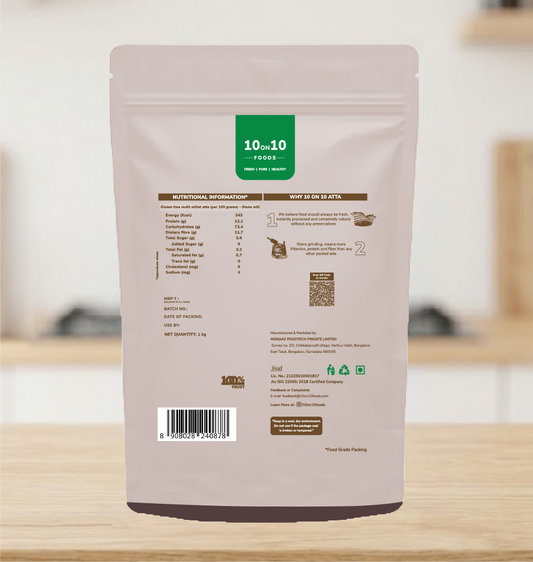
These are general reference values for raw grain and will vary by variety and batch. For the tested values of our own barley atta, see our published lab reports and the flour nutrition database.
The headline is simple: similar protein and calories to wheat, noticeably more fibre, and a type of fibre wheat barely has. That last part is where jau earns its reputation.
Want to try jau without changing your whole routine?
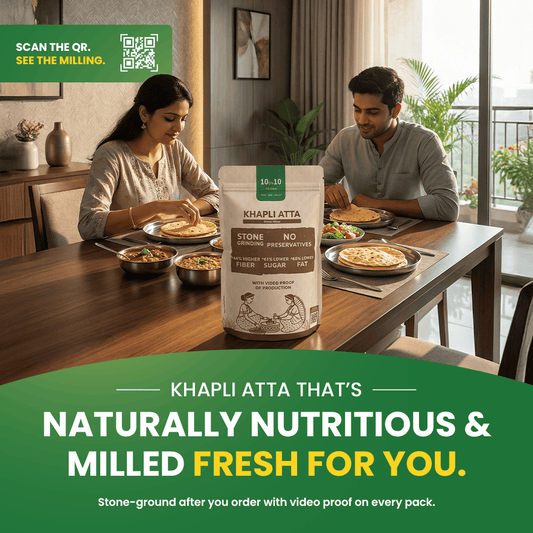
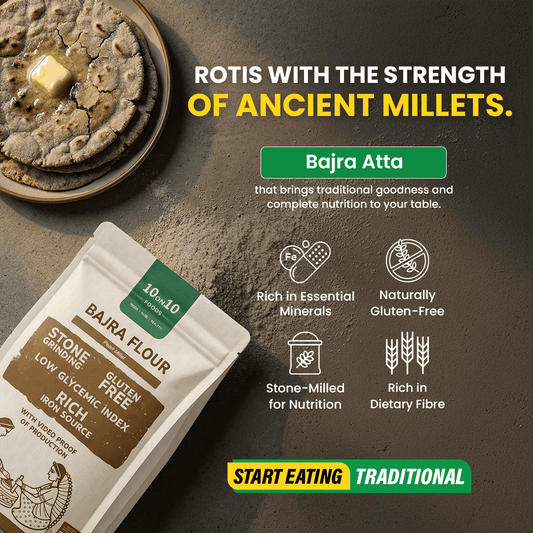
Our Barley Atta (Jau Atta) is stone-ground on a slow chakki and milled only after you order, so the bran and its beta-glucan reach your kitchen fresh, not after months on a shelf. Scan the QR on the pack and watch your own batch being milled.
Shop Fresh Jau Atta →7 benefits of jau atta, and what the science actually says
We're going to be straight with you here. Jau is a genuinely good food. It is not a medicine. Here's what it can realistically support as part of a balanced diet.
1. Beta-glucan supports healthy cholesterol levels
This is jau's best-studied benefit. Barley beta-glucan is a soluble fibre that forms a gel in your gut, and the European Food Safety Authority (EFSA) has reviewed the evidence and accepted that barley beta-glucans have been shown to lower blood cholesterol, with the effect linked to a daily intake of 3g of beta-glucan. HEART UK notes that a 25–30g serving of raw barley gives roughly 1g, so reaching 3g means barley in more than one meal a day, not a single roti.
The practical takeaway: jau works best as a daily habit, not a once-a-month experiment. If heart health is on your mind, our heart health guide covers the other everyday food swaps that add up.
2. Keeps you fuller for longer
That same gel-forming fibre slows down how quickly your stomach empties. In plain terms, a roti with jau in it tends to keep you satisfied longer than a plain wheat one. That makes portion control easier, which is why jau shows up in so many weight management plans. It's a helpful tool, not a fat-burner. More on this in our weight management guide.
3. Supports a steadier blood sugar response
Research on barley and its beta-glucan suggests it can slow how quickly carbohydrates are absorbed, which may support a gentler rise in blood sugar after a meal compared with refined flour. The effect depends on the whole meal, the portion and the person. If you're managing diabetes, jau can be a sensible part of your plate, but please speak to your doctor or dietitian before changing your diet, especially if you take medication. Our guide to the glycemic index of different attas goes deeper.
4. Good for your gut
With roughly 17g of fibre per 100g as whole grain, jau adds both soluble and insoluble fibre, which supports regular digestion and feeds the good bacteria in your gut. If most of your fibre currently comes from "I'll eat a salad tomorrow," this is a much easier daily upgrade. See our gut health guide and top high-fibre foods in India.
5. Quietly packed with minerals
Whole barley is a good source of magnesium, manganese, selenium, phosphorus and copper, the kind of nutrients that get lost when grains are heavily polished or refined. Stone-grinding the whole grain keeps the bran and germ in, which is where most of these live.
6. Cooling by tradition, perfect for the switch between seasons
In Ayurveda, jau is considered sheeta (cooling) and light. That's why dadi made jau sattu in May and June. Even in October, when Bengaluru afternoons still feel warm and North India is caught between seasons, a jau-wheat roti is a lighter everyday choice. (Curious how this compares with jowar? Read is jowar hot or cold for the body.)
7. The easiest "healthy grain" swap for fussy eaters
This one doesn't get talked about enough. Many families try millets and quit because the taste or texture is too different. Jau is malty, mildly sweet and much closer to wheat, so a 30:70 jau-wheat roti usually passes the kids-and-in-laws test on day one.
Who should avoid jau atta?
- Coeliac disease or gluten intolerance: jau contains gluten. Choose Jowar Atta, Ragi Atta or Multi Millet Atta instead. (A note on honesty: all our grains are milled on the same chakki, so these are naturally gluten-free grains milled in a facility that also handles wheat and barley.)
- Sensitive stomach or IBS: barley, like wheat, contains fructans that can cause bloating in some people. Start with a small amount and see how you feel.
- On medication for cholesterol, blood sugar or thyroid: jau is safe food for most people, but it's always worth checking with your doctor before a big diet change.
How to make soft jau roti (without it cracking)
Pure jau dough is softer and less stretchy than wheat, because it has less of the gluten that makes wheat dough elastic. That's why most first attempts end in cracked edges. This method fixes it.
- Start with a blend. Our nutritionist Dr. Anju suggests 30% jau atta to 70% whole wheat atta. For 4 rotis, that's roughly ½ cup jau + 1 cup wheat. Once the family is used to it, move to 50:50.
- Use warm water, and a little more of it. Barley absorbs more water than wheat. Add water slowly and knead to a slightly softer dough than you normally would.
- Add ½ tsp ghee or oil while kneading. It makes a visible difference to softness.
- Rest the dough 20 minutes, covered. Don't skip this. The bran needs time to hydrate.
- Roll a little thicker than a phulka and cook on a medium-hot tawa. Too hot and jau rotis dry out fast.
- Keep them in a cloth-lined casserole so the steam keeps them soft till dinner.
5 more ways to use jau atta this festive season
- Jau-besan missi roti: mix jau atta, wheat atta and besan in equal parts with ajwain, green chilli, onion and coriander. More protein, more fibre, same comfort.
- Jau thalipeeth: swap part of your thalipeeth bhajani with jau atta for a crisp, nutty breakfast.
- Jau sattu drink: dry-roast jau atta on low heat till it smells nutty, cool it, and whisk 2–3 tbsp into water with roasted jeera, black salt and lemon. The original Indian energy drink. (If you like this, you'll love our ragi drinks.)
- Jau cheela: jau atta + besan + curd + grated veggies, rested 10 minutes, cooked like a dosa.
- Jau-atta laddoo for Diwali: roast jau atta in ghee, add jaggery powder, cardamom and chopped nuts. A festive sweet with a lot more fibre than the maida version.
Why fresh-milled jau matters more than you think
Here's what most barley flour packets won't tell you. The good stuff in jau (the beta-glucan-rich bran, the germ and its natural oils) lives in the outer layers of the grain. The moment the grain is ground, those oils start meeting air and the flour slowly goes stale. Months in a warehouse and on a shelf mean flatter flavour and a bitter aftertaste, which is often why people decide "jau doesn't taste good."
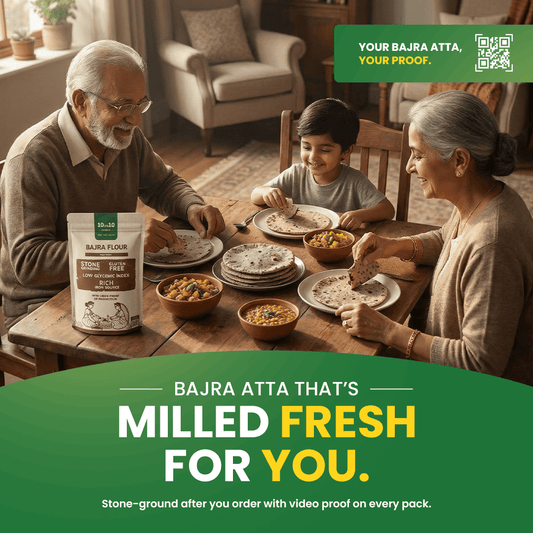
At 10on10, we don't mill in advance. Your barley atta is stone-ground on a slow, cool-running chakki only after you place your order, with nothing added and nothing sieved out. Every pack has a QR code, so you can watch your own batch being milled, with a timestamp. That's what 100% trust, 100% nutrition and 100% freshness looks like in practice. (Want the science of why stone-milling matters? Read stone-ground vs roller-milled flour.)
Your Jau Roti Starter Kit
Everything you need for soft 30:70 jau rotis and missi roti this festive season, milled fresh for your order.
🌾 Barley Atta (Jau Atta), 500g
🫓 100% Whole Wheat Chakki Atta, 2kg
🧡 Stone-Ground Besan, 500g for missi roti and cheela
Together they take your cart past ₹299, so shipping is free.
Start With Jau Atta → Try High Protein Jau Atta →FSSAI licensed · ISO 22000:2018 certified · Lab reports published · QR video proof on every pack
Frequently asked questions about jau atta
What is jau called in English?
Jau is barley (Hordeum vulgare). It's often confused with jowar, but jowar is sorghum, a completely different, gluten-free grain. Here's our detailed jau vs jowar guide.
Is jau atta gluten free?
No. Barley naturally contains gluten, so jau atta is not suitable for coeliac disease or a strict gluten-free diet. Here's what's myth and what's fact about gluten in atta.
Is jau atta good for weight loss?
Jau is high in fibre, including beta-glucan, which helps you feel full for longer and makes portion control easier. It can support weight management as part of a balanced diet and active lifestyle, but no single flour causes weight loss on its own.
Can diabetics eat jau roti?
Many people managing diabetes include barley in their diet because its soluble fibre may support a steadier blood sugar response than refined flour. Portion size and the rest of the meal matter a lot. Please consult your doctor or dietitian before making changes, especially if you're on medication.
Can I eat jau roti every day?
Yes, for most healthy adults a jau-wheat roti is perfectly fine as a daily staple. If you're new to high-fibre grains, start with a 30:70 blend and increase slowly, and drink enough water through the day.
Is jau hot or cold for the body?
Traditionally, jau is considered cooling (sheeta) in Ayurveda, which is why jau sattu has long been a summer drink in North India.
Jau or oats: which is better?
Both are among the best everyday sources of beta-glucan. Jau is the easier one to fit into Indian rotis and parathas, while oats work well in cheelas, porridge and baking. There's no need to pick one. Our Oats Atta and Barley Atta can even share a dough.
How long does fresh jau atta last?
Because ours has no preservatives, treat it like fresh food. Move it to an airtight steel or glass container, keep it cool and dry, refrigerate in humid weather, and go by the milling date on the pack.
The grain on your puja thali belongs on your plate too
This Navratri, when you sow jau in that little clay pot and watch it turn green, maybe let it be a reminder, not just of prosperity, but of a grain our grandparents trusted every single day. Start small. One dabba. A 30:70 roti. See how your family feels in a month.
Get your fresh-milled jau atta here, stone-ground after you order, with the video to prove it.
Keep reading
- Jau vs Jowar: Are They the Same Grain?
- Glycemic Index of Flours: Which Atta Is Best for Diabetics?
- Top 10 High Fibre Foods in India You Should Eat Daily
- Why Freshly Milled Atta Is Nothing Like Store-Bought Flour
- How to Choose the Right Atta for Your Family's Health Goals
This article is for general information and is not medical advice. Jau atta is a food, not a treatment for any condition. If you have a medical condition, are pregnant, or take regular medication, please consult your doctor or a registered dietitian before changing your diet. Nutrition values quoted are general reference values (USDA FoodData Central) and will differ from batch to batch; see our lab reports for tested values.