
How to Choose the Right Atta for Your Family's Health Goals
MOORAV FOODTECH PRIVATE LIMITED AdminShare
A meal in India without a roti is hard to imagine, since most Indians consume between 250-500 grams of atta per week in the form of parathas, roti, and other flatbreads. At this point, we can recall one old saying, which goes like, “You are what you eat”. Hence, the type of atta you choose can quietly shape your family’s long-term health.
Many households even today buy atta without giving much thought to its nutritional composition or how it aligns with their health goals. Then, what else? Is it truly an issue of ignorance? Perhaps the reason is that the atta market has evolved, and you now have plenty of options at your local store with heightened nutritional composition.
On the contrary, health-conscious families are perplexed by choices available for healthy atta in India, multigrain blends, gluten-free alternatives, and more.
Great choice comes with great responsibility, and sometimes, confusion. This guide resolves exactly that. We will explain how the right atta for health goals can bridge the nutrition gap, lifestyle, and preventive health.
Why Atta Choice Matters More Than Ever?
When we specifically talk about India, it is currently going through a steady rise in lifestyle diseases. Somewhere around 77 million Indians are living with diabetes. Plus, obesity rates are showing no signs of stopping across urban households. This is probably another reason that has made people rethink their daily staples.
Wait… There is more to it. Before you start exploring the supermarket shelves, you need to take a step back and ask yourself these questions:
- What are our family's unique health priorities?
- Are you managing weight or looking to build muscle?
- Is someone in your family dealing with diabetes or blood sugar concerns?
- Do you have family members with gluten sensitivity or celiac disease?
- Are you looking to improve digestive health and gut function?
When you have your answers in mind, then consider these factors next…
How to Identify the Healthy Atta in India?
Choosing healthy atta in India can feel like finding a needle in a haystack. But don’t worry, once you know what to look for, the process becomes much simpler.
The checklist below is quite long and noteworthy, so take a moment to explore them all.
Explore the Top Choices
To start with, you can explore the top choices like jowar atta, high-protein atta, multigrain atta, ragi atta, khapli atta, and more. Now the catch here is that different types of atta are utilized for different intentions. For instance:
- Whole Wheat Atta: Rich in fiber and vital nutrients.
- Gluten-Free Atta: For added nutrition.
- Multigrain Atta: Best for people with gluten intolerance or dietary limitations.
- Organic Atta: Used for better nutrition and a cleaner diet.
Each type serves different health goals, so selecting the right one depends on your family’s nutritional needs (as suggested above).
Nutritional Value
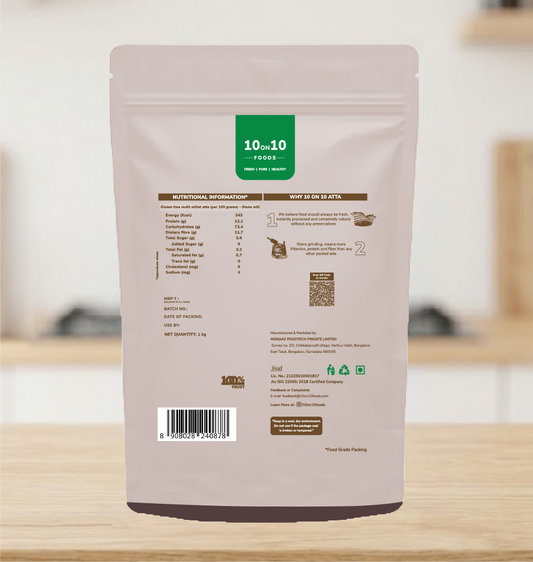
Reading the label is equally important, so always flip the package and read the nutrition facts panel. Keep in mind, your focus shouldn’t be on the nutritional values but on who you’re feeding at home. Why? Because every family has different needs. So, choose the one that works for everyone.
To identify the healthiest atta, make sure that the pack of flour you choose has the right amount of fiber, proteins, and vitamins.
For your knowledge, here's what you should look for:
-
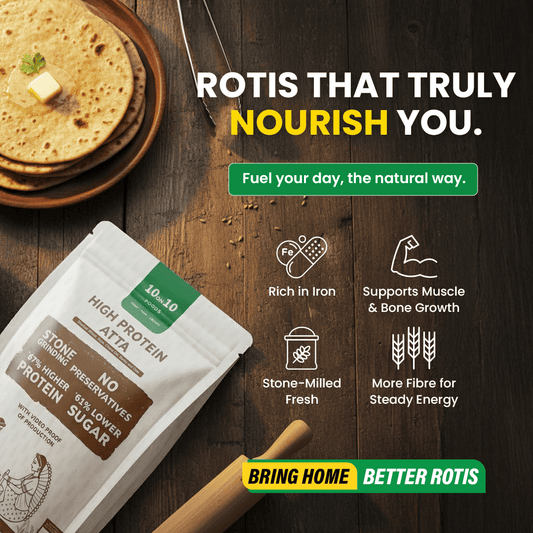
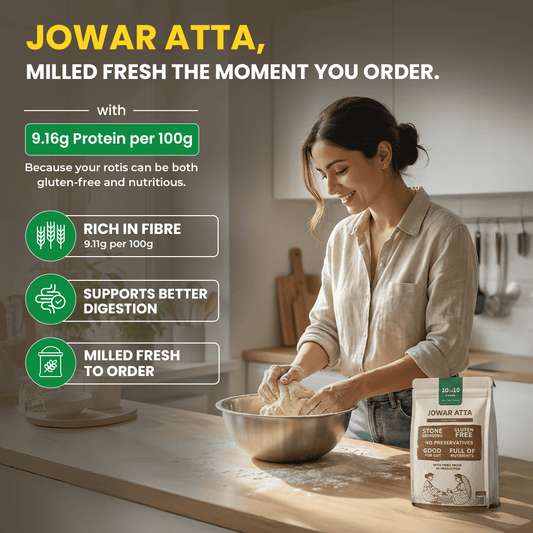
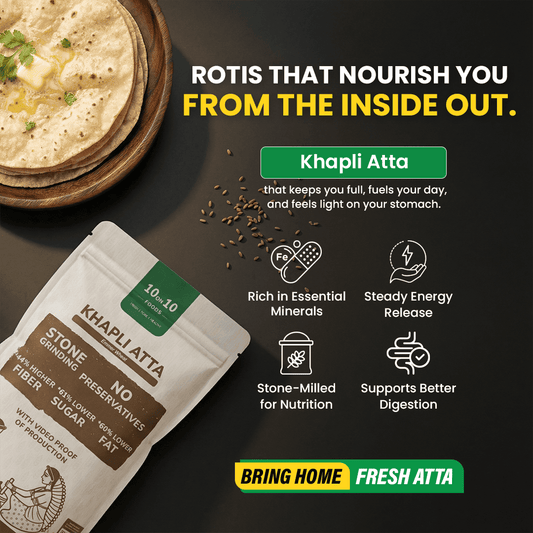
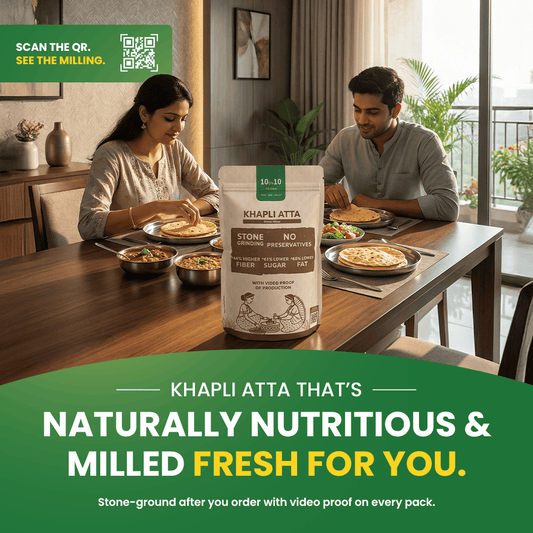
Protein Content: Protein in regular wheat flour should be 10-12g per 100g, 12-14g per 100g in multigrain atta, 20-25g per 100g in high-protein atta (fortified with legumes), 9.16g per 100g in jowar flour, and 14.5g per 100g in Khapli atta. However, for gym goers, these high-protein blends are enough to fulfill their dietary needs.
-
Dietary Fiber Content: The minimum dietary fiber you atta must contain is 12g fiber per 100g, as it is ideal for digestive health. Plus, high fiber leads to better satiety and blood sugar management. It can be perfect either for your diabetic father, mother, or a fussy toddler to support their gut health.
To suggest one, you can go with a wholegrain atta that retains the bran (contains 83% of phenolic content) and jowar atta.
-
Iron and Micronutrients: These are important for energy and immunity, so your atta must have at least 4-5 mg per 100g of iron and 2-3 mg per 100g of zinc. The presence of magnesium, manganese, and B vitamins would be a bonus. Nutrient-dense attas are ideal for women suffering from PCOD or having poor menstrual health, as it supports hormonal balance and energy levels.
Before you buy wheat from a store, you need to read all of this information. However, make your final choice only after you've decided that the flour is worth buying.
Brand Reputation and Reviews
A strong brand reputation is built over years and after a successful delivery of products. We always recommend people get their flour/atta from a reputable brand because they maintain uniform quality, milling, and nutritional value.
In case you have no knowledge of how to judge one, here's what indicates a trustworthy atta brand:
-
FSSAI Certification: Your chosen atta brand must display an FSSAI license number. If it's missing, that's a red flag. Therefore, FSSAI standards are stringent and include tests for uric acid, pesticides, and microbial contamination.
-
Transparent Contact Details: The pack must have clear manufacturer information with dates clearly printed on it. In addition, the brands that provide QR codes to verify milling timestamps show extra commitment to transparency.
- Customer Reviews: The next way to know about the brand in reality is to check e-commerce ratings and reviews mentioning softness of rotis, aroma, or digestibility.
Processing Method
How the atta is processed makes a huge difference, as it impacts the nutritional content. In the table below, we’ve described how processing methods affect various criteria of a flour:
|
Criteria |
Stone-Milled (Chakki) |
Roller-Milled (Industrial) |
|
Temperature |
Low (preserves nutrients) |
High (degrades B vitamins) |
|
Freshness |
Can be milled on demand |
Pre-packed (loses nutrients over |
|
Aroma and Taste |
Rich, earthy aroma |
Muted flavor |
|
Price |
Slightly higher (premium) |
Lower (mass production) |
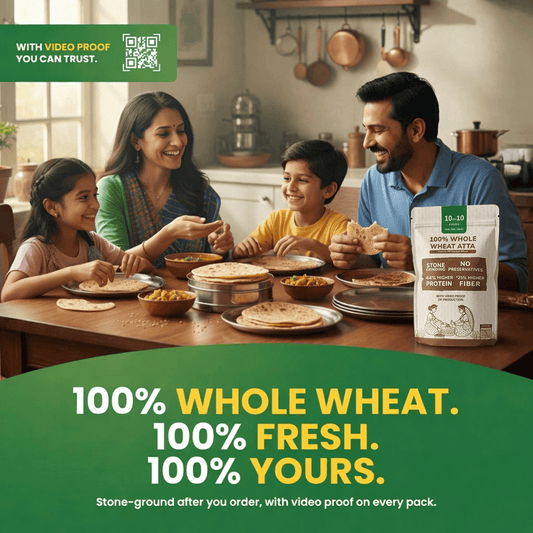
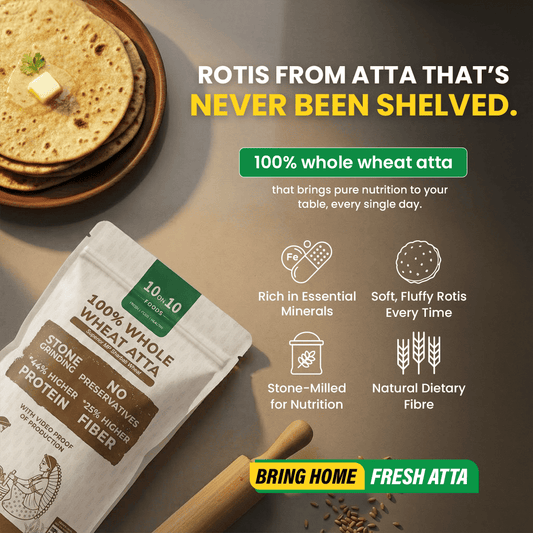
To keep the atta fresh, mill-to-meal approaches like those followed by 10on10 Foods ensure less time between grinding and consumption. As you can see, this is why stone-milled remains the best choice.
Color and Texture Preferences
Although you shouldn’t judge the book by its cover, in the case of an attack, one must pay attention to visual cues. Healthy atta usually has a slightly brownish tone (not overly white) and a coarse yet soft texture. In contrast, if the flour looks too fine and bright, it may be overly processed.
To determine the best texture, the good atta feels soft and fine to the touch, with no graininess or lumps.
Shelf Life
Atta doesn't get better with age. In fact, the opposite is true. The ideal consumption window falls within 1 month of milling as it secures optimal nutrition and freshness. 1-2 months is still good, but the vitamin B content begins to degrade.
In short, shorter shelf life indicates fewer preservatives + fresh ingredients, and longer shelf life sometimes comes at the cost of nutritional quality.
Why You Should Trust 10on10 Food to Score the Healthiest Atta in India?
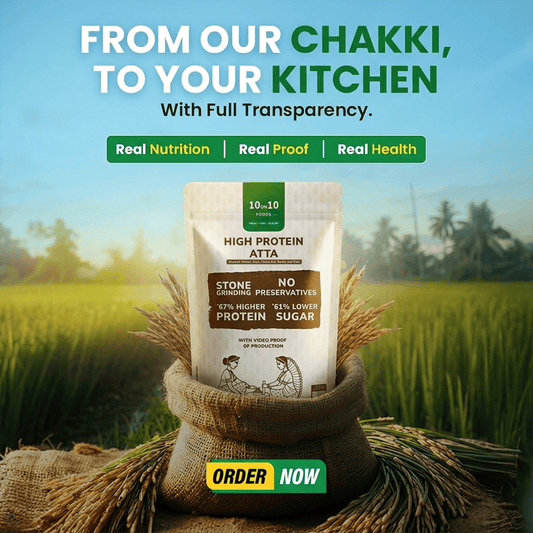
Trust in this context is everything. Plus, atta isn’t just another regular grocery; it’s a daily superfood that impacts your family’s nutrition. And let’s be real, the person in the kitchen, i.e., you mom, sister, wife, or someone who cooks food, cares about two things the most: soft, wholesome rotis and real health benefits. This is where 10on10 Foods comes into the picture. We are known to deliver flours that are not only clean but also functionally beneficial.
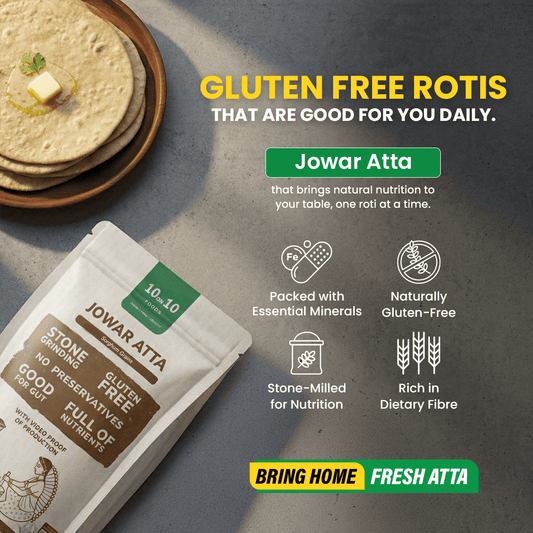
One of our standout options is Jowar Atta. The reason why it is our star product is that it has an exceptional nutritional profile and helps you serve rotis that are light or satisfying.
Here are some of the most noteworthy jowar atta health benefits that support multiple aspects of health:
- 10on10 Food’s jowar atta has high fiber content. Therefore, our jowar atta doesn't just fill stomachs, it regulates blood sugar and aids digestion.
- Naturally gluten-free.
- Helps regulate blood sugar levels.
- Supports heart health with antioxidant properties.
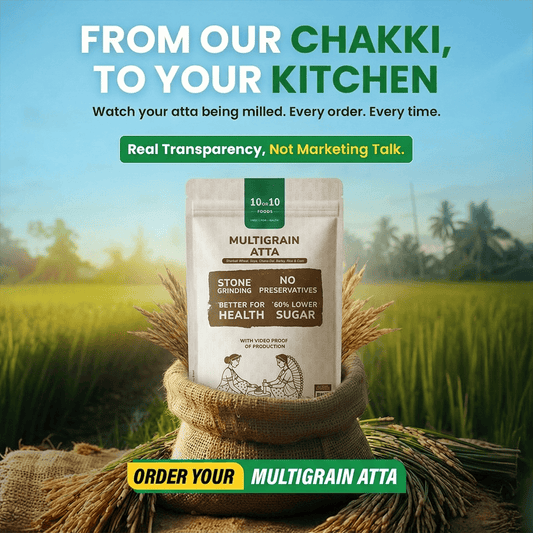
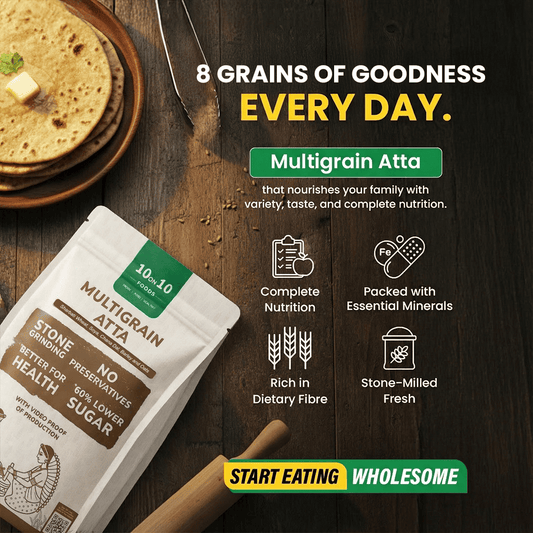
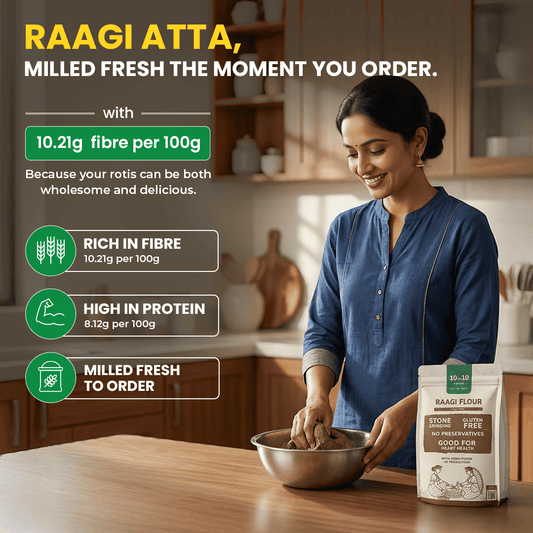
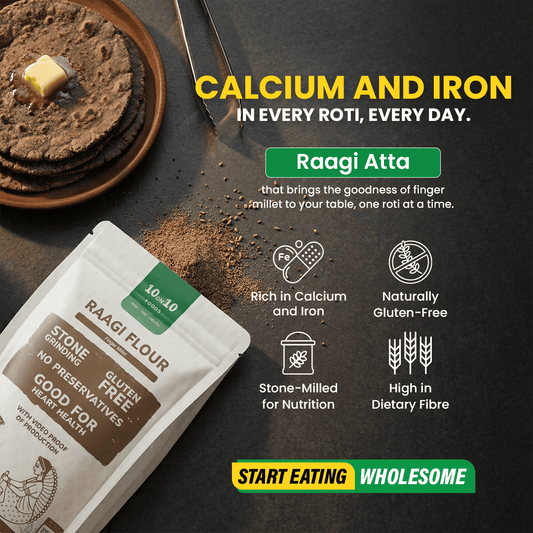
Now, beyond millet-based options, 10on10 Foods also provides flours that deliver the multigrain atta benefits modern consumers look for. With such products, we ensure that you’re not just eating to fill your stomach, but fueling your body the right way.
Conclusion
Selecting the right atta for family health is unquestionably a tough choice to make, since you have to take their health needs into account, instead of only yours. Therefore, choosing the right atta is more important than improving the atta quality.
The better the input, the better the output.
In Indian kitchens, no one really chases numbers on a label. You always look for an atta that keeps your family full, energized, and healthy. With options like Jowar Atta and nutrient-rich blends, 10on10 Foods appears as a lifestyle solution. Every atta prepared here is sure to match the needs of an Indian family.
So, if your goal is to find healthy atta in India for your well-being, 10on10 Foods is a name you can count on since we understand the modern Indian kitchen better than anyone else!