

10on10 Foods
Besan, Stone-Ground Gram Flour, Milled Fresh
Besan, Stone-Ground Gram Flour, Milled Fresh
Couldn't load pickup availability
 Order On WhatsApp
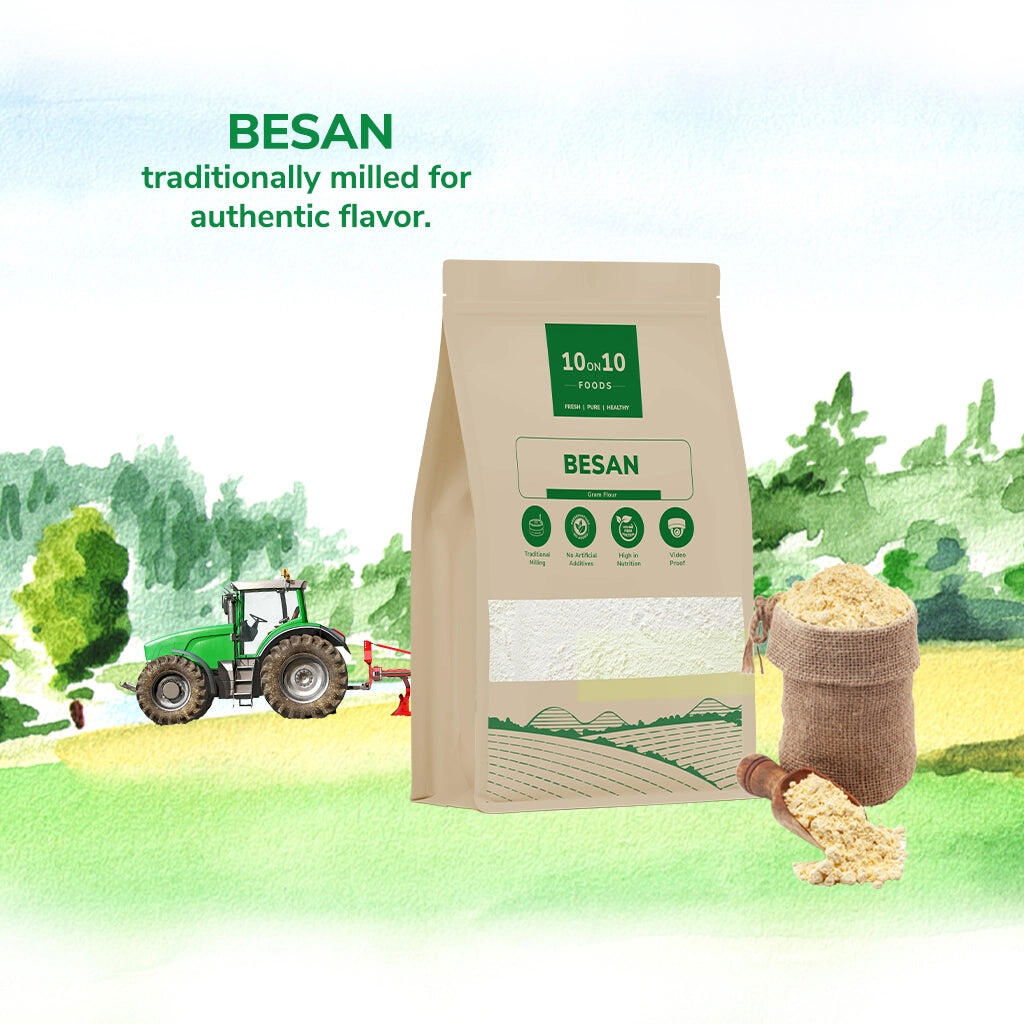
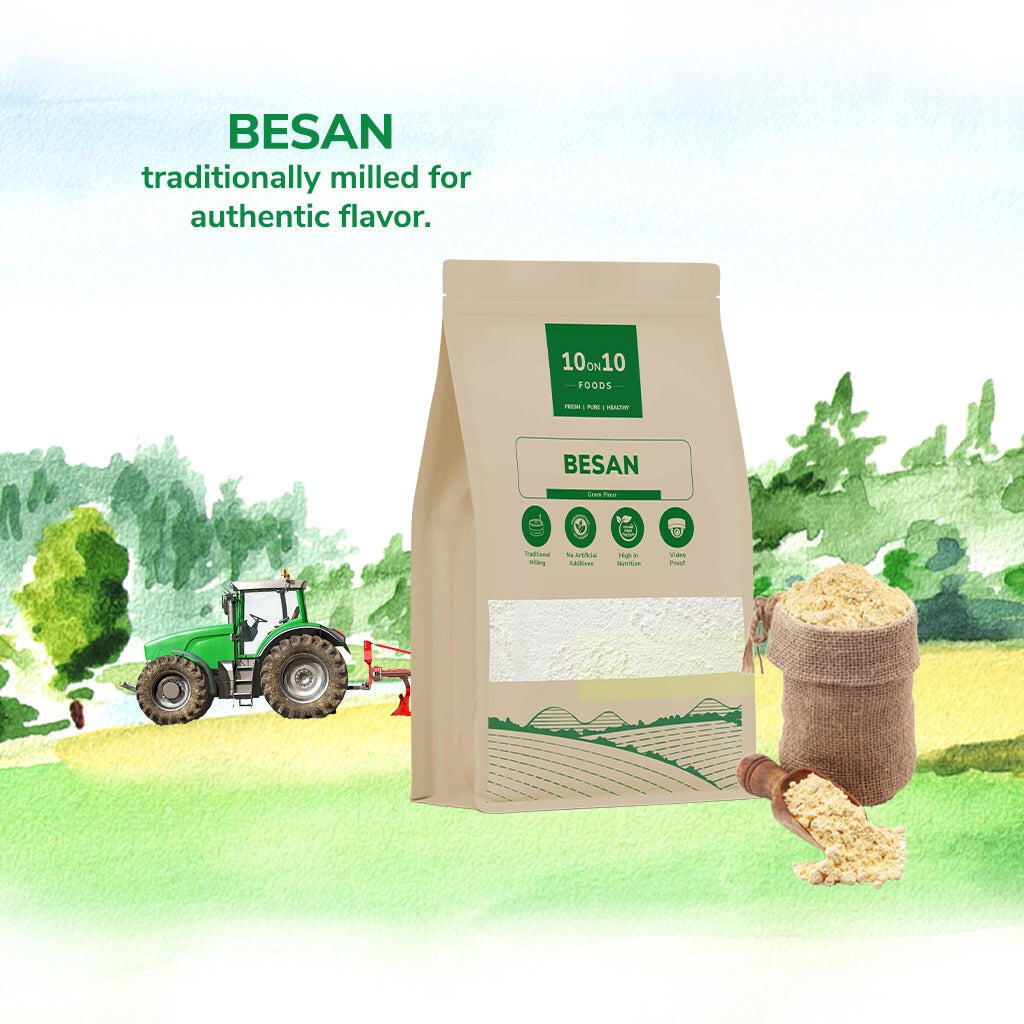
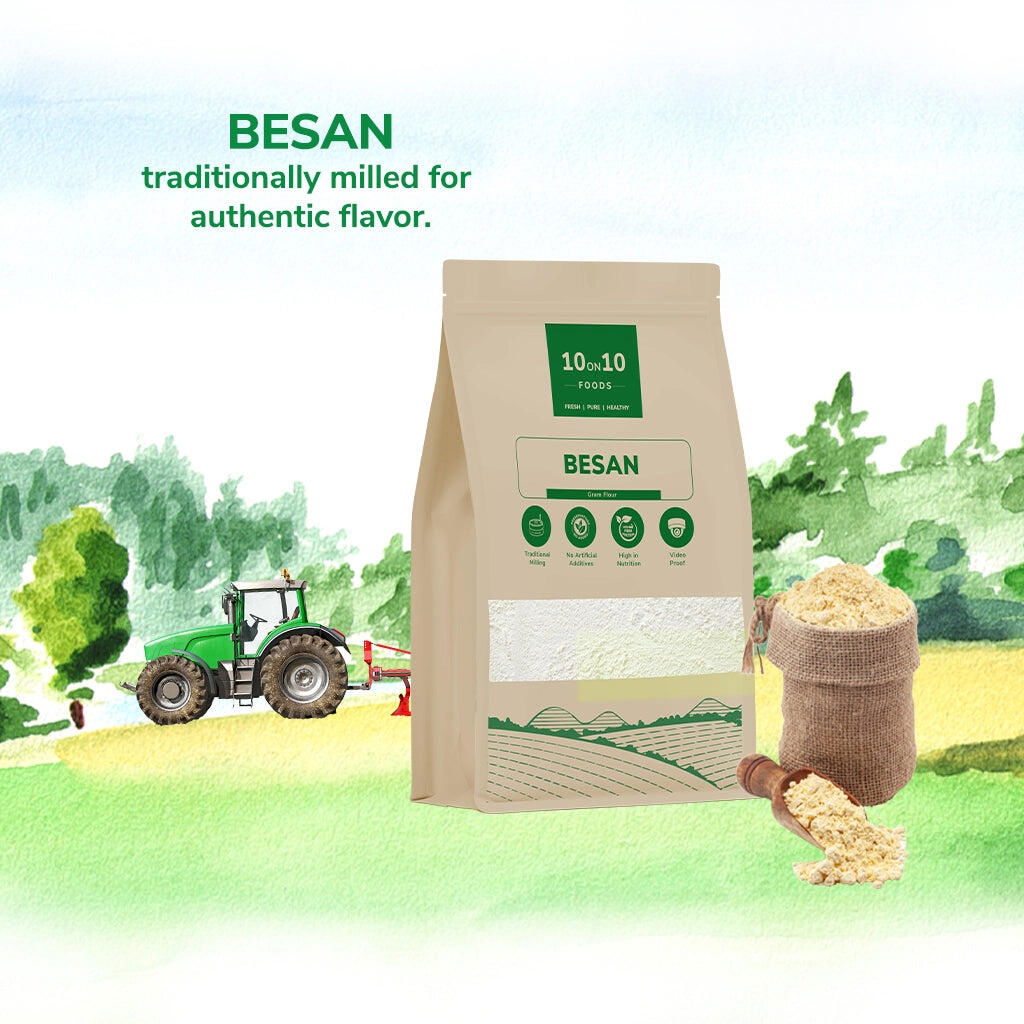
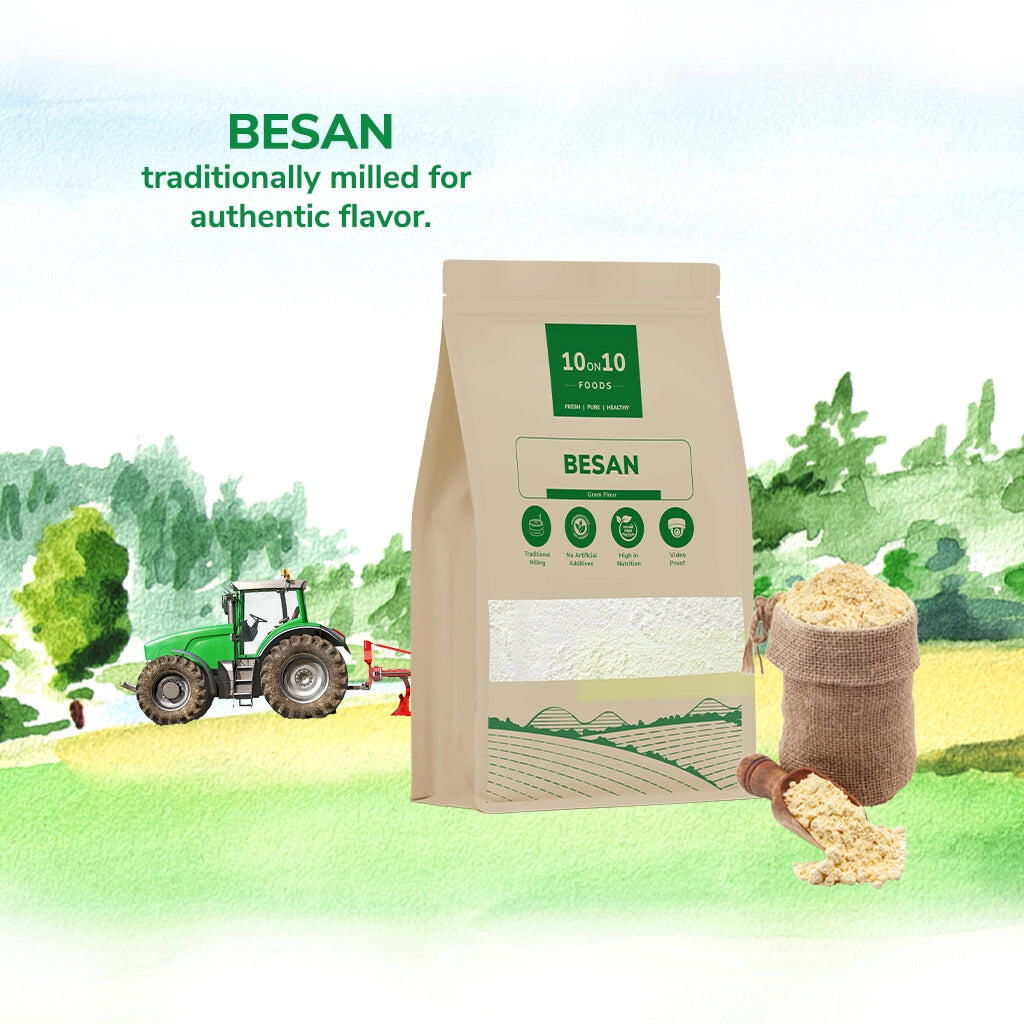
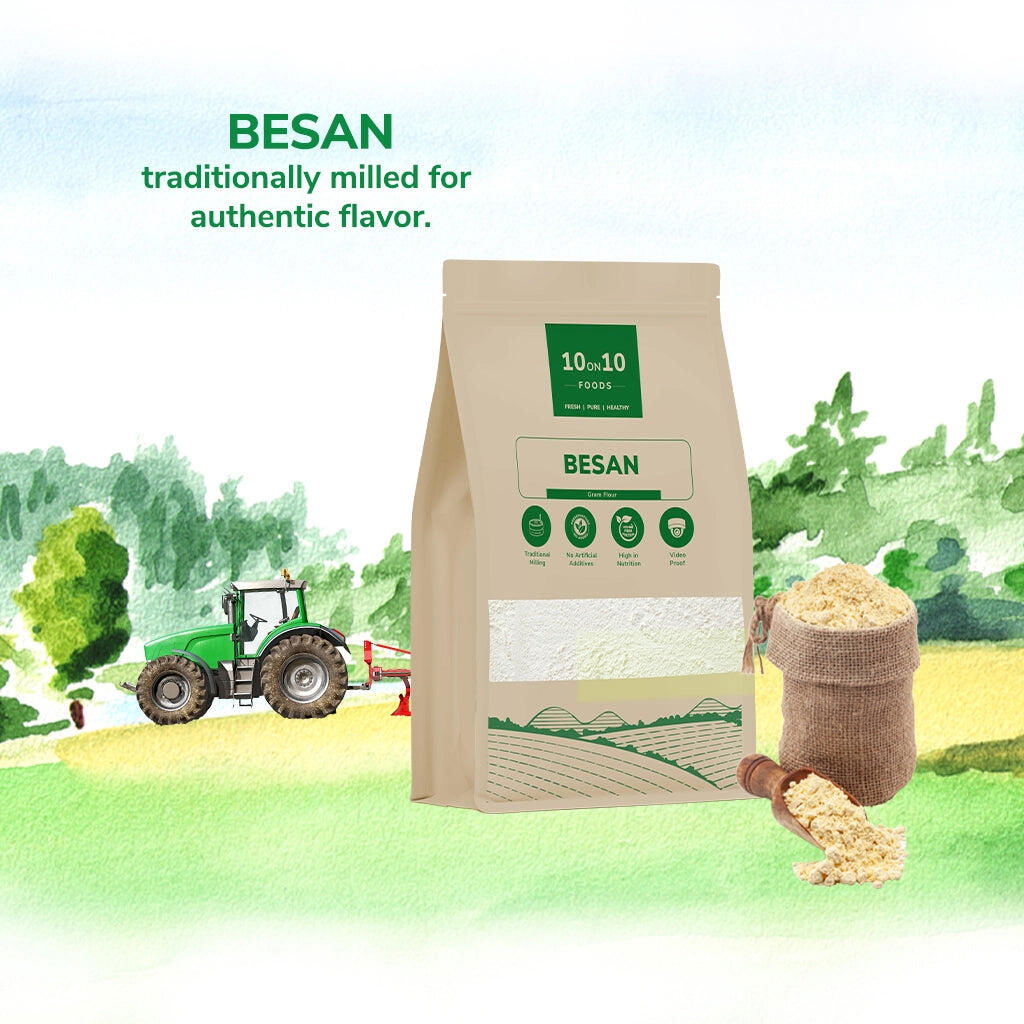
Every family knows the sound their pakora batter makes when it hits the oil, and every family knows when it is wrong. Usually it is the besan. Ours is stone-ground from whole chana only after you order, which is why the pack smells nutty when you open it instead of dusty. Good besan is not a big claim. It is just fresh besan.
Milled fresh after you order
Besan goes stale faster than almost anything else in the kitchen, and most of us have simply got used to it.
- Whole chana is cleaned and stone-milled on a traditional chakki
- The stones run slow and cool, so the flour keeps the natural oils that carry the nutty smell and taste
- Nothing is cut in. No pea flour, no starch filler, no colour, no preservative
- Milled against your order, because besan more than any other flour tells you exactly how old it is
Watch your own batch. Every pack carries a QR code. Scan it and you will see the video of the batch that became your besan.
Nutrition per 100g
- Milled from whole chana, so the fibre and protein of the pulse stay in
- A source of plant protein and dietary fibre
- Naturally free of wheat, and nothing is blended in
- Full analysis is published here: our lab reports
Contains chana (chickpea). Chana is a naturally gluten-free pulse, and this besan is milled in a facility that also handles wheat, so please take that into account if you are avoiding gluten strictly.
Why fresh besan is different
- You can smell it. Fresh besan smells nutty and slightly sweet. Old besan smells of nothing, or of the packet
- The batter behaves. Fresh besan hydrates evenly and holds air, which is what gives a dhokla its lift and a pakora its crisp shell
- No filler. Cheap besan is often cut with pea flour or starch. That is why some batters go heavy and greasy no matter what you do
- It fries cleaner. Whole-chana besan picks up less oil than a starch-cut one
Who it is for
- Anyone who cooks Gujarati, Rajasthani or Maharashtrian food regularly, where besan is not optional
- Households making chilla, dhokla or kadhi weekly
- Anyone adding plant protein through food they already cook
- Cooks who have quietly given up on supermarket besan
How to use it
- Kadhi, where fresh besan is the difference between silky and grainy
- Besan chilla, the everyday high-protein breakfast
- Dhokla and khaman, which need besan that can hold air
- Pakoras and bhajiyas, crisper with less oil pickup
- Besan ladoo and mysore pak, where the roasted smell of fresh besan is the whole flavour
- Thalipeeth and gatte, blended with your other flours
One tip. Rest your batter 10 to 15 minutes before frying. Fresh besan keeps absorbing after you mix it, so a batter that looked right immediately will be too thick by the time the oil is hot. Adjust after the rest, not before.
Pack sizes and which to pick
- 500g, ₹76.19. The right size for most households. Besan is best used fresh, so a smaller pack finished quickly beats a big one that sits
- 1kg, ₹151.43. For kitchens where chilla is a weekly fixture or festival cooking is coming up
Storage and shelf life
- Besan is the most perishable flour in most kitchens, because the pulse carries oil
- Move it into an airtight steel or glass container as soon as it arrives
- Keep it cool and dry, away from the stove and out of direct sunlight
- Refrigerating besan is genuinely worth it, especially in humid weather. It keeps the nutty smell far longer
- Go by the milling date printed on your pack
Shipping and delivery
- Free shipping above ₹299
- Milled after your order is placed, so dispatch takes a little longer than a warehouse product
- Delivered across India, sealed, with the QR code on every pack
Why buy from 10on10 Foods
- FSSAI licensed and ISO 22000:2018 certified
- Lab-tested, with the reports published: see them here
- Guided by our nutritionist Dr. Anju
- Whole chana only, with no pea flour, starch or colour cut into it
- Milled fresh after you order, with QR video proof of your own batch
Frequently asked questions about Besan
Is besan the same as gram flour?
Yes. Besan is gram flour, milled from chana. It is not the same as chickpea flour made from white kabuli chickpeas, which is coarser and milder.
How do I know if besan is fresh?
Smell it. Fresh besan is nutty and faintly sweet. If it smells of nothing, or slightly sour, it has been sitting.
Is besan gluten free?
Chana is naturally gluten free. Ours is milled in a facility that also handles wheat, so we would not call it suitable for coeliac disease. For everyday gluten avoidance it works well.
Why does my kadhi go lumpy?
Usually the besan was whisked into hot liquid. Mix it into cold curd or water first until completely smooth, then heat. Fresh besan dissolves more easily than old.
Can I use besan every day?
Yes. A besan chilla is one of the easiest high-protein Indian breakfasts there is.
Which size should I buy?
The 500g unless you cook with besan weekly. It is a flour that rewards being finished fresh rather than stored.
Also available on Blinkit, Swiggy Instamart and FirstClub. Those packs are milled in advance and stocked ready to deliver. Milled-to-order packs, with QR video proof of your own batch, ship only from here.
Learn more and recipes


Create Your Own Customized Order