
Top 10 High Fiber Foods in India You Should Eat Daily
MOORAV FOODTECH PRIVATE LIMITED AdminWe all have experienced bloating after meals or struggled with constipation. Sometimes you feel hungry even an hour after having lunch. Well, the simple answer is that your diet is missing one essential thing, i.e., "Fiber".
Most Indian diets have really low fiber content in them, even though they are highly rich in carbs and spices. And you won't believe this, but the best fiber-rich options are already sitting in our kitchens.
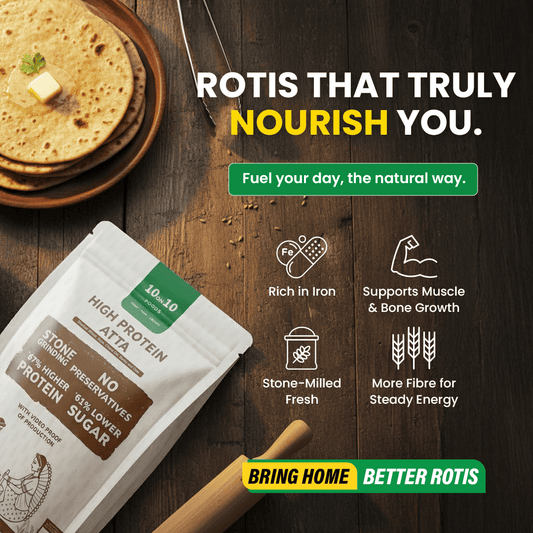
At 10on10 Foods, we make sure to maintain most of the grain's natural fiber by using stone-grinding that keeps the bran and germ intact.
Here is a simple guide to discover the top 10 high fiber foods in India and everything you need to know about a fiber-rich diet.
High fibre attas, stone-ground fresh
500 g · high in beta-glucan fibre, contains glutenAdd to cart
1 kg · 14.54 g fibre and 14.51 g protein per 100 gAdd to cart
1 kg · eight grains, still rolls a soft rotiAdd to cart
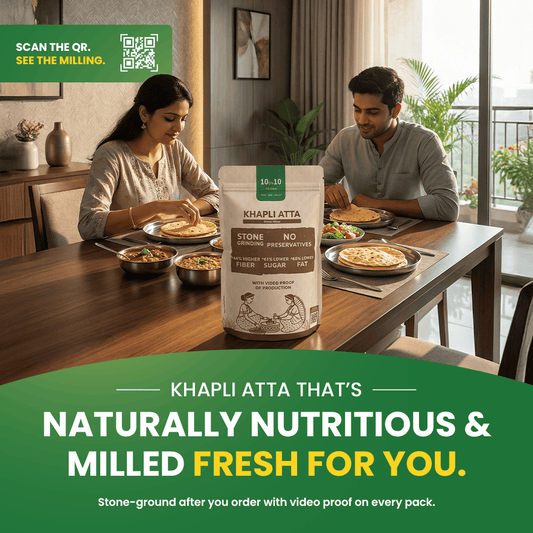
Stone-ground only after you order · QR video of your batch on every pack
What Is Dietary Fiber and Why Does It Matter?
Well, fiber is that part of the plant that your body cannot fully digest. The dietary fibers you consume move through your digestive system almost intact, helping you with digestion and good bowel movements.
Fibers come in two types:
- Soluble fiber mixes with water to produce a gel-like substance. It helps with slow digestion, keeps you full longer, and supports healthy blood sugar and cholesterol levels.
- Insoluble fiber doesn't dissolve like soluble fiber. It helps add bulk to stool and helps food move through the gut more easily, which is why it's especially useful for helping with constipation.
A good diet needs both types of fiber. Luckily, most whole foods already contain a mix of the two, and these are very easy to include in your Indian diet.
Top 10 High Fiber Foods in India You Should Eat Daily
India already has a rich tradition of whole grains, lentils, seasonal vegetables, and fruits. Here is the fiber rich foods list you can add to your plate to complete your fiber intake:
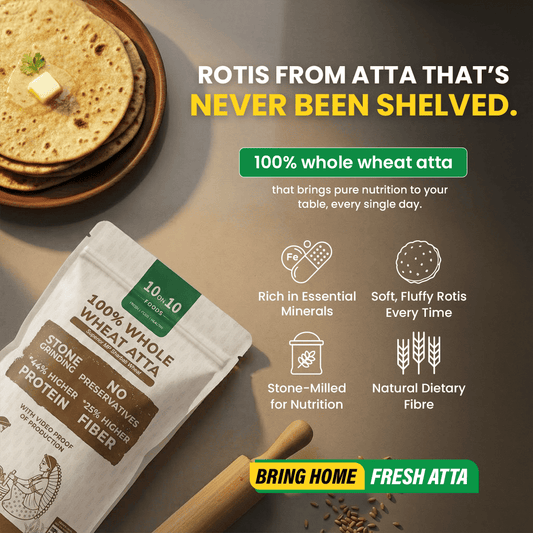
- Whole Wheat Atta: Freshly stone-ground atta retains far more fiber than flour that's been processed for months. You can opt for our 100% Whole Wheat Atta, which is milled fresh after you order.
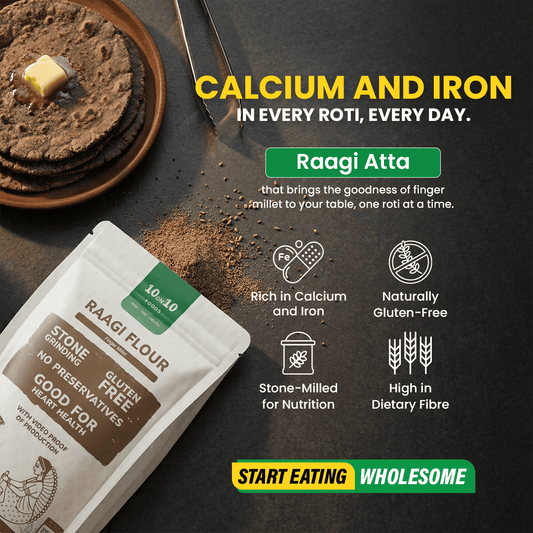
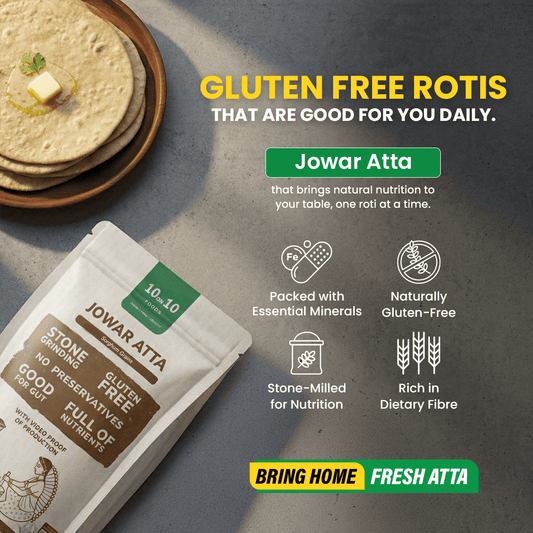
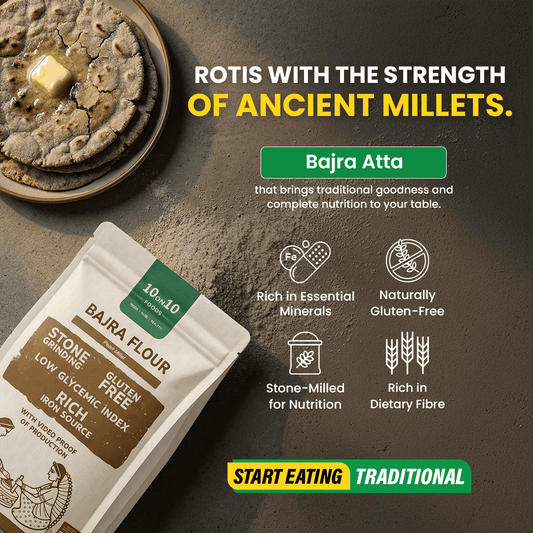
- Millets: Jowar, Bajra, and Ragi are among some of the most fiber-dense grains available in India. Swap a few weekly rotis with our Jowar Atta, Bajra Atta, or Ragi Atta for an easy fiber upgrade.
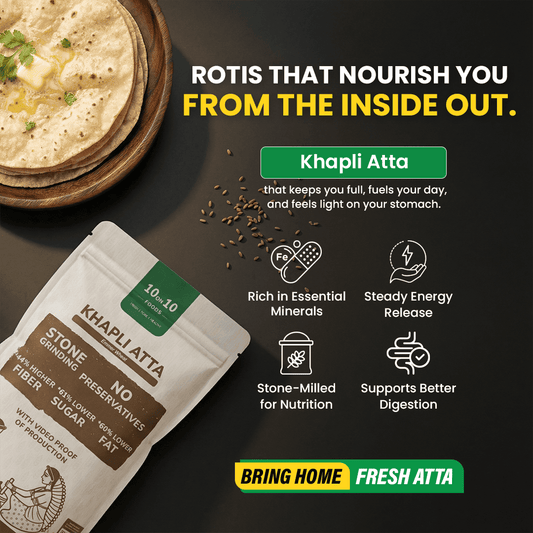
- Khapli Atta (Emmer Wheat): Khapli is an ancient wheat variety famous in Maharashtra and Karnataka. It is naturally higher in fiber and easier to digest than regular wheat. Learn more about the benefits of Khapli Atta.
- Barley (Jau): Barley is rich in beta-glucan, a soluble fibre linked to healthier cholesterol. Try our barley atta (jau atta) blended into your regular atta; read more about jau atta benefits.
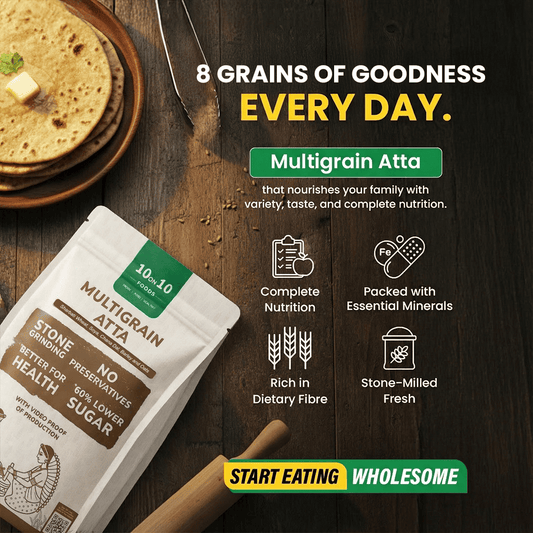
- Multigrain Atta: Combining many grain options into one flour increases fiber and nutrients. Try our 8-grain multigrain atta for a full daily dose of fiber.
- Legumes and Dals: Rajma, chana, and moong dal contain around 15g of fiber per cooked cup. Switch to our stone-ground Besan for legume fiber in chillas or curries.
- Guava: When eaten with skin and seeds, guava offers more fiber than most fruits sold locally.
- Green Leafy Vegetables: Spinach, methi, and amaranth are low-calorie and high-fiber — great for weight management.
- Sweet Potato: A fiber-rich alternative to a regular potato. Eating it unpeeled makes a great change to your fiber intake.
- Chia, Flax Seeds and Sprouts: One tablespoon of seeds adds around 4–5g of fiber; try them in curd, smoothies, or oats. Sprouted moong, a whole apple, or broccoli round out your day with both soluble and insoluble fiber.
The truth is, a big change won't happen overnight. But even swapping two or three options from this list into your routine is enough to start your healthy eating journey.

Fiber Chart and Its Benefits
Here's a quick look at how much fiber some everyday foods pack, and which goal each supports best:
| Food | Fiber (per 100g) | Best for |
|---|---|---|
| Khapli Atta | 12-14.5g | Gut health and daily fiber |
| Barley Flour | ~15-17g | Cholesterol and fullness |
| Ragi | 11.5g | Constipation and calcium |
| Whole Wheat Atta | 11-12g | Daily fiber intake |
| Rajma (cooked) | 6.5g | Constipation and gut health |
| Besan | 10.8g | Weight loss, protein, and fiber |
| Guava | 5.4g | Constipation and weight loss |
| Chia Seeds | 34g | Gut health and soluble fiber |
| Sweet Potato | 3g | Weight loss and digestion |
For Constipation
Prefer increasing insoluble fiber. It provides bulk to the stool and helps speed up digestion. Try ragi, guava, and rajma. Don't forget to drink enough water daily, as fiber alone cannot do the job without hydration.
For Weight Loss
High-fiber food takes time to digest and keeps you fuller for longer. Focus on whole grains, legumes, and leafy vegetables in your daily diet.
For Gut Health
Soluble fibers support good gut bacteria that boost immunity and digestion. Pair high fiber foods with curd or other fermented foods.
🍞 PRO TIP: Always pair high-fiber food with a good amount of water. Intaking fiber without hydration can worsen constipation instead of relieving it.
How Much Fiber Per Day Do You Actually Need?
Most fully grown adults should consume 25-38 grams of fiber every day. Women should have around 25g, while men need closer to 30-38 grams per day.
Yet most Indians take in only 10-15 grams of fiber per day — roughly half of the required amount. This is mainly because whole, natural foods are gradually being replaced by refined, processed alternatives in everyday meals.
And this gap is the exact reason why people often feel constipated and have sluggish digestion. Many don't even realise that low fiber is mostly the root cause of their problems.
How Can High-Fiber Options from 10on10 Foods Help You?
Sometimes it's hard to calculate how many grams of fiber you're taking every time you eat a meal. Our range of high-fiber options makes it easier to cook foods high in fiber from staple ingredients you're already familiar with.
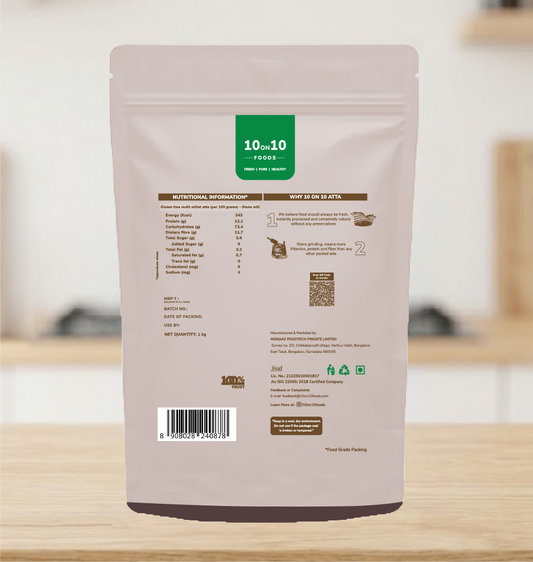
Let's take a look at the nutrition label of 10on10 Foods' stone-ground and fiber rich products:
| 10on10 Product | Dietary Fiber (per 100g) |
|---|---|
| Khapli Atta (Emmer Wheat) | 14.54g |
| Multigrain Atta (blend of 8 grains) | 13.05g |
| 100% Whole Wheat Atta | 12.94g |
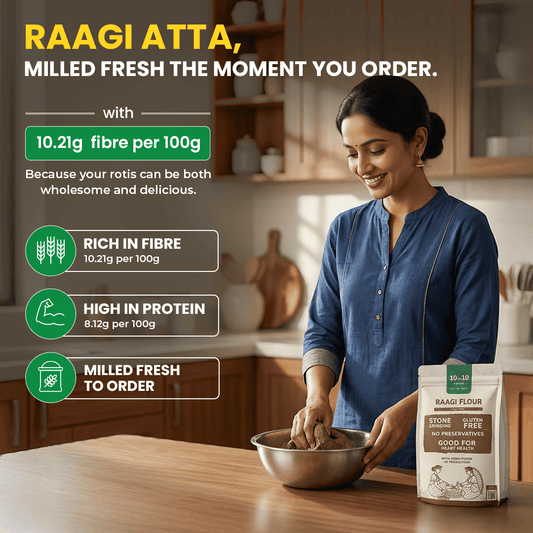
| Ragi Atta | 10.21g |
| Besan (Gram Flour) | 10.02g |
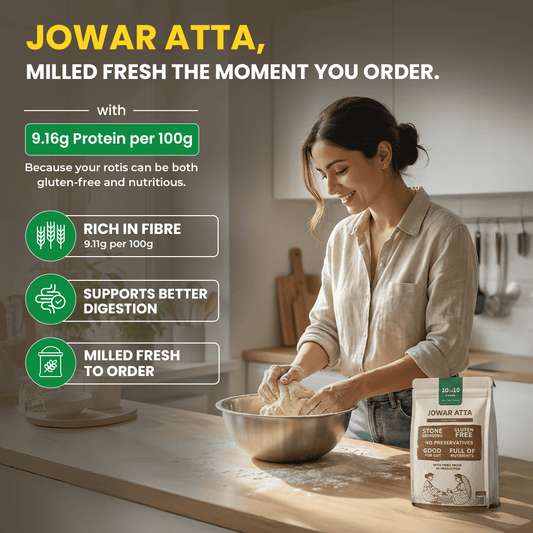
| Jowar Atta | 7g |
Each order is milled only after it is placed by a customer. That's why the fiber content in our products is closer to the grain's natural value. If you're targeting 25-28 grams every day, swapping even one weekly meal to khapli or multigrain atta is an easy way to start.
Final Thoughts
You don't need to follow any diet trends from social media to fix your low fiber intake. Start with staples already available in everyone's pantry.
You can make the smart choice by switching to 10on10 Foods for restocking your everyday grains and legumes. The stone-ground atta, millets, khapli, multigrain, and besan are milled fresh right after you order, so you get real, intact fiber from food you're eating anyway.
It's okay to start your health journey with baby steps. One fiber-rich swap a day is enough to make a real difference to your gut and weight over time.
FAQs
Q1: Does freshly milled atta really have more fiber?
A: Yes, whole wheat atta milled freshly keeps its bran and fiber, while many shelf flours have some bran removed.
Q2: Is fiber from food better than supplements?
A: Whole foods deliver fiber with water, vitamins, and minerals, making them more effective than supplements.
Q3: How much fiber per day is healthy?
A: Women need around 25g, men around 30-38g daily. Most Indians currently eat only half that.