Ragi Atta Benefits: Nachni, Finger Millet Flour Explained (2026)
MOORAV FOODTECH PRIVATE LIMITED AdminShare
In Karnataka kitchens, ragi isn't a trend — it's tradition. A bowl of warm ragi malt before school, soft ragi mudde with saaru, a crisp ragi roti at dinner. Long before "superfood" was a word anyone used, ragi was just what grandmothers cooked with, every single day.
If you've landed here searching for nachni atta, finger millet flour, or mandua atta — you're in the right place. They're all the same grain, known by different names across India.
What Is Ragi? (And Why So Many Names?)
Ragi (Eleusine coracana), known in English as finger millet, goes by several regional names depending on where you're from:
- Nachni — Maharashtra
- Kezhvaragu — Tamil Nadu
- Mandua / Madua — Uttarakhand, parts of North India
- Ragi — Karnataka and most commonly used pan-India
Whatever you call it, it's one of the oldest cultivated millets in India, naturally gluten-free, and known for one standout trait: it has more calcium than almost any other grain.
Common Uses of Ragi Flour
- Ragi Roti / Rotti: A Karnataka staple, slightly earthy and filling
- Ragi Mudde: Steamed ragi balls, traditionally eaten with saaru (rasam)
- Ragi Malt / Porridge: A classic first food for babies and a popular breakfast for adults
- Ragi Dosa: A gluten-free, nutrient-dense twist on the everyday dosa
- Ragi Cookies & Baked Goods: A calcium-rich swap in kids' snacks
Health Benefits of Ragi Atta
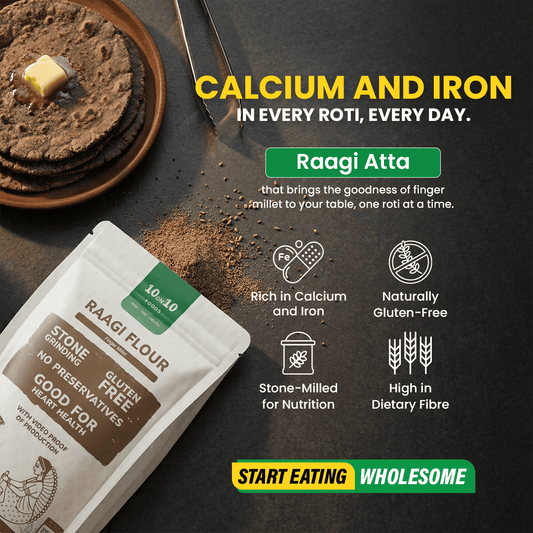
1. Exceptionally High in Calcium: Ragi contains roughly 344mg of calcium per 100g — among the highest of any grain. That matters most at two life stages people rarely connect to flour: growing children and teenagers building bone density, and active or gym-going women, whose calcium needs are often overlooked next to their protein goals.
2. Naturally Gluten-Free: Safe for people with gluten intolerance or celiac disease.
3. Rich in Fibre: Supports digestion and helps you feel full for longer.
4. Low Glycemic Index: Releases energy slowly, helping avoid blood sugar spikes.
5. Iron and Amino Acids: Contains the amino acid methionine, which is rare in plant-based diets, along with a meaningful iron content that supports haemoglobin levels.
6. Supports Bone Health Across Life Stages: The calcium-plus-protein combination is why ragi malt is a traditional first food for babies in South India, why it's worth a second look for teenagers in their peak bone-building years, and why it belongs in an active woman's kitchen just as much as any supplement aisle.
This is really the point of an atta brand talking about health at all: most of what fills Indian kitchen shelves is engineered for shelf life, not for the body that eats it. A grain like ragi doesn't need reformulating — it needs to be understood, and used.
Nutritional Value of Ragi (Per 100g)
| Nutrient | Amount | Health Impact |
| Calories | ~336 kcal | Sustained energy release |
| Protein | ~7.3g | Supports growth and repair |
| Fibre | ~3.6g | Aids digestion and satiety |
| Calcium | ~344mg | One of the highest of any grain — supports bones and teeth |
| Iron | ~3.9mg | Supports healthy haemoglobin levels |
| Glycemic Index | ~54–61 (low–moderate) | Slower glucose release than wheat (~69) or refined flour (~80+) |
Is Ragi Good for Babies, Diabetics and Weight Loss?
For babies: ragi malt is one of the most traditional first foods introduced in South Indian households, largely because of its calcium and iron content alongside its easy digestibility. As always, introduce any new food to an infant's diet under paediatric guidance.
For diabetics: ragi's low-to-moderate glycemic index (~54–61) means a slower, steadier glucose release compared to wheat or refined flour — supportive of a diabetic-friendly diet, though it isn't a substitute for medical advice. Check with your doctor or Dr. Anju on how it fits your specific plan.
For weight management: ragi's fibre content promotes fullness, helping reduce overeating, while its slow-digesting carbohydrates support steady energy through the day.
Is Ragi Safe During Pregnancy and Breastfeeding?
Ragi is widely considered a beneficial addition during pregnancy, and it's a common recommendation across Indian households and dietitians alike. Its calcium and iron support the mother's bone health and help guard against pregnancy-related anaemia, while its fibre content eases the constipation that's common in later trimesters. Traditionally, ragi is also used postpartum to support breastfeeding, largely due to its calcium and iron content.
As with any dietary change during pregnancy, introduce it gradually and discuss it with your gynaecologist or a qualified nutritionist — particularly if you have thyroid concerns, since ragi contains compounds that in large quantities may interact with thyroid function.
Ragi vs Jowar vs Bajra — How Does It Compare?
All three are gluten-free millets, but they serve slightly different purposes: jowar is lighter and more neutral in flavour, bajra is warming and traditionally favoured in winter, and ragi stands apart for its calcium content — making it the one to reach for specifically for bone health. For a full comparison, see our millet-for-your-body-type guide.
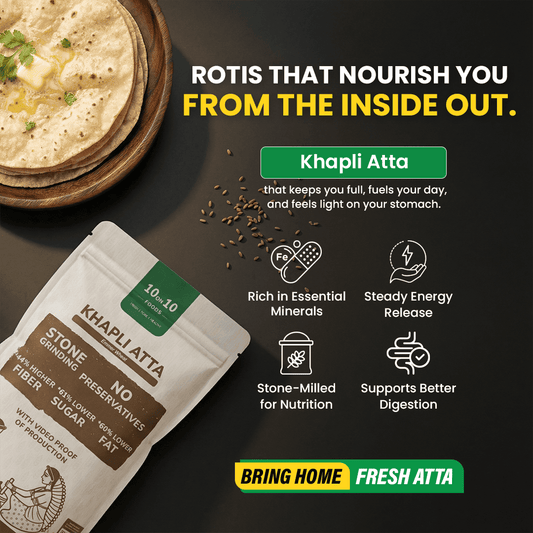
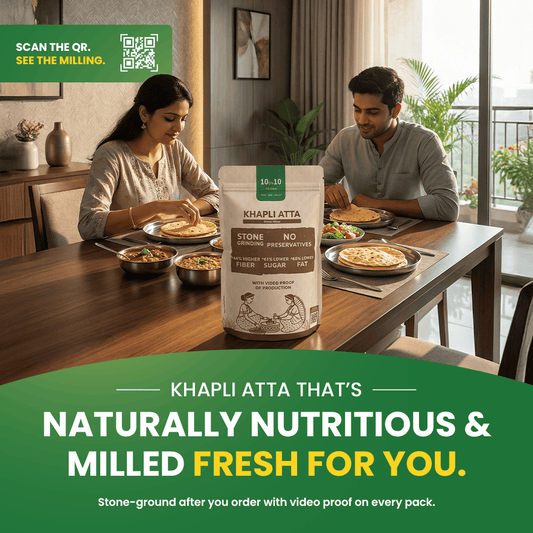
Why Choose 10on10 Foods' Ragi Atta
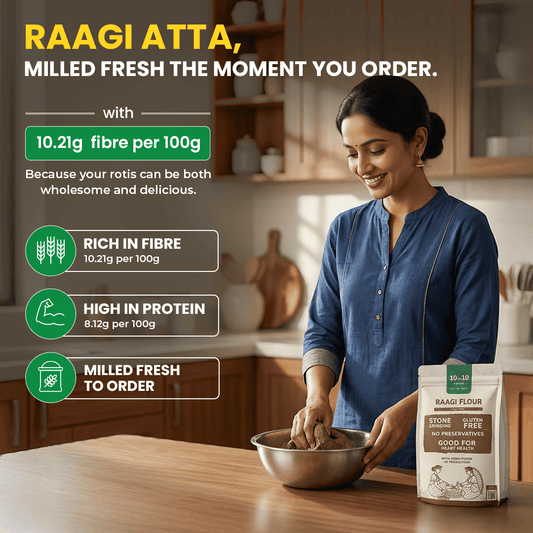
- Stone-ground and milled only after you place your order
- No chemicals, no preservatives, no artificial whiteners
- Video proof with timestamp for every batch
- Delivered within hours, not days or weeks
- Eco-friendly, refillable packaging
Try our stone-ground Ragi Atta (Finger Millet Flour)
FAQs About Ragi Atta
Q1. Is ragi and nachni the same?
A1. Yes. Ragi, nachni, kezhvaragu, and mandua are all regional names for the same grain — finger millet (Eleusine coracana).
Q2. What is ragi called in English?
A2. Ragi is called finger millet in English.
Q3. Is ragi good for babies?
A3. Ragi malt is a traditional South Indian first food for infants, valued for its calcium and iron content and easy digestibility — always introduce new foods under paediatric guidance.
Q4. Is ragi good for weight loss?
A4. Its high fibre content promotes fullness and helps manage overall calorie intake as part of a balanced diet.
Q5. Can diabetics eat ragi?
A5. Ragi has a low-to-moderate glycemic index, which supports steadier blood sugar levels — check with your doctor for how it fits your specific diet plan.
Q6. How is ragi different from jowar and bajra?
A6. All three are gluten-free millets. Ragi stands out specifically for its very high calcium content compared to jowar and bajra.
Q7. Is ragi safe during pregnancy?
A7. Yes, ragi is commonly recommended during pregnancy for its calcium, iron and fibre content, and is traditionally used postpartum to support breastfeeding. As always, check with your gynaecologist before making significant dietary changes.
Q8. Is ragi good for teenagers or gym-going women specifically?
A8. Yes — its calcium content supports bone density during teenage growth years and is a useful, food-based addition for active women, whose calcium intake is often overlooked next to protein tracking.