
Why Freshly Milled Atta is Nothing Like What You Buy in a Store?
MOORAV FOODTECH PRIVATE LIMITED AdminShare
There's an old saying in Indian kitchens: "Roti bani toh zindagi bani". This means if the roti is right, life is right. And it's been generations since Indian kitchens were blessed with soft, fluffy rotis.
Have you ever wondered why the rotis at your nani’s or dadi’s home tasted better than what you eat today? It isn’t love or technique, basically it’s stone ground atta. Today, millions of families pick up a brilliantly packaged bag of “whole wheat flour” from a supermarket shelf, roll it into rotis, and believe they are eating healthy. But that’s not true.
Most of the time, what’s inside the packet is far less nourishing than the label suggests. This blog post emphasises the importance of freshly-milled atta, the science, and talks about nutrition.
What Exactly Is Freshly Milled Atta and What Goes Inside The Store-Bought Packet?
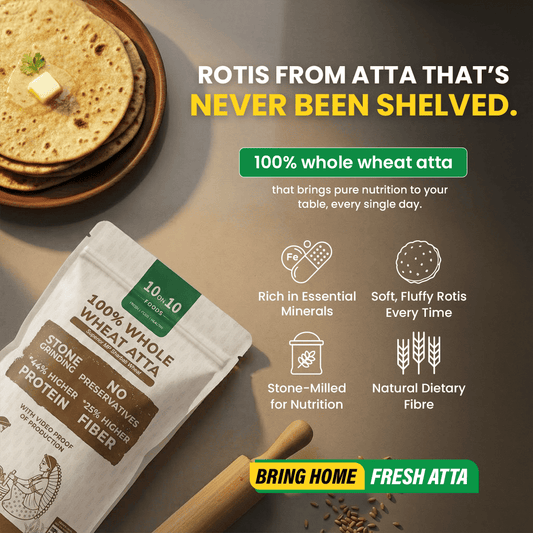
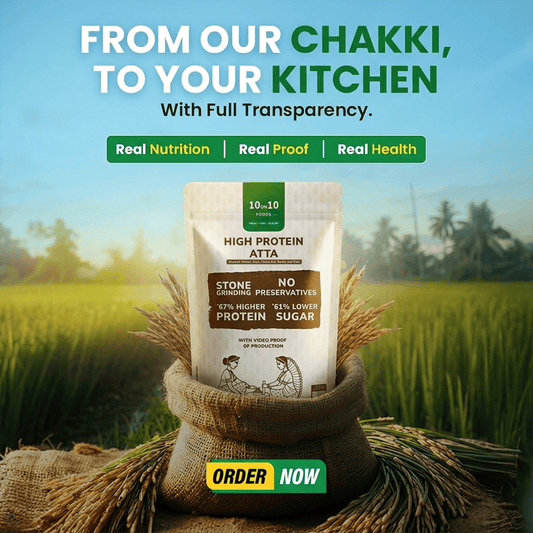
Freshly milled flour is a stone ground atta (milled on a chakki), where the entire kernel is used, including the bran (outer layer), the germ (nutrient powerhouse), and the endosperm (starchy core). With this technique, nothing is stripped away, and nothing is added artificially. Natural oils remain intact, and vitamins haven't had months to fade away.
On the other hand, commercial flours or store-bought atta packs undergo roller milling. It is a high-speed industrial process that separates the bran and germ from the endosperm, then blends the portion back in. Now this process produces high heat, damages sensitive nutrients, and leaves the flour to oxidise before it reaches your kitchen.
This means that more than two-thirds of the calcium, magnesium, phosphorus, and potassium will start to fade. Plus, to make their flour look fresher and last longer on shelves, atta brands add bleaching agents, preservatives, and artificial whiteners.
So, the answer to the question, “Does stone-ground flour retain more nutrients than roller-milled?” is Yes.
Research Finds 👉: Vitamins like E and the B-complex begin to degrade within just days of milling.
Real Life Example: The Selection of Whole Wheat Atta
Let us illustrate the basic difference between two families where rotis are their daily staple.
- Family A: This family bought a popular brand atta from their neighbourhood kirana or supermarket. In appearance, that pack looked wholesome, and the label says exactly what they have been aiming to get, i.e., “Whole Wheat”. In reality, that flour was milled weeks ago, stored in a temperature-variable warehouse, and chemically treated to extend shelf life.
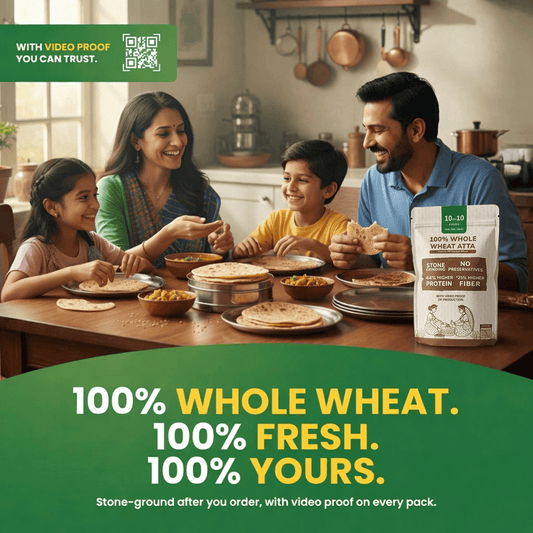
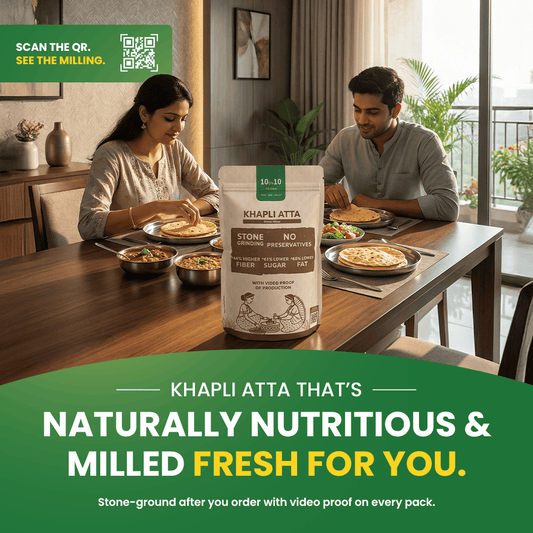
- Family B: This family ordered unprocessed wheat flour that is freshly stone-ground on order. Now, here is where all the difference lies. Since this flour has no chemicals, no additives, and the wheat germ is still intact, family B notices softer rotis, better digestion, and more long-lasting energy after meals.
That’s where science comes in and makes the difference.
Health Benefits of Chakki Fresh Atta
Stone ground atta is often known for its minimal processing and nutrient retention, but it also delivers the following health benefits:
- High in Carbohydrates: Chakki fresh atta provides enough carbohydrates alongside dietary fibre. As a result, it causes slow glucose absorption while providing steady and lasting energy rather than a prompt spike-and-crash cycle.
- Good for Heart Health: The soluble fibre in whole wheat lowers LDL (bad) cholesterol and supports healthy blood pressure. Magnesium, potassium, and phosphorus retained in natural flour support cardiovascular function.
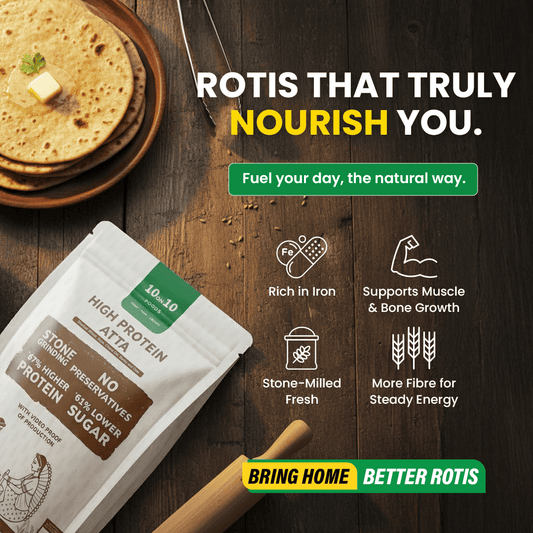
- Rich in Nutrients: A single wheat grain atta contains B vitamins (including B1, B2, B3, B5, B6), Vitamin E, iron, zinc, copper, and manganese, which are concentrated in the bran and germ. The stone grounding technique secures this complete nutrition profile and doesn’t expose it to oxidative stress.
- Helps in Digestion: Whole wheat bran's insoluble fibre gives stool more volume, eases its passage through the intestine, and promotes regular, healthy bowel movements. At the same time, soluble fibre feeds good bacteria in the gut. It is a prebiotic effect that packed flour without bran can't match. Also, freshly milled atta also has natural enzymes that help the digestive process.
- Minimises Risk of Health Issues: In some research, it is found that phytochemicals like lignans, flavonoids, and carotenoids in whole wheat have anticancer properties. Plus, regular consumption of whole wheat reduces the risk of type 2 diabetes and lowers the risk of metabolic syndrome.
- Antioxidants: Wheat germ and bran are the richest sources of Vitamin E (tocopherols), which are the body’s primary fat-soluble antioxidants. Carotenoids and phenolic compounds found in fresh atta also help to combat free radicals and lessen oxidative stress, which is linked to ageing, inflammation, and chronic disease.
Who Should Make the Switch?
Improving the atta quality can transform the daily nutrition, you get what you deserve or what you pay for. Now the biggest question of all time remains, “Who should specifically switch to chakki or organic atta and stop getting packed flour immediately.
- Health-Conscious Families: Families who cook rotis daily and want their most-eaten food to be nutritious.
- Individual Having Blood Sugar: The fibre content and slow-digestive carbohydrates in freshly milled unprocessed wheat flour prevent an individual from sharp blood glucose spikes.
- Those With Digestive Concerns: The intact bran and natural enzymes in chakki fresh atta support gut health that is rare with packed flour.
- Parents Feeding Young Children: There are families where the foundation of a child's daily meal is atta. And, that must carry every nutrient the wheat grain was grown to provide. Therefore, they can get natural flour to fulfill it.
- Someone Who Values Knowing Exactly What They Eat: Chemical-free atta that is stone-ground fresh, with no additives, no bleach, no preservatives, is food you can trust completely.
Conclusion
There is a big difference in nutrition between freshly milled atta and what's in a store-bought packet. Whereas, switching to chakki fresh atta is the best choice one can make, as far as health is concerned.
You can use shortcuts everywhere and enjoy convenience, but choosing fresh atta is like aiming for sustained health, better taste, and better living. So, before convenience gets in the way, we suggest you explore 10on10 Foods to find freshly stone-ground, made-to-order flours and feel the difference.
FAQs
Q1: How much time does freshly ground atta last?
A: Since it is prepared fresh, it may last for at least 2–3 weeks at room temperature, and up to 2 months, only when stored in an airtight container and in the refrigerator.
Q2: Does unprocessed wheat flour make softer rotis?
A: Undoubtedly yes, the natural oils and enzymes in homemade atta improve the elasticity of the dough and retain moisture. This ultimately makes the dough pliable and the rotis softer.
Q3: What does “Chemical-free atta” mean exactly?
A: These are processed without bleaching agents, artificial whiteners, synthetic preservatives, or any additives. It is simply a wheat that is clean, dried, and stone-ground.
Q4: Can I grind multiple grains?
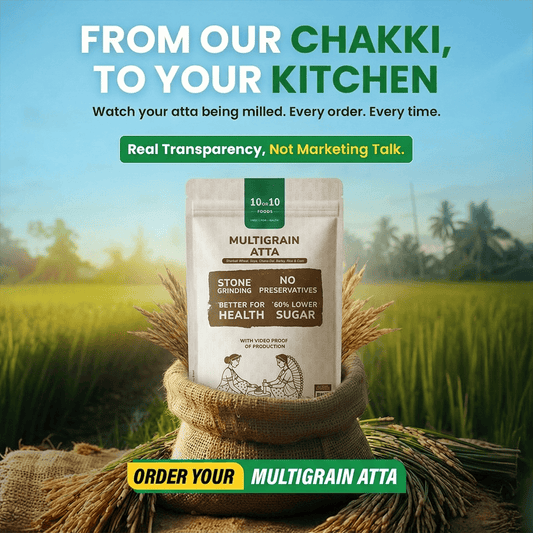
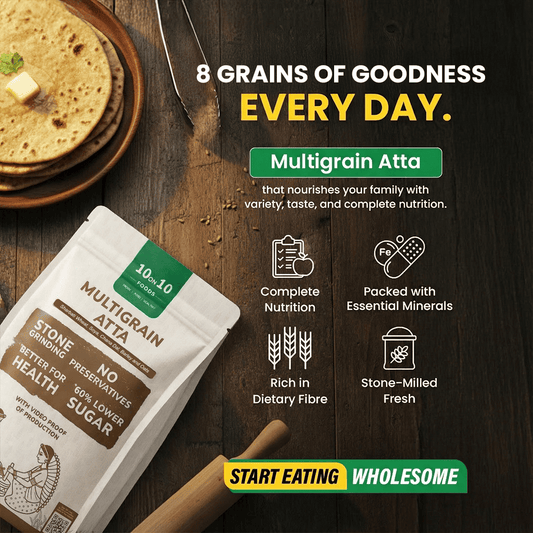
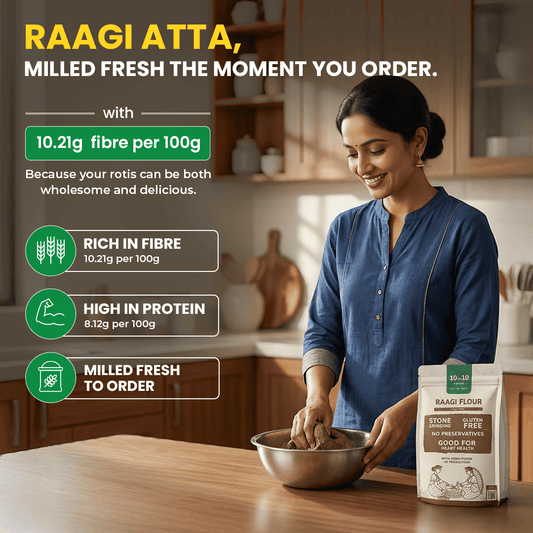
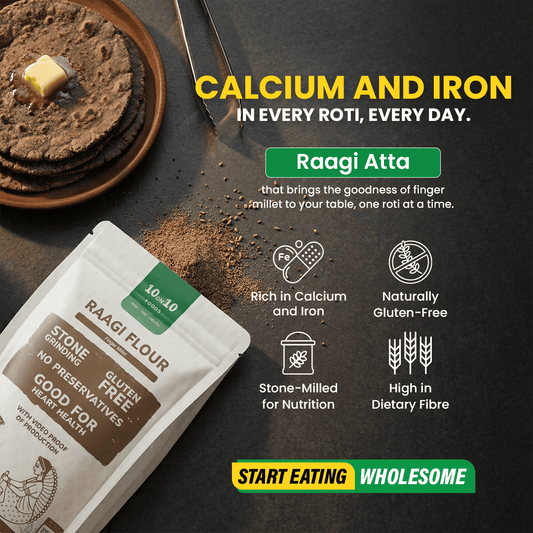
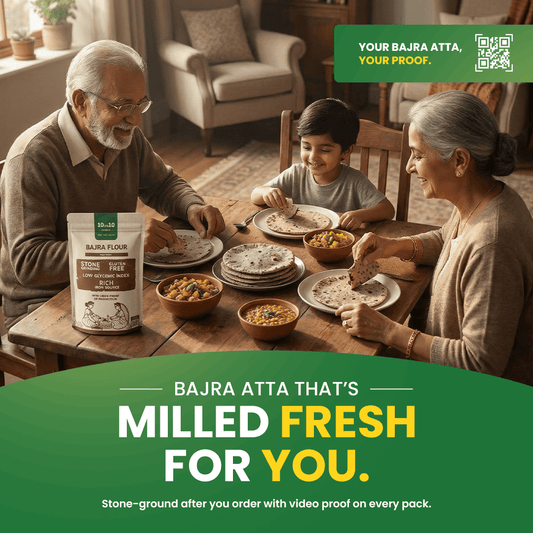
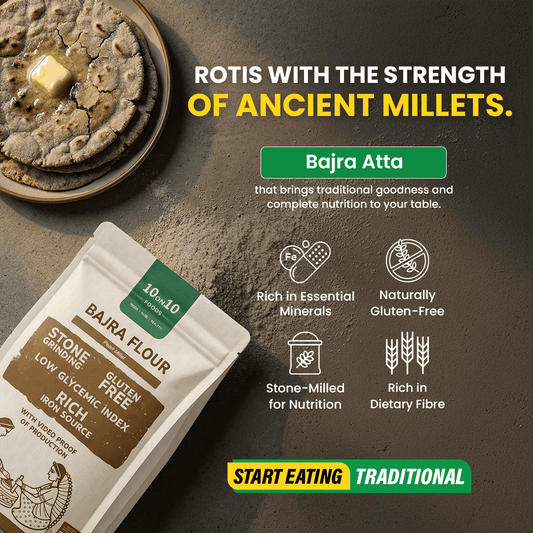
A: Absolutely, if you consider stone-ground flour, then you can switch between ragi, bajra, jowar, barley, wheat, khapli, and custom mixes.
Q5: Does 10on10 Foods use preservatives in atta?
A: No, our flour is 100% natural and chemical-free. The best part is, they are freshly made on order.