

10on10 Foods
Ragi Atta, Stone-Ground Finger Millet Flour, Fresh
Ragi Atta, Stone-Ground Finger Millet Flour, Fresh
Couldn't load pickup availability
 Order On WhatsApp
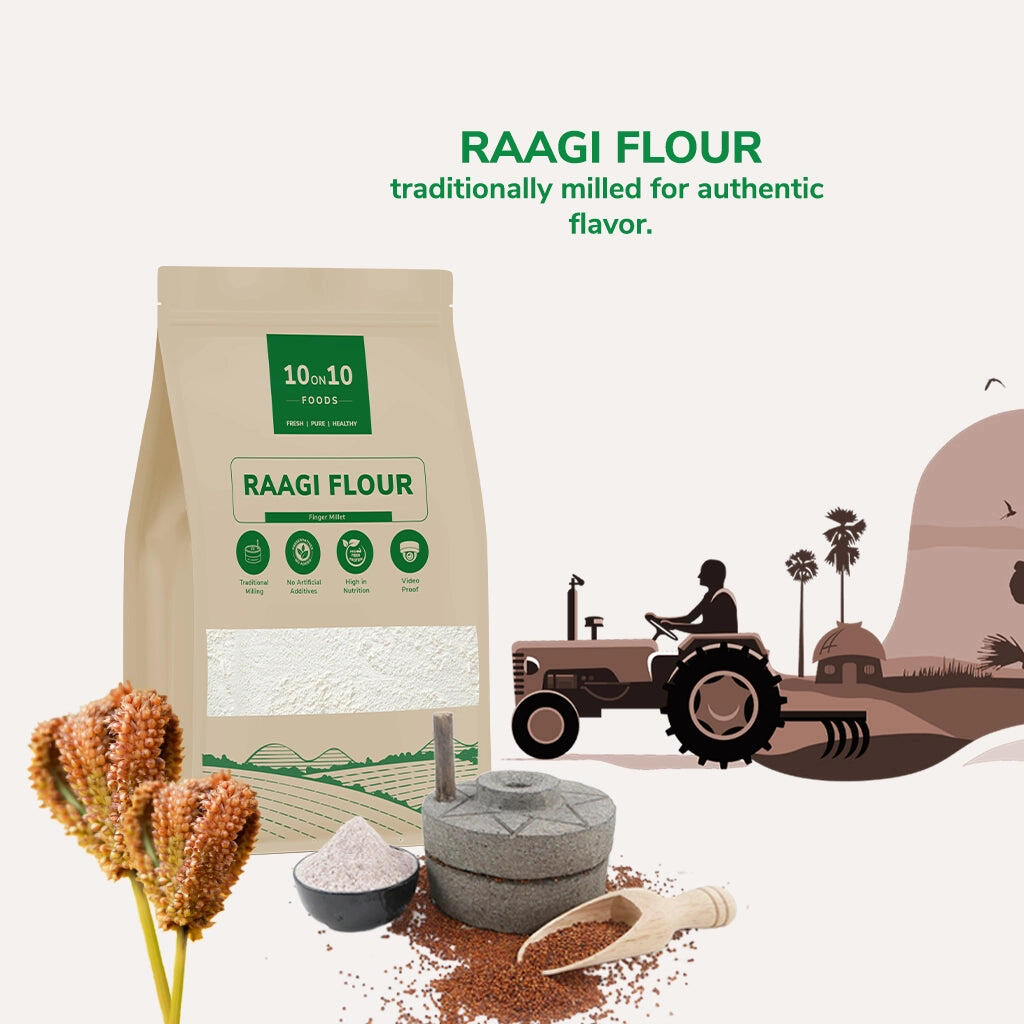
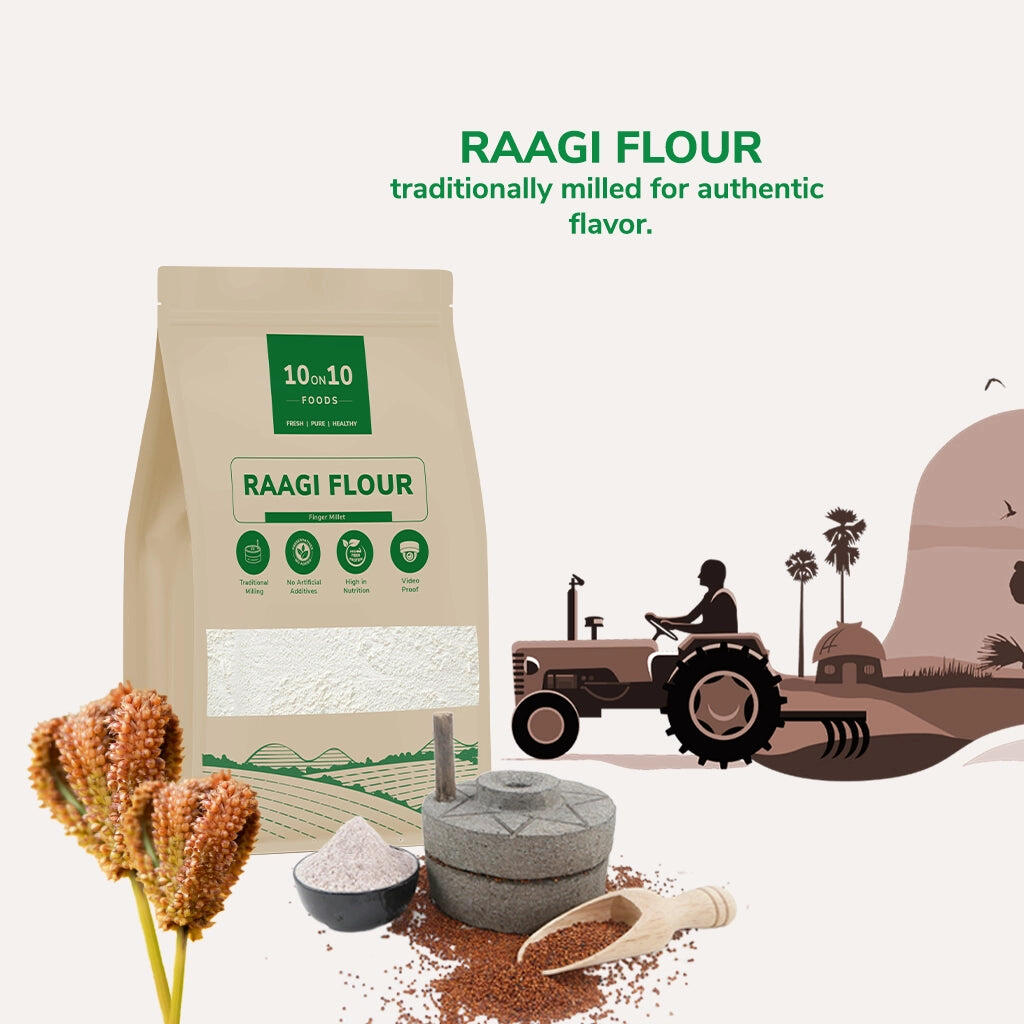
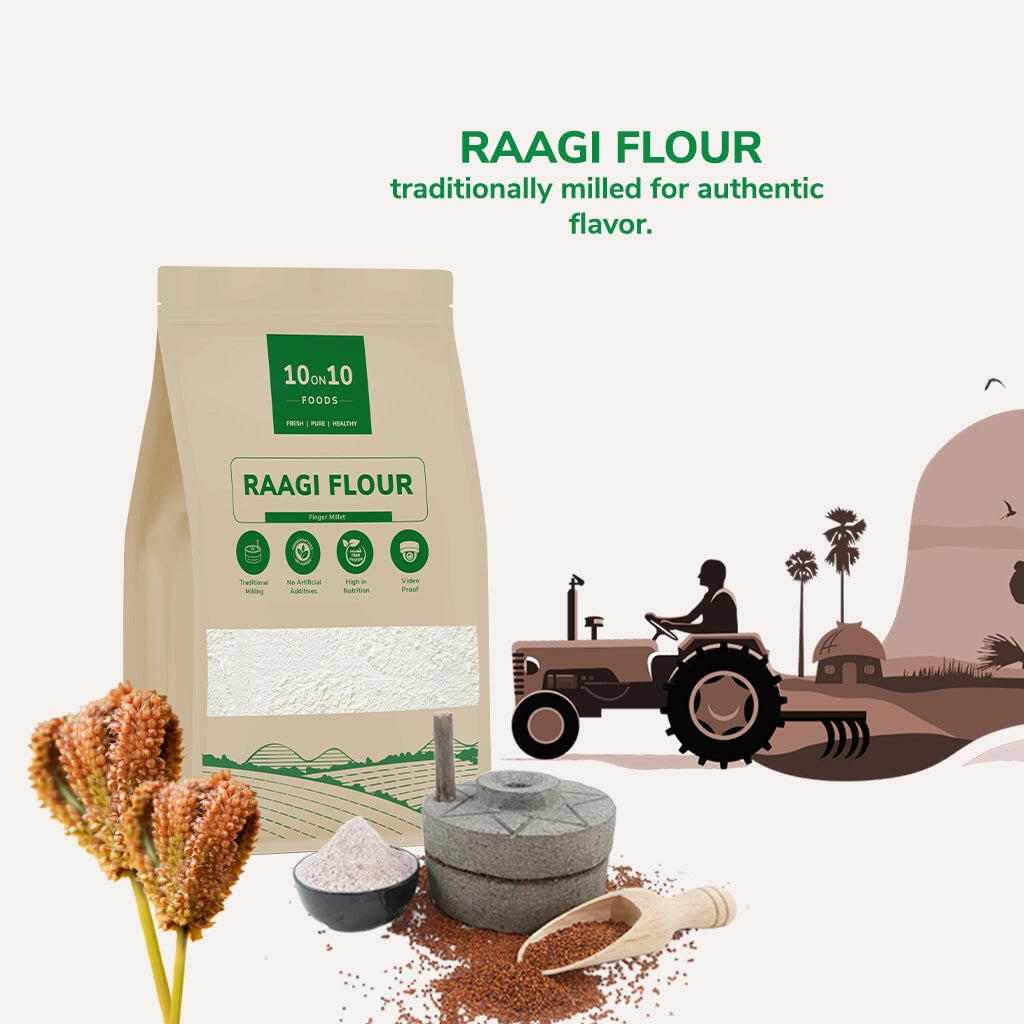
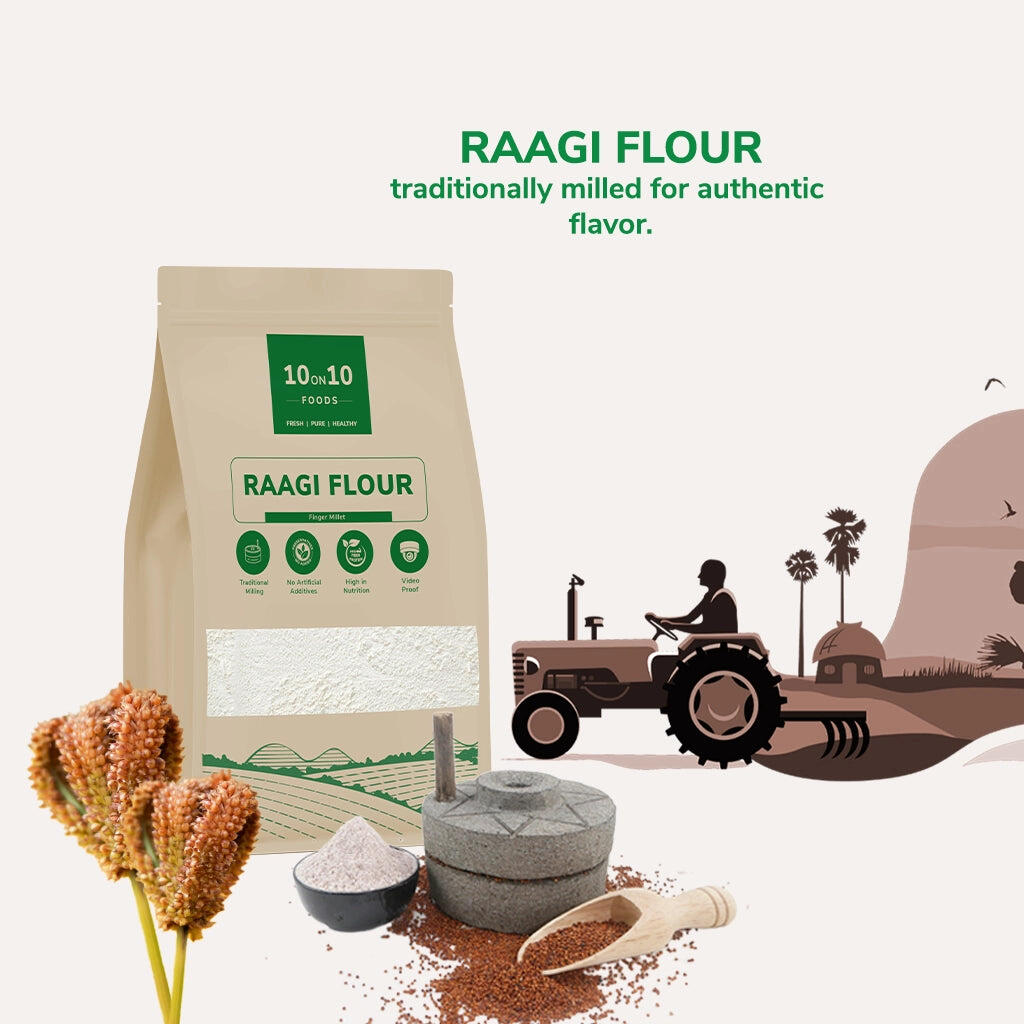
In Karnataka kitchens, ragi is not a trend, it is tradition. Ragi mudde, ragi roti, a warm bowl of ragi malt before school. Somewhere along the way it got rebranded as a superfood and priced accordingly. We just mill it on stone, after you order, and let it go back to being what it always was.
Milled fresh after you order
Ragi is a tiny grain with a lot of bran, and it is the bran that goes off first.
- Whole ragi is cleaned and stone-milled on a traditional chakki, bran and all
- The stones run slow and cool, so the grain is not scorched the way high-speed roller milling can be
- Nothing is added afterwards. No binder, no preservative, no anti-caking powder
- Milled against your order, because ragi flour turns faintly bitter once it has sat too long
Watch your own batch. Every pack carries a QR code. Scan it and you will see the video of the batch that became your atta.
Nutrition per 100g
- Whole finger millet with the bran intact, which is where ragi's minerals sit
- Ragi is one of the richest plant sources of calcium among Indian cereals
- A source of dietary fibre and plant protein
- Full analysis is published here: our lab reports
On gluten: ragi is a naturally gluten-free grain. It is milled in a facility that also handles wheat, so if you are avoiding gluten strictly or for coeliac disease, please take that into account.
What makes ragi different
- The calcium. This is the reason ragi has been given to children and to new mothers across south India for generations, long before anyone called it a superfood
- It is eaten differently. Ragi is as much a mudde and a malt as it is a roti, which is why it fits into more meals than most millets
- The colour and taste are strong. Deep reddish-brown, earthy, slightly nutty. It does not hide in a blend, and it is not meant to
- It is filling out of proportion to its size, which is why a ragi mudde carries a working day
Who it is for
- Families in Karnataka, Tamil Nadu and Andhra where ragi is already part of the week
- Parents making ragi malt or porridge for young children
- Anyone adding plant calcium through food rather than a tablet
- Households avoiding gluten who want a millet with real character
How to use it
- Ragi mudde, the classic, with saaru or a country-style curry
- Ragi roti, patted out by hand with onion and green chilli worked into the dough
- Ragi malt or ambli, warm or chilled, a summer staple
- Ragi dosa and idli batters
- Ragi porridge for babies and toddlers, sprouted or plain
- Blended into wheat atta, a quarter ragi, if you are easing the family in
The soft-roti tip. Ragi has no gluten, so hot water is what holds the dough together. Use water just off the boil, knead while warm, and pat the roti out by hand on a damp cloth or directly on the tawa rather than rolling it. Cold water is why ragi rotis crack.
Pack sizes and which to pick
- 500g, ₹56.19. Start here, especially if you are making malt or porridge rather than daily rotis
- 1kg, ₹113.33. For households where ragi is a weekly fixture
Storage and shelf life
- Ragi flour has a lot of bran, and bran carries oil, so it needs airtight storage
- Move it into an airtight steel or glass container as soon as it arrives
- Keep it cool and dry, away from the stove and out of direct sunlight
- In humid weather, refrigerate what you will not use in the next few weeks
- Go by the milling date printed on your pack
Shipping and delivery
- Free shipping above ₹299
- Milled after your order is placed, so dispatch takes a little longer than a warehouse product
- Delivered across India, sealed, with the QR code on every pack
Why buy from 10on10 Foods
- FSSAI licensed and ISO 22000:2018 certified
- Lab-tested, with the reports published: see them here
- Guided by our nutritionist Dr. Anju
- Whole ragi with the bran left in, nothing added and nothing sieved out
- Milled fresh after you order, with QR video proof of your own batch
Frequently asked questions about Ragi Atta
What is ragi called in English?
Ragi is finger millet. It is nachni in Marathi and Gujarati, kezhvaragu in Tamil and taidalu in Telugu.
Is ragi atta gluten free?
Ragi is a naturally gluten-free grain. Ours is milled in a facility that also handles wheat, so we would not call the finished flour suitable for coeliac disease. For everyday gluten avoidance it works well.
Why does my ragi roti crack?
Cold water. Ragi has no gluten, so hot water and warm kneading are what hold the dough together. Pat the roti out by hand rather than rolling it hard.
Can I give ragi to my baby?
Ragi porridge is a traditional first food across south India. Introduce it the way you would any new grain, and check with your paediatrician about timing for your child.
Is ragi good for calcium?
Ragi is one of the richest plant sources of calcium among Indian cereals, which is why it has been given to children and new mothers for generations. It is a good food source, not a substitute for medical advice on calcium needs.
Can I eat ragi every day?
Yes, millions of households in south India do. If you are managing a specific health condition, check with your doctor or dietitian before changing your daily staple.
How should I store ragi atta?
Airtight, cool and dry, and refrigerated in humid weather. Ragi's bran turns faintly bitter if it is left open.
Also available on Blinkit, Swiggy Instamart and FirstClub. Those packs are milled in advance and stocked ready to deliver. Milled-to-order packs, with QR video proof of your own batch, ship only from here.
Learn more and recipes


Create Your Own Customized Order