
Which Flour Is Best for Kids' Nutrition? Besan vs Wheat Flour Compared
MOORAV FOODTECH PRIVATE LIMITED AdminIn a report published by the National Institute of Health, it was found that over 90% of school-aged children consume packaged foods. And the rise of ultra-processed junk food has made parents forget what actually nourishes kids.
Set aside all the juggles; your child's body needs proper nutrition during crucial growth years, i.e., ages 2-10. Nutritional deficiencies during childhood affect 43% of Indian children. As a result, it ends up impacting their cognitive development, immunity, and growth.
One simple way to improve your child's diet starts with something already present in every Indian kitchen, i.e., "a flour". Be it rotis, parathas, cheelas, dosas, pancakes, or homemade snacks, the choice of the right atta improves your child's daily nutrient intake.
Now the real confusion starts with wondering about besan vs wheat flour. Let's understand which flour deserves a place on your family's dining table.
The Challenge Parents Face Today
Modern parenting is under siege from junk food marketing. Junk food like pizza, noodles, burgers, French fries, chips, etc., is made to taste amazing while providing zero nutrition. A child's brain, when under developing age, becomes dependent on these hyperpalatable options.
Wait… see the stats, as they are quite shocking:
- 45% of children's calories come from ultra-processed foods, as per a report published by the WHO in 2023.
- In the last 20 years, sugar consumption among kids has increased by 300%.
- Childhood obesity doubled from 1990 to 2020 globally.
- Malnutrition coexists with obesity: Kids can be both overweight AND malnourished.
- School-age children consume 5x more sodium than the recommended daily limit.
In turn, parents end up wondering why their kids reject home-cooked meals. Why do they demand sugary cereals? Why have they developed picky eating habits?
The simple answer is that junk food satisfies your kid's taste buds, which is why they keep on demanding it. The surprising part is that flour is no exception. Most flours available today are heavily refined and processed, which strips away nutrients.
Nutrients improve satiety, and without them, kids eat more. They develop blood sugar imbalances, their energy crashes, and behavioral problems follow.

Understanding Flour Types: Beyond Simple Wheat
Being a parent, you'll be responsible for your child's growth and eating habits. So, choosing the right flour for your child isn't just about taste or tradition; it should be about the nutrients the flour provides.
Let's explore the nutritional value, benefits, and best uses of the most popular flours for children.
Wheat Flour
Traditional Healthy Roti Flour has been a staple for generations. The major reason behind it is that it is affordable and familiar to most families. But modern wheat cultivation has changed it completely.
Today's wheat flour is mostly refined, where the outer bran and nutritious germ are removed. They have a high glycemic index, induce calories without satiety, and lack micronutrients.
Let us give you a nutritional reality check: "One cup of refined wheat flour is equal to 455 calories, 1.5g fiber, and little to no vitamins or minerals". With this much nutrition, your kid may face an energy crash mid-morning, hunger 2 hours after breakfast, and difficulty concentrating in school.
Besan (Chickpea Flour): Is It Better Than Wheat?
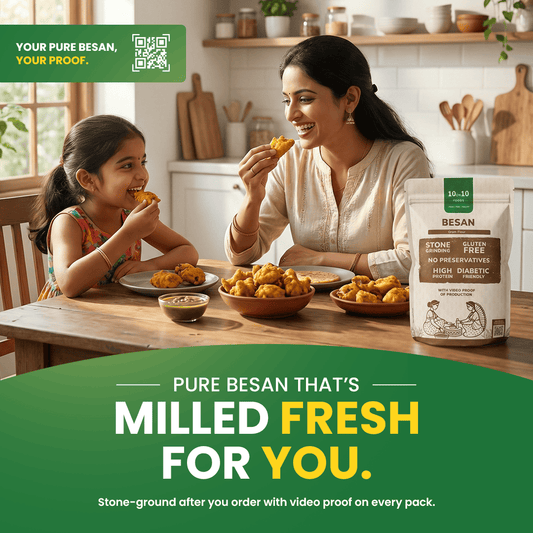
Besan is widely considered the protein powerhouse for the human body. And when comparing besan vs wheat flour, besan is naturally richer in protein and has important micronutrients. For example, one cup of besan provides approximately 25g of protein, compared to 13g in whole wheat flour.
Other advantages of besan include:
- High in fiber to support digestion.
- Lower glycemic index, which keeps the blood sugar steadier.
- Rich in folate, iron, and magnesium.
- Works well for younger kids, especially those aged between 2 and 6.
Besan vs Wheat Flour: When to Use Each
- Besan can be used by parents to make pancakes, cheelas, khandvis, kadi pakode, desserts, and snacks. Kids from 6 to 18 months old mostly like these recipes.
- Pick wheat flour for everyday staples like rotis, parathas, and bread.
Ragi or Nachni Atta
Ragi and nachni are exactly the same. Both are regional Indian names for finger millet. While the term ragi is used in South India, Nachni is commonly used in Maharashtra, Gujarat, and parts of North India.
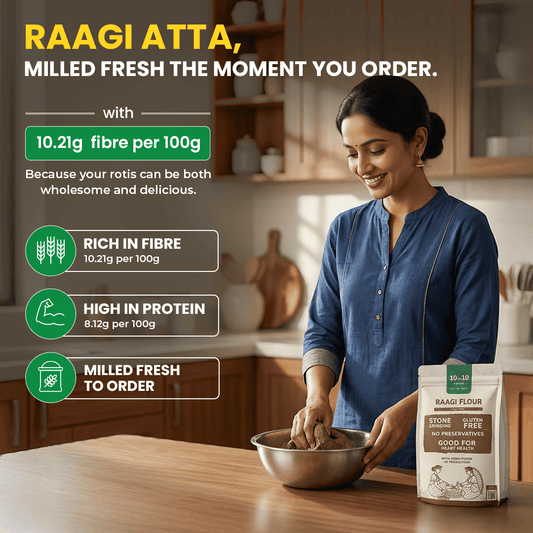
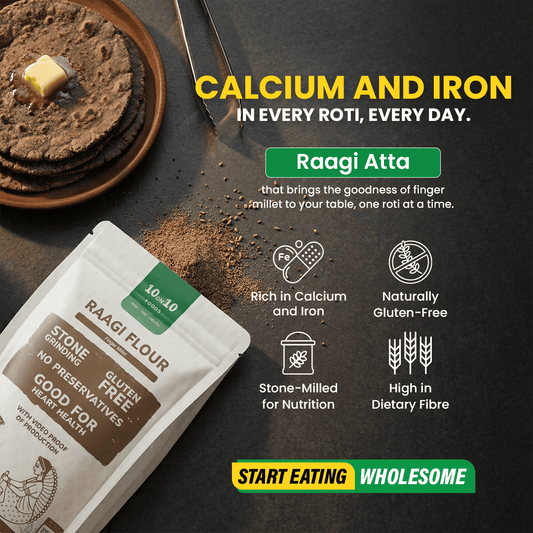
Although ragi atta benefits and nachni atta benefits are remarkable but are less discussed, nutritionists consider ragi one of the most nutrient-dense grains for children because it is naturally rich in calcium, iron, dietary fiber, and essential amino acids that support healthy growth and development.
Uses of Ragi or Nachni Atta
Ragi atta is quite versatile, and there are several uses of ragi atta. Parents can ask their elders, and they will surely tell you some amazing recipes that can dominate junks.
A few popular ways to use ragi atta include:
- Nutritious ragi porridge for babies during the weaning stage (make sure to do that after pediatric guidance).
- Soft rotis or parathas mixed with wheat or multigrain flour.
- Ragi dosas and idlis.
- Ragi cheelas.
- Homemade pancakes and waffles.
- Healthy cookies, muffins, and laddoos.
- Thickening soups or porridges for extra nutrition.
Let us take a moment to highlight a few ragi atta side effects so that parents can include it wisely in their child's diet:
- Digestive discomfort.
- Less protein than legumes.
- Oxalate content.
- Taste acceptance.
Multigrain Atta
As the name suggests, Healthy Flour For Growing Children is a mix of multiple grains like wheat, barley, oats, millets, maize, etc. And when grains are combined, protein quality improves naturally.
Moreover, it broadens the nutrient spectrum since each grain adds different nutrients. Other multigrain atta benefits are that kids feel fuller longer, improve digestion, and, most importantly, it has a similar taste, which ensures an easy transition.
🤔 Did You Know? A study available online mentioned that children who eat a variety of whole grains have higher intakes of fiber, iron, magnesium, and B vitamins than those who rely on a single grain source. That is why multigrain atta is highly recommended.
Comparing the Options: Which Is Best for Your Child?
So, which flour should parents choose? There isn't a one-size-fits-all answer because every flour has its own nutritional strengths. Let's compare them side by side:
| Flour Type | Best Age | Key Benefit | Drawback |
|---|---|---|---|
| Wheat (refined) | 1+ years | Familiar and affordable | Low nutrition |
| Besan | 1+ years | High protein | Can feel heavy |
| Ragi/Nachni | 8+ months | Calcium, iron, and brain development | Less familiar taste |
| Multigrain | 1+ years | Complete nutrition, optimal blend | Slightly higher cost |
The comparison suggests that if you're looking for an everyday option that supports your child's overall growth, the multigrain flour is the flour to use every day. Multigrain atta benefits include the goodness of whole grains, millets, and pulses in a single meal. On top of that, it provides kids a mix of protein, fiber, vitamins, and minerals.
Meanwhile, variety is equally important. Instead of relying on just one type of flour, rotate different options throughout the week so your child starts to develop diverse food preferences.
Recommendation by Age
- 6-12 Months: Start with ragi porridge and gradually introduce multigrain in the form of paratha or cheela.
- 1-3 Years: Multigrain, along with besan, is good for toddlers.
- 3-8 Years: Introduce balanced multigrain initially, and then occasionally switch to wheat for variety.
- 8+ Years: They've already grown up, so parents can continue multigrain, add whole wheat, and introduce legume flours.
Why Is 10on10 Foods Perfect for Your Child's Nutrition?
Most commercial flour packages fail due to the lack of availability of additives or preservatives. For example, it may contain potassium iodate, maida, added salt, pesticide residues (sometimes), or processing chemicals.
As an impact on children's bodies, these can disrupt gut bacteria, accumulate chemical toxins, cause digestive issues, and behavioral changes.
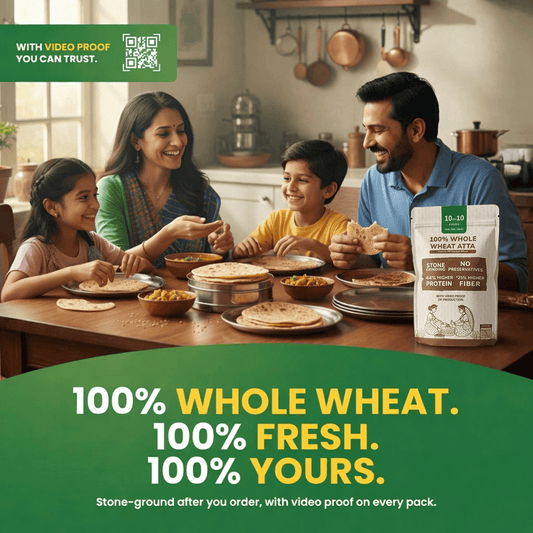
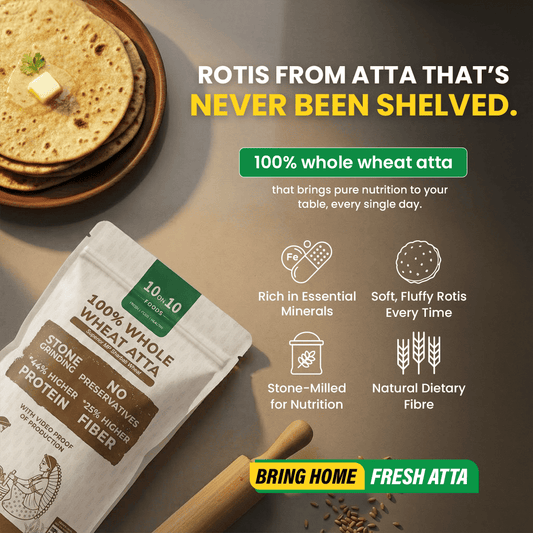
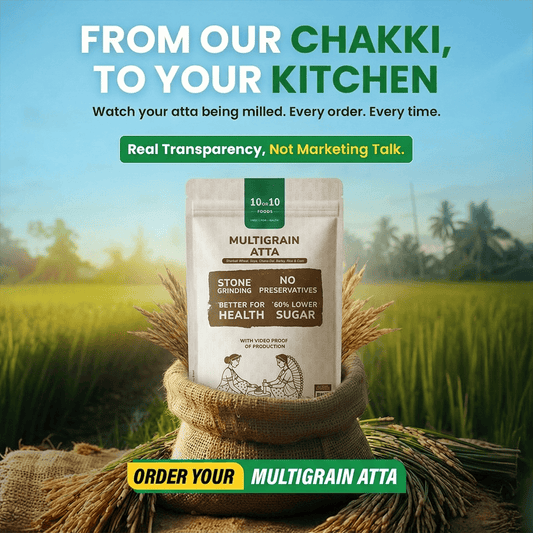
On the other hand, 10on10 Foods is committed to adding zero preservatives and zero additives. Be it a besan, ragi flour, multigrain atta, or wheat flour, each of them is cold-pressed and stone-ground.
We produce flours in smaller quantities so you can get fresh flour every time you order. So, when a child consumes 10on10 Food's flour with no additives, they benefit from:
- Improved Digestion: No processed ingredients upset stomachs.
- Increased Nutrient Absorption: It cleans out the body system so that it can process food in a better way.
- Stabilized Energy Levels: No energy crashes from processed ingredients.
- Fewer Behavioral Issues: No chemical triggers.
- Optimized Growth: The body uses energy for development, not for processing toxins.
The parents mentioned the following statements:
"After consuming 10on10's multigrain atta for 2 continuous months, my 4-year-old's energy levels are consistent throughout the day. He doesn't feel hungry often".
"My daughter's occasional stomach issues have completely resolved. We realized it was the additives in regular flour".
"The taste difference is noticeable. My kids actually prefer rotis made from 10on10 flour now".
How to Implement 10on10 Foods' Range of Flour in Your Child's Everyday Diet?
Switching to healthier flour doesn't have to happen overnight. Introducing them gradually lets children adapt to different tastes and textures. Here is a phased approach for parents to observe how their child responds to each flour and build long-lasting, healthy eating habits:
Phase 1: Transition (Weeks 1-2)
- Mix new flour with familiar wheat and maintain a ratio of 25% new and 75% wheat.
- Check your child and observe if they have any digestive changes.
- Let kids adjust to new tastes gradually.
Phase 2: Gradual Introduction of Different Flours (Weeks 3-4)
- Increase the ratio of new flour by 50% and reduce the percentage of wheat to 50%.
- Make a habit of feeding them rotis, pancakes, and porridge in their daily meals.
- At last, monitor their digestion patterns and energy levels.
Phase 3: Full Transition (Week 5+)
- In the 5th week, start using 75-100% multigrain or any other specialized flour.
- You can also mix different flours for variety.
- Observe improvements in energy, digestion, and concentration.
With these timelines, parents can expect improvements within 4-6 weeks in the form of better energy levels throughout the day, less bloating, good digestion, better concentration at school, reduced picky eating, and improvement in overall health markers.
Bottom Line
The best flour for your child isn't limited to just one grain. A balanced combination of wheat, besan, multigrain flour, and ragi provides a wide spectrum of nutrients. In case you want to stick to one flour, compare each on the basis of its benefits, scope of uses, your kid's dietary goals, and their likes.
The key here is choosing a flour that is minimally processed and one that includes high-quality ingredients because they nourish children naturally.
At 10on10 Foods, we believe every meal should contribute to your child's well-being. So, switch to 10on10 Foods today and give your little ones the wholesome nutrition they deserve.
FAQs
Q1: Which atta is best for kids?
A: Amongst the mentioned flours, ragi and multigrain atta are best for kids. Ragi is great for calcium, whereas multigrain ensures a balanced diet.
Q2: Which is better, besan or atta?
A: Both besan and atta serve different purposes. Besan is good for protein, blood sugar control, and gluten-free diets. And, atta provides energy and assures easy digestion. In case you don't have to choose just one, then mixing the two (e.g., 1 part besan to 2 parts atta) gives you the best of both worlds.
Q3: Is ragi hot or cold for the body?
A: Ragi has a natural cooling effect on the body. Many people consume it as a natural coolant in summer because it helps to regulate body temperature.
Q4: What grains are included in the multigrain atta of 10on10 Foods?
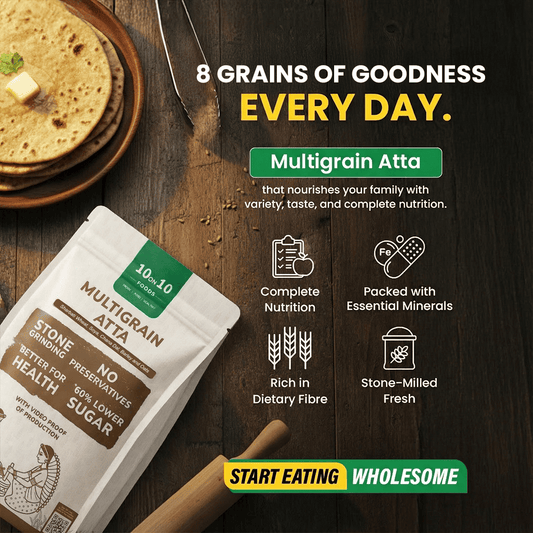
A: Wheat, soya, channa, barley, oats, maize, rice flour, and psyllium husk are included in our pack of multigrain atta.