Thyroid
Let us start with the uncomfortable bit. No flour treats a thyroid condition. Anyone telling you otherwise is selling something.
What food can do is stop working against your thyroid, and support the things around it: protein, minerals, steady energy, a stable weight. That is a smaller promise. It is also a true one, and it happens to point at some grains and away from others.
What actually matters here
- Iodine has to be adequate and consistent. India's iodised salt programme is why goitre is far rarer than it was. Switching to rock salt or Himalayan salt full time quietly removes your main iodine source.
- Millets contain goitrogens, and this is worth knowing honestly. Pearl millet, or bajra, is the most studied source of C glycosylflavones, compounds that inhibit thyroid peroxidase and interfere with iodine uptake. In Sudan, goitre was substantially more prevalent in villages where millet supplied about 74% of dietary energy than in an urban area where it supplied about 37%, despite similar iodine deficiency in both.
- Context is everything. That effect appears where millet dominates the diet and iodine is low. A bajra roti twice a week with iodised salt is not the same situation. But if you are hypothyroid, all millets at every meal is not the free health upgrade the internet suggests.
- Protein, selenium and zinc support thyroid hormone conversion and are commonly underconsumed.
Recommended for you
Six flours from our range, chosen for this concern and ranked by how much difference they make.

High fibre ancient wheat, no goitrogen question, and it helps with the weight and energy side of hypothyroidism.

Clean protein for a metabolism that is already running slow. Light and easy to digest.

Complete protein plus zinc and magnesium in one ingredient.

Protein and fibre, low GI, useful for the stubborn weight that comes with an underactive thyroid.

Freshly stone ground, nothing removed. An unremarkable, dependable staple, which is the point.

Selenium, magnesium and vitamin E. Best used in baking and blends.
A note on bajra and ragi. We are not telling you to avoid them. They are excellent grains and we sell both. But if you have a diagnosed thyroid condition, keep them occasional rather than daily and exclusive, cook them thoroughly, and make sure your salt is iodised. That is the honest version.
How to actually do this, this week
- Check your salt. If it says rock or pink, it probably is not iodised. Keep iodised salt as your everyday default.
- Rotate your grains rather than eating one exclusively. Variety is the actual protection.
- Take levothyroxine on an empty stomach, well away from high fibre meals and from calcium or iron, because both reduce its absorption. This matters more than your choice of flour.
- Recheck TSH after any big dietary change.
Where this comes from
- Gaitan E, et al. Antithyroid and goitrogenic effects of millet: role of C glycosylflavones. Journal of Clinical Endocrinology and Metabolism, 1989. Read the paper
- Antinutritional factors in pearl millet grains: phytate and goitrogen content variability. PLOS ONE, 2018. Read the paper
- Goitrogens in millets: occurrence, impact on product development and mitigation strategies. International Journal of Food Properties. Read the review
Nutrition information, not medical advice. Never adjust or stop thyroid medication based on a diet change. Talk to your endocrinologist.
-
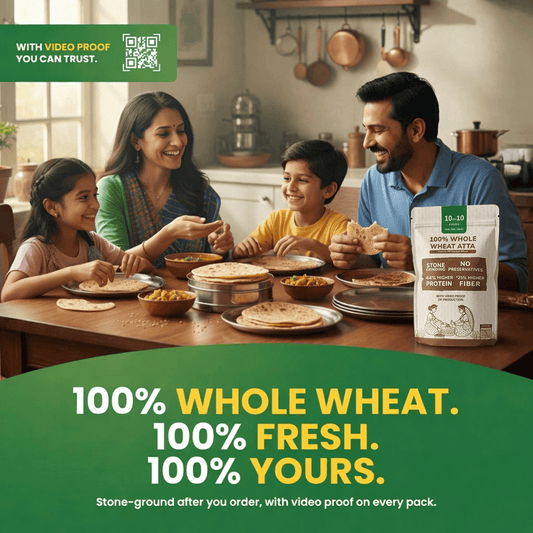
100% Whole Wheat Chakki Atta, Stone-Ground Fresh
Regular price From Rs. 85.00Regular priceUnit price per -
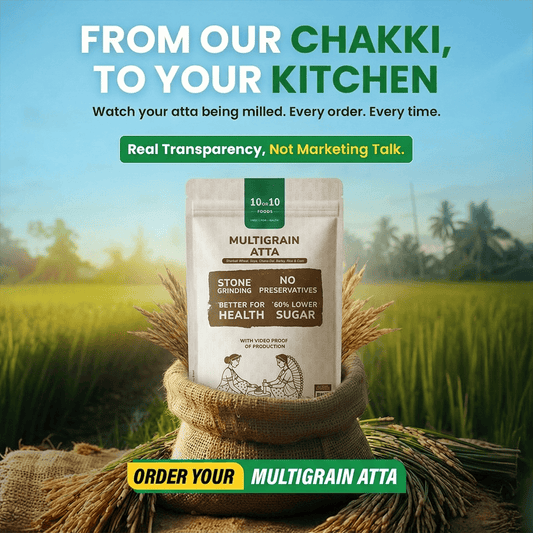
8-Grain Multigrain Atta, Stone-Ground, Milled Fresh
Regular price From Rs. 119.00Regular priceUnit price per -
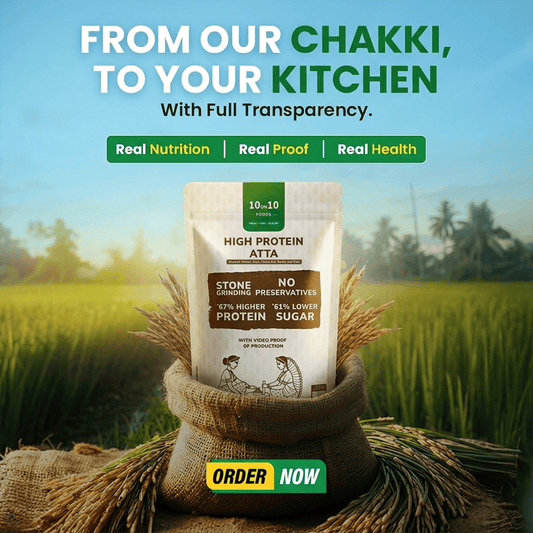
High Protein Atta, 25g Protein, Stone-Ground Fresh
Regular price From Rs. 149.00Regular priceUnit price per