
Is Ragi Roti Better Than Rice? A Complete Nutrition Comparison
MOORAV FOODTECH PRIVATE LIMITED AdminHave you been in the kitchen and wondered whether you should cook rice or roll out a ragi roti? Many mothers encounter the same scenario, especially when a member of their family is trying to control their blood sugar values or maintain ideal weight.
You’ve probably heard someone say, “Replace rice with ragi roti” when you started your fitness journey or are trying to eat healthier. But the question is: Is it really that simple? If so, a majority of people fall under the category of healthy individuals.
The truth is, both rice and ragi have their place in a healthy diet. However, depending on your health goals, one may be a better option than the other.
So let's settle the ragi vs rice debate properly, with real numbers, not just “our grandmother said so” logic.
What Is Ragi, Really?
Ragi, aka finger millet (Eleusine coracana), is one of India's oldest cultivated grains. In addition to being naturally high in nutrients and gluten-free, it is making a resurgence as young, health-conscious individuals rediscover the foods their grandparents regularly consumed.
It's not a trendy superfood invented by Instagram or any other social media platform. It's been a staple in South Indian homes for generations, and science is now backing up why.
|
Did You Know 🤔: According to the ICAR, millets like ragi are considered “nutri-cereals” because they provide significantly more micronutrients than many refined grains. |
Ragi vs Rice: Which One is Healthier?
Here's the side-by-side comparison that answers the question everyone's asking: Is ragi better than rice, or is that just marketing?
|
Nutrient (per 100g raw grain) |
Ragi |
White Rice |
|
Calories |
~336 kcal |
~345 kcal |
|
Calcium |
~344 mg |
~10 mg |
|
Dietary Fibre |
~11.5 g |
~0.6 g |
|
Protein |
~7.3 g |
~6.8 g |
|
Iron |
~3.9 mg |
~0.8 mg |
|
Glycemic Index |
~54–68 (moderate) |
~73 (high) |
 Source: Indian Food Composition Tables (ICMR-NIN), FAO Food Composition Database.
Note 📝: The values shown above are approximate and intended for general comparison only. The actual nutritional values may differ depending on the variety, source, processing method, and preparation.
A few things come out immediately when you look at ragi vs rice calories:
- The calorie difference is actually small because ragi isn’t magically “low calorie”.
- Ragi packs roughly ten times more calcium than rice and nearly six times more fibre.
- Ragi has a noticeably lower glycemic index.
- This is why nutritionists keep pointing families back toward ragi grain.
Nutritional Glimpse of Ragi Roti
In this section, we are about to discuss the nutrition packed in a roti made with ragi flour. So, one medium roti made from about 30g of ragi flour gives you roughly 90–120 calories, depending on how much oil or ghee goes into it.
However, the real answer to the question everyone searches for at 9 p.m. is that one ragi roti usually has about 100 calories, about the same amount of calories as a little less than a bowl of steamed white rice of the same size.
Other than that, typical ragi roti nutrition includes:
- Complex carbohydrates for sustained energy.
- Plant-based protein.
- High dietary fiber.
- Calcium for stronger bones.
- Iron for healthy blood.
- Magnesium and phosphorus.
- Polyphenol antioxidants.
Ragi Roti Benefits You Can Actually Feel
Let's move past the spreadsheet and talk about real ragi roti benefits:
- Bone Health for Growing Kids and Ageing Parents: Ragi is one of the few plant foods that actually helps you build strong bones with almost 3x the calcium as compared to full-fat milk per 100g. So it is more important for children during their growth years, and for parents with early bone density loss to control.
- Better Blood Sugar Control: Ragi has a gentler effect on blood glucose than rice because of its fibre and polyphenol content. And this is exactly why it is frequently recommended for people managing prediabetes or type 2 diabetes.
- Naturally Gluten-Free: Rotis made of ragi can be a genuine relief for anyone dealing with gluten sensitivity who does not want a rice-only diet. What makes ragi gluten-free? It is a true grass species (Eleusine coracana) that makes it gluten-free.
- Iron for Energy: Ragi's iron content supports haemoglobin levels, which is important, especially for women and anyone dealing with fatigue.
Here's an example of how this plays out in real life:
A 35-year-old office worker swapping their lunchtime rice bowl for two ragi rotis with dal and sabzi isn't indicating that he/she is “eating healthy” in the abstract. They're likely avoiding the post-lunch energy dip that sends people running towards the coffee machine or the biscuit soon.
Ragi vs Rice for Different Life Stages
If we talk about nutrition on a ground level, the nutrition needs aren't the same for a 6-year-old, a 30-year-old individual, and a 60-year-old grandparent. Given that, let’s look at ragi vs rice through each lens instead of treating it as one-size-fits-all advice.
- For Growing Children: Kids need calcium and iron, not more carbs. Adding a ragi roti to the lunchbox 2-3 times a week can help in their bone development. Nor does it lead to the sugar crash that can be brought on by heavy rice meals during afternoon school hours.
- For Fitness-Focused Adults: If you're training regularly, ragi's slow-release carbs make it a solid pre-workout option. At its core, it releases steady energy instead of a quick spike-and-drop. Fitness freaks are open to pairing ragi roti with a protein source like paneer, egg, or dal to round out a workout-day meal.
- For Older Adults: Age-related bone loss is a well-known fact, especially after the age of 35 to 40. This is when ragi's calcium content becomes especially helpful. In contrast, a lot of dietitians now suggest it as an easy, food-first way to help bone health, in addition to any calcium supplements that are already being given.
- For People Managing PCOS or Insulin Resistance: Roti made from ragi is a gentler solution to managing blood sugar and hormone imbalances due to their lower glycemic index in comparison to rice.
Common Mistakes People Make When Switching to Ragi Roti
Before you go all-in on ragi, we would like to give you a quick reality check because switching badly can make the results feel disappointing even when the food itself is doing its job:
- Drowning It In Ghee or Oil: Ragi roti is naturally nutrition-rich. Additionally, loading it with extra fat cancels out the calorie advantage you were counting on. Actually, a light brushing is enough.
- Switching Too Fast: Without giving much thought, jumping from zero fibre to a high-fibre diet overnight can cause you bloating or discomfort in your stomach. What you can do is start with 2–3 rotis a week and build up gradually. Give your body a space to adjust to it.
- Skipping Protein on the Side: Although ragi is a good source of protein, it isn’t a complete protein. To get extra protein, you can pair ragi roti with dal, curd, paneer, or eggs. For example, a traditional ragi mudde with sambar (that you think looks disgusting) makes the meal genuinely balanced, instead of sounding healthy.
- Expecting Overnight Results: Like any dietary change, the benefits of swapping rice for ragi show up over weeks, not days. For this change, consistency matters more than intensity here.
So, Is Ragi Better Than Rice Or Is It Just Different?
If you talk realistically, rice isn’t that bad. What makes it unhealthy is how you prepare it. We shouldn’t forget the fact that it has been an energy-giving staple that has fed generations.
But if you're comparing the two head-to-head. Ragi roti health benefits like bone strength, blood sugar stability, and sustained fullness come out ahead in almost every category except sheer versatility and ease of cooking.
Let’s not do “rice vs ragi”; instead, get to a middle ground by making a balance of both. Most nutritionists suggest making ragi roti a regular fixture (3–4 times a week) rather than a total rice replacement. This especially shouldn’t be the case for growing children, people managing weight, and anyone with a family history of diabetes or osteoporosis.
How Can 10on10 Foods Help?
Making healthier food choices gets much easier when nutritious ingredients are also convenient and enjoyable to eat.
At 10on10 Foods, our range of millet-based products is prepared to suit modern lifestyles. Whether you're a busy professional, a parent preparing wholesome meals, or someone working toward fitness goals, no one can go empty-handed.
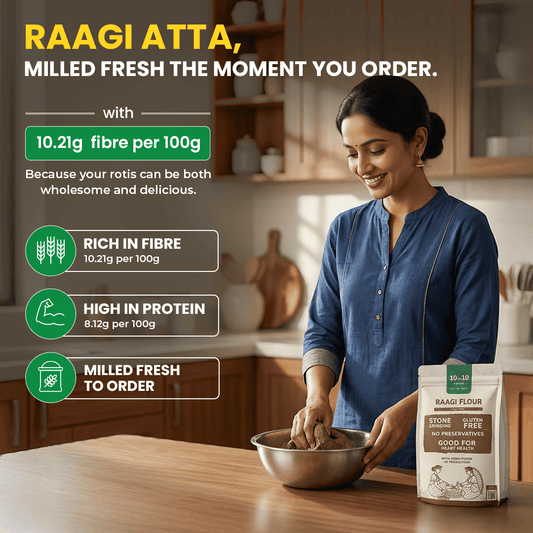
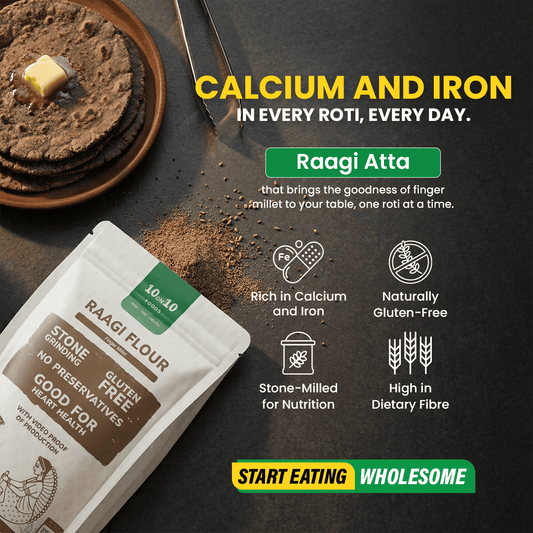
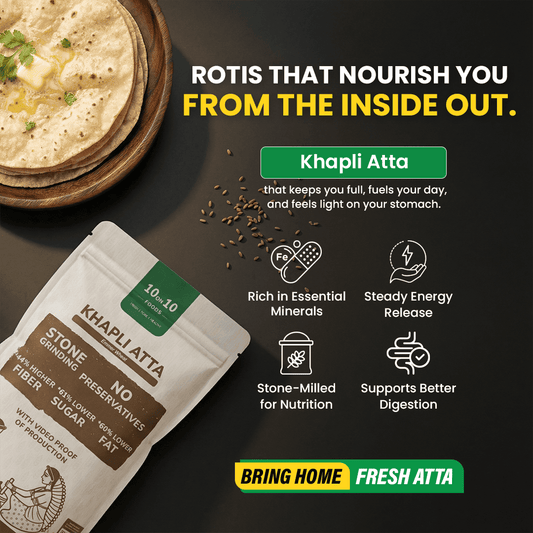
With our quality ragi products included in your daily routine, you can have the benefits of eating ragi roti without compromising on taste or the nutrition needed.
Rather than following extreme diets, small, sustainable changes like replacing refined grains with wholesome millet-based alternatives in the form of vegetable ragi dosa a few times a week can make a meaningful difference in your long-term health journey.
Final Thoughts
At the end of the day, the ragi vs rice question isn't about picking a winner forever. One should concentrate on giving their plate a little more of what actually supports their body.
Start with a few rotis a week, see how you feel, and let the results speak for themselves.
Now that you’ve made a decision to go healthy without grinding, sourcing, or guessing quality, explore 10on10Foods' range of clean, ready-to-cook ragi products today and give your family a simple way to eat better.
FAQs
Q1: Is ragi better than rice for weight loss?
A: It does help a lot of people lose weight. How come? Ragi contains a higher concentration of fibre, which aids in the regulation of portion size and helps you feel fuller. And when it is combined with a balanced diet and regular exercise, ragi roti for weight loss can be a smart dietary choice.
Q2: Are there any downsides to consuming ragi continuously?
A: You shouldn't eat too much of anything, even healthy foods, because doing so can make you eat more calories. Plus, eating a lot of fiber without drinking enough water can hurt your stomach. However, people with certain kidney problems should talk to their doctor about how much millet they should eat because everyone has different mineral needs.
Q3: How many calories are in one ragi roti?
A: The calories in 1 ragi roti are typically around 90–110 kcal. Now, it further depends on its size and preparation. If oil or ghee is added, the calories in ragi roti will increase accordingly.