
Gluten in Atta: Myths vs Facts About the Flour We Eat Every Day
MOORAV FOODTECH PRIVATE LIMITED AdminShare
You hear it all the time: “Don’t eat gluten, it’s bad for you.”
That little phrase seems to pop up everywhere. Gluten-free labels stare at you from supermarket shelves, menus, even those plain old boxes of cookies.
But seriously, what is gluten, anyway?
And is it actually something to worry about?
People didn’t always think this way. Food used to be different, made with fewer shortcuts. Back then, nobody cared about gluten. Now, it’s on everyone’s radar.
So, what changed?
Let’s dig in and see what’s really going on.
Before We Talk About Gluten — Wheat & Millets Matter First
When people mention “atta,” they’re almost always referring to wheat atta, the kind filled with gluten. But millets are an entirely different matter. They’re naturally gluten-free right from the beginning.
So, if you’re avoiding gluten, and looking for low-GI options, or just want something a bit purer, it’s important to understand the distinction between these two types.
Wheat-Based Atta (Contains Natural Gluten)
This is the traditional flour for rotis. When it’s stone-ground and fresh, you get all the benefits:
carbohydrates, protein, fiber, vitamins, and minerals.
10on10 Wheat Atta Selection:
- MP Lokwan Atta
- Sharbati Atta
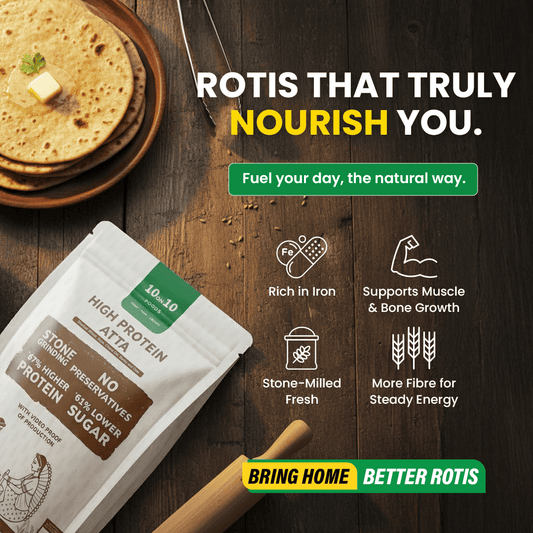
- High Protein Wheat Atta
- Multigrain Atta (wheat + millets)
To be clear, these flours are not gluten-free. They’re meant for those who want:
- Softer rotis
- Extra protein
- Wheat flour with high fiber
- Improved digestion from slow stone grinding
-
More nutrition than standard atta
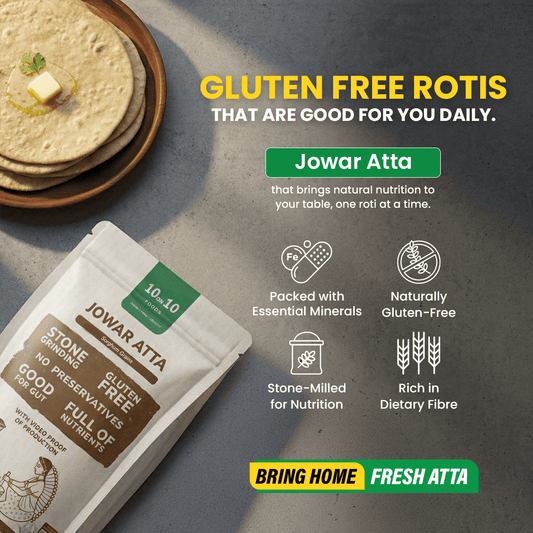
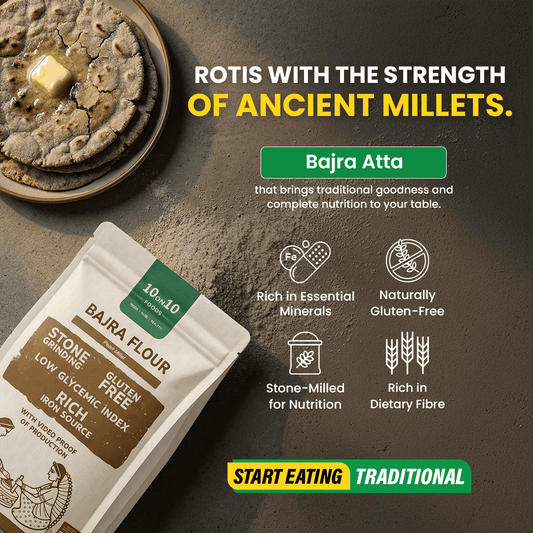
Millet-Based Atta (100% Naturally Gluten-Free)
Millets are not wheat. No gluten here. No sticky dough, and they don’t puff up like wheat rotis.
Choose these if you want:
- Gluten-free alternatives
- Foods with a low glycemic index
- Lots of fiber
- Rotis that support weight management
-
Flour suitable for diabetics
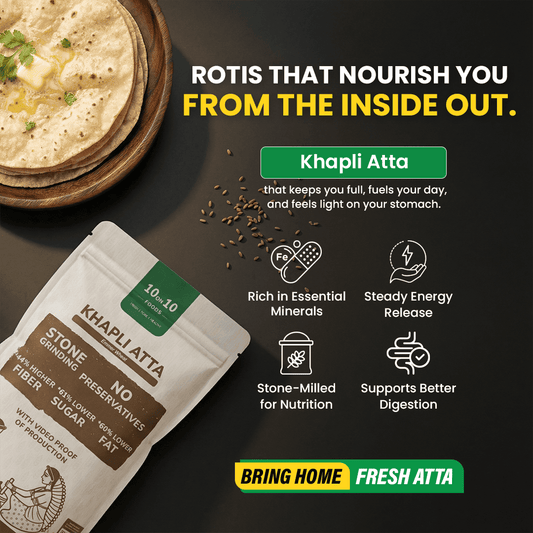
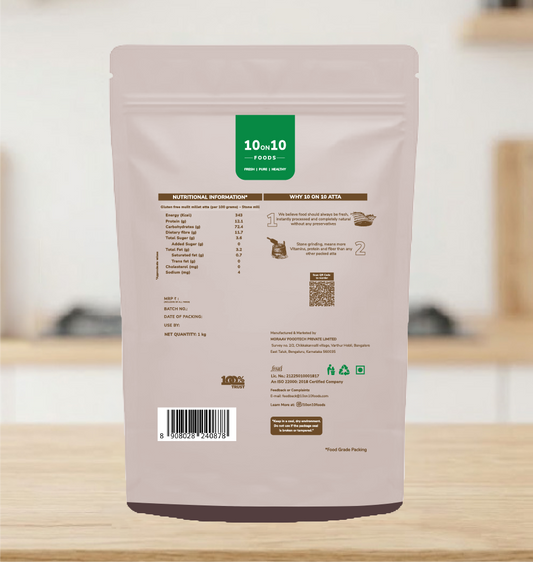
10on10 Gluten-Free Millet Selection:
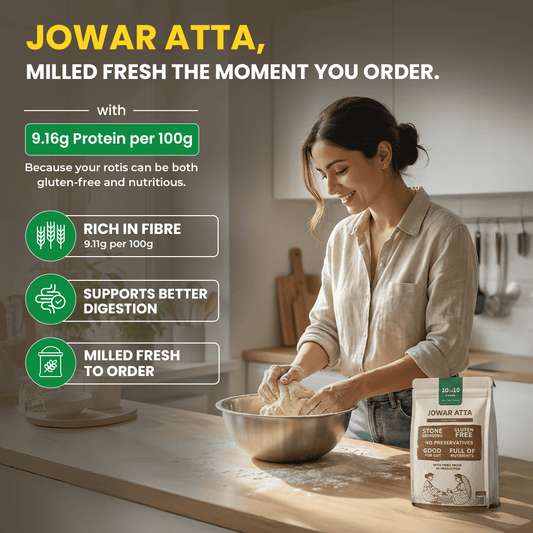
- Jowar Atta (our top pick — highly recommended)
- Bajra Atta
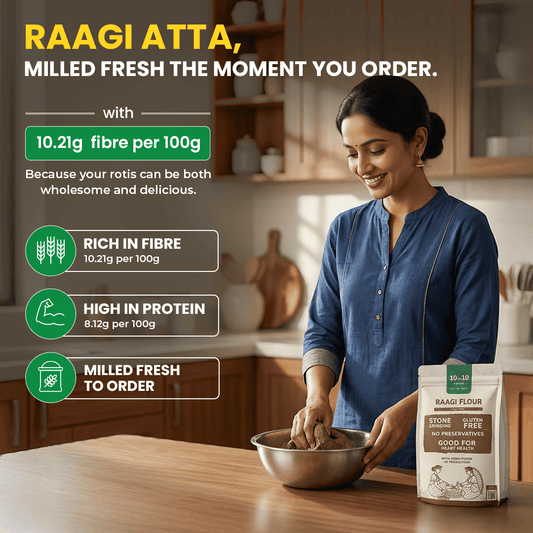
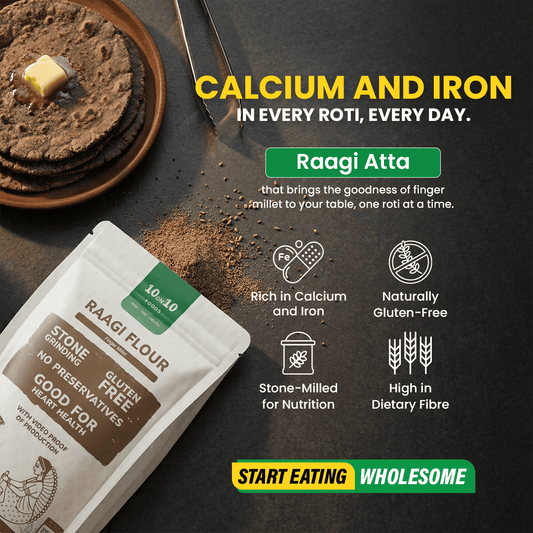
- Ragi Atta
-
Jowar–Ragi Blends
These choices weren’t easily available before. Now you know where to get them.
Now that we’ve separated wheat and millets clearly,
Let's actually understand where gluten fits in, why it gets blamed, and what’s really going wrong with the flour we eat every day.
What Is Gluten, Really?
Gluten isn’t some weird chemical or artificial additive—it’s just a natural protein you already find in wheat, barley, and rye. When you mix atta with water, gluten kicks in and gives the dough that stretchy, elastic feel. That’s what lets your roti puff up instead of falling apart. Take gluten away, and your dough would just crack and crumble.
Most people eat gluten without any trouble at all. Only a small group—like those with celiac disease or gluten sensitivity—have real problems because their bodies can’t handle it.
So, if gluten itself isn’t the enemy, why do so many folks complain about feeling bloated or tired after eating wheat? Honestly, the real issue has more to do with how our atta gets made these days.
Where the Real Problem Started
Back in the day, people took their wheat to the local chakki. There, the grain got crushed between stones—slow, steady, no real heat. That old-school method kept everything together: the bran for fiber, the germ packed with nutrients and healthy oils, and the endosperm with its carbs and proteins.
Then along came industrial roller mills. They moved fast, a lot faster than stones ever could. But all that speed meant extra heat. The rollers smashed the wheat under high pressure, cranking up the temperature enough to mess with the proteins and destroy some of the good stuff inside.
And the real kicker is just to make the flour look smooth and white, they strip out the bran and the germ. That’s where most of the nutrition lives. So, what you’re left with is this pale, lifeless flour that’s easy to stack on a shelf, but your body has a tougher time breaking it down.
Gluten isn’t the real problem here. It’s this kind of processed atta - overheated, stripped of its best parts, and left sitting around for months before you even see it.
Why Stone-Ground Atta Feels Different
If you’ve ever tried rotis made from freshly milled, stone-ground flour, you know the difference right away. They’re softer, a bit nutty, and honestly, they just sit lighter in your stomach. The secret? Stone grinding takes its time. The stones move slowly, so the flour never gets hot. That means all the natural oils, the enzymes, and the gluten stay just the way they should means it's easy for your body to handle.
Nothing gets stripped away either. The bran and germ stick around, packing the atta with fiber and nutrients. When you eat it, you get everything the grain has from fiber to keep your digestion on track, minerals like iron and magnesium, and natural gluten to bind it all together.
That’s exactly how we do things at 10on10 Foods. We don’t let atta (stone-ground) sit on shelves. We only grind it after you order, using those slow, old-school stones yes just like in traditional chakkis. So your flour stays fresh, full of nutrients, and much gentler on your digestive system.
Myths vs Facts About Gluten
|
Myth |
Fact |
|
Gluten is harmful for everyone. |
Only people with celiac disease or gluten intolerance need to avoid it. For most, it’s completely safe. |
|
Stone-ground atta has more gluten. |
Stone grinding doesn’t increase gluten — it preserves it in its natural, digestible form. |
|
Feeling bloated after roti means gluten allergy. |
Most of the time, bloating comes from stale atta, missing fibre, or poor gut health — not from gluten. |
|
Gluten-free atta is always healthier. |
Many gluten-free flours are heavily processed and lack natural fibre or nutrients. |
|
Store-bought atta is the same as fresh atta. |
It’s not. Stored atta loses oils and nutrients over time, making it heavier to digest and dull in taste. |
Why Freshness Matters
Every grain’s alive, you know. When wheat gets milled fresh, it keeps its natural enzymes, so your body handles gluten and starch without a fight. But if that flour sits around in packets for weeks, those enzymes just fade away. The flour might look exactly the same, but your body can tell the difference.
That’s why 10on10 Foods only mills wheat after you order. The atta you get is never some old stock from a warehouse. It’s fresh, warm, and honestly, you can taste the difference. That’s the secret behind soft rotis and that light, happy feeling in your stomach.
So, Should You Avoid Gluten?
Listen to your doctor. If you have celiac disease or a real gluten intolerance, you absolutely need to avoid gluten. But if that’s not you, don’t stress about it. Gluten isn’t the enemy for most people. Focus more on what really matters: pick atta that stone-ground, fresh, and free from chemicals or preservatives. That’s what your body cares about. Ignore the trends,because quality always wins.
What You Can Take Away From This
-
Gluten actually comes from wheat itself, it’s not some weird additive.
-
The real issue isn’t gluten; it’s all the crazy processing that makes flour tough on your stomach.
-
Stone-ground flour keeps its natural proteins and nutrients, just the way it should be
-
When flour’s fresh, it tastes better, feels lighter, and your gut thanks you for it.
So, forget going gluten-free. Just switch back to real stone-ground flour. That’s what your body’s looking for.
A Note of Care
If wheat leaves you feeling off after every meal, talk to your doctor. Sometimes it’s something serious, like celiac disease, and you need real medical help for that. But honestly, for most people, the kind of flour you use matters a lot. Go for slow-ground, chemical-free, and fresh flour — it changes everything.
When food takes its time, your body knows the difference. That’s what 10on10 food is all about. We don’t rush our atta, or treat it with weird stuff, or let it sit around forever. It’s just pure wheat, freshly milled, and sent straight to you while it’s still full of life.
Relax, this isn’t just a sales pitch. This is how food’s supposed to be.