
Ragi Atta Benefits, Nutrition Per 100g & 6 Easy Ragi Recipes
10on10 Content TeamShare
Quick answer: Ragi atta is flour milled from finger millet, the same grain called nachni in Maharashtra and mandua in the north. Per 100g it gives roughly 360mg of calcium (about nine times more than whole wheat flour), around 11g of fibre, useful iron and about 7g of protein. It is naturally gluten-free and digests slowly, which is why it has been an everyday staple in Karnataka homes for generations. Protein is its modest side, so pair it with dal or a high protein atta if protein is your main goal.
Ask anyone who grew up in Bengaluru what ragi means to them and you will rarely hear the word "superfood". You will hear about ragi mudde on the lunch plate with a bowl of saaru, a crisp ragi rotti in the evening, and a warm glass of ragi malt before school. Ragi was never a trend in these kitchens. It was simply what people ate.
This guide covers what ragi atta is, what is actually in it (with real numbers, not wellness hype), who it suits, and six easy ragi recipes that turn out soft instead of dry or crumbly.
Flours used in this guide
1 kg · stone-ground, rich in calciumAdd to cart
500 g · try it before you switchAdd to cart
1 kg · 25g protein per 100g, pairs well with ragiAdd to cart
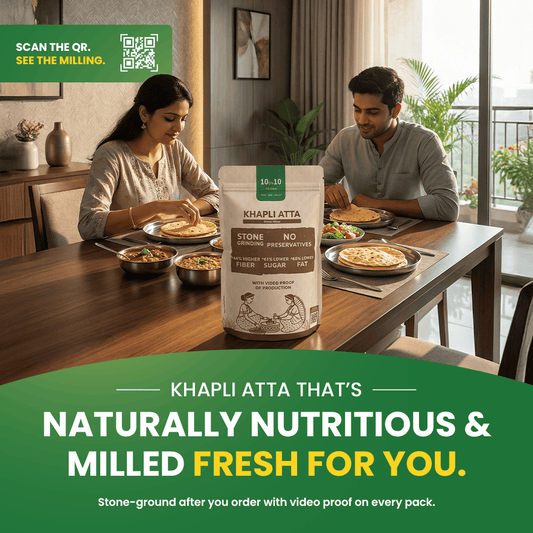
Stone-ground only after you order · QR video of your batch on every pack
What is ragi in English?
Ragi in English is finger millet (botanical name Eleusine coracana). The name comes from the way the grain head splits into finger-like spikes. Ragi atta in English is simply finger millet flour.
The same grain goes by different names across India:
- Ragi: Kannada, Telugu and most of South India
- Nachni or nachani: Marathi and Gujarati
- Mandua or madua: Hindi belt and Uttarakhand
- Kezhvaragu: Tamil
- Muthari: Malayalam
Are nachni and ragi the same?
Yes. Nachni and ragi are the same grain, finger millet, with different regional names. Nachni atta and ragi atta are the same flour. If a recipe calls for nachni flour, ragi atta works exactly the same way.
Ragi atta nutrition per 100g
Here is how ragi compares with the two flours most Indian homes use every day. Values are rounded, per 100g, from the Indian Food Composition Tables (IFCT 2017) published by the National Institute of Nutrition.
| Per 100g | Ragi (finger millet) | Whole wheat | Rice (milled) |
|---|---|---|---|
| Protein | about 7 g | about 10.6 g | about 7.9 g |
| Dietary fibre | about 11 g | about 11 g | about 2.8 g |
| Calcium | about 364 mg | about 39 mg | about 7.5 mg |
| Iron | about 4 mg | about 4 mg | about 0.7 mg |
| Fat | about 1.9 g | about 1.5 g | about 0.5 g |
Values vary with the variety of grain, the soil it was grown in and how it is milled. See our flour nutrition database for every flour we mill.
Two things stand out. Calcium is ragi's headline: very few plant foods come close. And the fibre matches whole wheat while being far higher than rice, which is where ragi's slow, steady digestion comes from.
How much protein is in ragi?
About 7g per 100g of flour, which works out to roughly 2 to 2.5g in a medium ragi roti made with 30g of flour. That is honest, useful protein, but ragi is not a high protein grain. If protein is your priority, eat ragi alongside dal, curd or paneer, or rotate it with our Everyday Protein atta range.
Ragi atta benefits
Ragi is food, not medicine, but its nutrient profile explains why it has stayed on Indian plates for so long.
1. One of the richest plant sources of calcium
At around 360mg per 100g, ragi carries far more calcium than wheat, rice or most other grains. That is why it has traditionally been given to growing children, new mothers and older family members. Calcium works best alongside vitamin D and an overall balanced diet.
2. Slow, steady energy
Whole ragi flour is high in fibre, so it is digested more slowly than refined flour or white rice. Many people find a ragi meal keeps them full for longer. How ragi is cooked matters: a thin ragi malt behaves differently from a ragi roti eaten with dal and vegetables.
3. Supports digestion
With around 11g of fibre per 100g, whole ragi atta supports regular digestion. Increase it gradually if you are not used to high-fibre grains, and drink enough water.
4. Adds to your iron intake
Ragi contributes useful iron, especially for vegetarian diets. Plant iron is absorbed better with vitamin C, so a squeeze of lemon on your meal or a side of tomato chutney helps. Our guide to absorbing more iron from millets explains how.
5. A naturally gluten-free grain
Ragi contains no gluten, which makes it a common swap for people reducing wheat. One honest note: our ragi is stone-ground on the same chakki that mills our wheat flours, so it is a naturally gluten-free grain milled in a facility that also handles wheat. It is not suitable for people with celiac disease.
Is ragi good for weight loss and diabetes?
Ragi can fit well into a weight-conscious or blood-sugar-conscious diet because its fibre slows digestion and increases fullness. It is not a cure or a treatment, and portion size still matters. The simplest approach is a swap: replace some refined flour or white rice with ragi, and pair it with dal, vegetables and a little healthy fat.
If you are managing diabetes or any medical condition, please check with your doctor or a qualified nutritionist before making major changes to your diet.
6 easy ragi atta recipes (and how to keep them soft)
The one rule with ragi: use hot water. Ragi has no gluten to hold the dough together, so hot water partly cooks the flour and makes it pliable. Knead while warm and rest the dough for 10 minutes. Here are six everyday ways to use ragi atta, from a Bengaluru lunch plate to an evening snack.
1. Ragi mudde (the Karnataka classic)
Serves 2 · 15 min · Lunch
You need
- 1 cup ragi atta
- 2 cups water
- Pinch of salt
- 1 tsp ghee (optional)
Method
- Bring the water, salt and ghee to a rolling boil.
- Lower the heat, add the ragi atta in one heap in the centre. Do not stir. Cover and cook 3 to 4 minutes.
- Mix hard with a flat wooden spoon (a mudde kolu) until smooth and lump-free, 2 to 3 minutes.
- Wet your palms and shape into balls while warm.
Tip: Serve with bassaru, sambar or soppu saaru. Swallow small pieces with the curry rather than chewing, the traditional way.
2. Soft ragi roti (rotti)
Makes 4 · 20 min · Breakfast or dinner
You need
- 1 cup ragi atta
- 1 small onion, finely chopped
- 1 green chilli, 2 tbsp coriander, a few curry leaves
- 2 tbsp grated carrot or coconut (optional)
- Salt, and about 3/4 cup hot water
Method
- Mix the atta, vegetables and salt.
- Add hot water little by little and knead into a soft dough. Rest 10 minutes.
- Pat a ball flat on a greased plastic sheet or banana leaf with wet fingers.
- Cook on a hot tawa with a few drops of oil until both sides have brown spots.
Tip: Hot water is the secret. Ragi has no gluten, so hot water is what holds the dough together.
3. Crispy instant ragi dosa
Makes 6 · 20 min · Breakfast
You need
- 1 cup ragi atta
- 1/4 cup rice flour, 2 tbsp rava
- 1/4 cup curd
- Cumin, chopped onion, green chilli, salt
- About 1.5 cups water
Method
- Whisk everything into a thin, flowing batter, thinner than regular dosa batter. Rest 10 minutes.
- Heat a tawa well. Pour the batter from a height, starting at the edges and filling in, rava-dosa style.
- Drizzle oil around the edges and cook on medium until crisp. No need to flip.
Tip: Stir the batter before every dosa because the flour settles.
4. Ragi malt (ragi ganji), sweet or savoury
Serves 2 · 10 min · Morning drink
You need
- 3 tbsp ragi atta
- 2.5 cups water or milk
- Sweet: jaggery and a pinch of cardamom
- Savoury: buttermilk, salt, roasted cumin
Method
- Whisk the atta into 1/2 cup cold water until there are no lumps.
- Pour it into the remaining simmering water or milk, stirring all the time.
- Cook 5 to 6 minutes until it thickens and turns glossy.
- Sweeten with jaggery off the heat, or cool and stir in buttermilk and salt.
Tip: Add jaggery only after switching off the heat so milk does not curdle.
5. Ragi vegetable chilla
Makes 4 · 15 min · Snack
You need
- 1 cup ragi atta, 2 tbsp besan
- 1 cup finely chopped vegetables (onion, tomato, capsicum, spinach)
- Ginger, green chilli, ajwain, salt
- Water for a pourable batter
Method
- Mix everything into a thick but pourable batter.
- Spread a ladleful on a greased hot tawa.
- Cook covered for 2 minutes, flip and cook until both sides are set.
Tip: Crumble a little paneer on top before flipping for extra protein.
6. Ragi jaggery laddoo (no sugar)
Makes 10 · 25 min · Sweet
You need
- 1 cup ragi atta
- 1/3 cup ghee
- 3/4 cup grated jaggery
- 2 tbsp chopped roasted peanuts or almonds
- 1/4 tsp cardamom powder
Method
- Roast the atta in ghee on low heat for 10 to 12 minutes, stirring, until nutty and aromatic.
- Take off the heat and cool until warm, not hot.
- Mix in jaggery, nuts and cardamom.
- Press firmly into small balls while still warm.
Tip: Keep laddoos in an airtight jar and eat within a week.
For more ideas, see our healthy roti variants and our ragi drinks guide.
Ragi vs jowar vs bajra
All three are millets, but they suit different needs. Ragi leads on calcium, jowar is the mildest and easiest for everyday rotis, and bajra is the warming winter grain with more iron. Our full comparison, best millet for your body type, helps you choose. If you are weighing ragi against rice, read ragi roti vs rice.
Why fresh-milled ragi atta is different
Ragi is a whole grain with natural oils in its bran. Once it is ground, those oils are exposed to air and the flour slowly loses its aroma and freshness. Flour milled months before it reaches your kitchen cannot smell or taste like flour ground this week.
That is why 10on10 stone-grinds ragi slowly, only after you order. There is no maida, no additives and no preservatives, and every pack carries a QR code linking to a video of your batch being milled.
Frequently asked questions
What is ragi called in English?
Ragi is called finger millet in English. Ragi atta is finger millet flour.
Are nachni and ragi the same?
Yes. Nachni is the Marathi and Gujarati name for ragi. Both refer to finger millet.
Can I eat ragi every day?
Yes, ragi can be part of a balanced daily diet, ideally rotated with other grains. Many South Indian households eat it daily. If you have a medical condition, check portion guidance with your doctor.
Is ragi atta good for babies?
Ragi porridge is a traditional first food in many Indian homes. Speak to your paediatrician about when and how to introduce it. Our article on ragi for babies looks at the facts.
How should I store ragi atta?
Keep it in an airtight container in a cool, dry place away from sunlight. Because our ragi is freshly milled with no preservatives, use it within a few weeks for the best aroma.
Make your next roti with fresh ragi
Stone-ground slowly, only after you order. No maida, no additives, no preservatives. Free delivery in Bengaluru on orders above ₹299.
Add Ragi Atta 1 kg to cart View productThis article is for general information and is not medical advice. For guidance on a specific health condition, please consult your doctor or a qualified nutritionist.