
Bajra and Iron: How to Absorb More from Pearl Millet
10on10 Content TeamShare
QUICK ANSWER
Bajra (pearl millet) is a good plant source of iron, but the iron it carries is non heme iron, which the body absorbs less easily, and bajra also contains phytic acid that can lower absorption further. The simplest fix is to eat your bajra roti or khichdi with vitamin C rich foods like lemon, tomato, amla or fresh green vegetables. Soaking or fermenting the flour and keeping tea and coffee away from the meal help too. Do this and your body takes up far more of bajra's natural iron.
Bajra has warmed Indian kitchens for generations, especially in winter. It is naturally rich in iron, fibre and minerals. But how much of that iron you actually absorb depends a lot on what you eat alongside it. Here is how to get the most from every bajra roti.
Does bajra have iron?
Yes, bajra is one of the more iron rich millets, with roughly 6 to 8mg of iron per 100g, though the exact figure varies by grain and mill. That is a meaningful amount for an everyday flour. The catch is the type of iron. Plant foods like bajra carry non heme iron, which the body absorbs less readily than the heme iron found in meat. This is not a problem, it just means smart pairing matters.
Why is bajra iron harder to absorb?
Two things reduce how much iron your body takes from bajra: it is non heme iron, and bajra naturally contains phytic acid, a compound in many whole grains that binds minerals and lowers their absorption. Phytic acid is not bad, it is part of a healthy whole grain. You simply work around it with a few easy habits rather than trying to remove it.
How to boost iron absorption from bajra
Pair bajra with vitamin C, cut down phytic acid with soaking or fermenting, and keep tea and coffee away from the meal.
- Add vitamin C to the meal. Vitamin C dramatically improves non heme iron absorption. A squeeze of lemon, a tomato based sabzi, amla, or a side of fresh greens or capsicum works well.
- Soak or ferment the flour. Soaking bajra dough for a little while, or fermenting it as in a bhakri or dosa batter, reduces phytic acid and frees up more iron.
- Move tea and coffee to between meals. The tannins in chai and coffee bind iron, so enjoy them an hour before or after, not with your bajra roti.
- Space out heavy dairy. Calcium can compete with iron for absorption, so if iron is your goal, keep the big glass of milk or bowl of curd a little apart from your main iron meal.
Best food pairings for a bajra iron meal
Build your bajra plate around vitamin C rich vegetables, fruits and dals so the iron is absorbed and the meal stays balanced.
Vegetables and sabzi
Tomato based sabzi, palak (spinach), methi, capsicum, or a lemony sarson ka saag. The vitamin C and the greens both support iron.
Dals and pulses
Pair bajra roti with dal, chana or rajma. Pulses add plant protein and their own iron, making the whole plate stronger.
Fruits on the side
Finish with amla, orange, guava or a squeeze of lemon over your food. These vitamin C fruits are among the easiest absorption boosters.
Simple bajra meal ideas
- Bajra roti with tomato sabzi and a wedge of lemon. The classic winter plate, and a genuinely iron smart one.
- Bajra khichdi with a side of amla chutney. Warm, easy and rich in absorbable iron.
- Bajra bhakri with palak and dal. Fermented dough plus greens plus pulses, a strong combination.
BOTTOM LINE
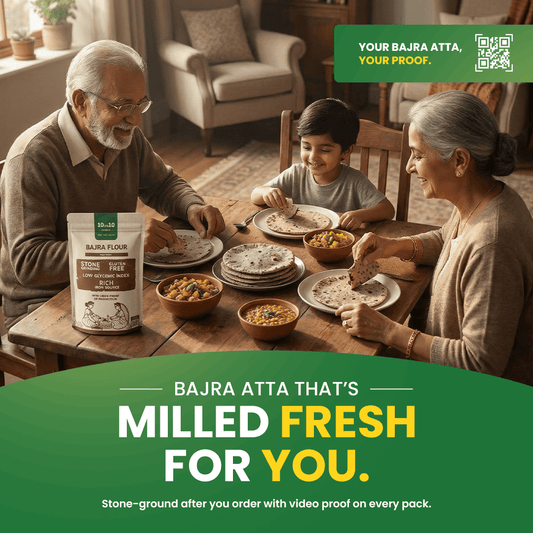
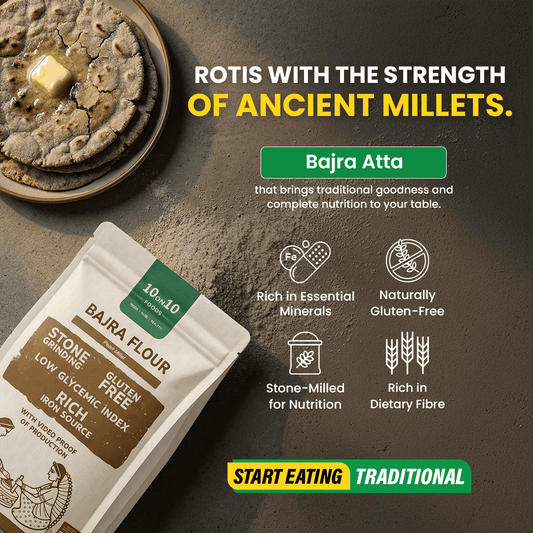
Bajra is naturally iron rich, but the iron is non heme and bajra carries phytic acid, so pairing matters. Eat your bajra roti or khichdi with vitamin C rich foods like lemon, tomato, amla and fresh greens, soak or ferment the dough, and keep tea, coffee and heavy dairy a little apart. 10on10 Bajra Atta is stone ground and freshly milled to order, with no maida and no additives, so you start with a clean, whole grain.
Frequently asked questions about bajra and iron
How much iron is in bajra?
Bajra has roughly 6 to 8mg of iron per 100g, which makes it one of the more iron rich millets. The exact amount varies by grain and mill.
Why should I add lemon to a bajra meal?
Bajra carries non heme iron, and vitamin C from lemon greatly improves how much of that iron your body absorbs. A simple squeeze over your food makes a real difference.
Does soaking bajra help with iron?
Yes. Soaking or fermenting the flour reduces phytic acid, a natural compound in whole grains that lowers mineral absorption, so more of the iron becomes available.
Can I drink tea with a bajra meal?
It is better not to. The tannins in tea and coffee bind iron, so enjoy them about an hour before or after your iron rich meal rather than alongside it.
Is bajra good for anaemia?
Bajra can be a helpful part of an iron friendly diet, especially when paired with vitamin C. It is food support, not a treatment, so speak to your doctor for anaemia care.
Bring home freshly milled bajra atta
Whole pearl millet, stone ground and milled fresh after you order, with no maida and no additives. Free shipping on orders above 299 rupees.
This article is for general information and is not medical advice. For anaemia or any medical condition, please consult your doctor or a qualified nutritionist.