
The Smartest Way to Increase Protein Intake: Upgrade Your Daily Roti
MOORAV FOODTECH PRIVATE LIMITED AdminShare
According to the World Obesity Atlas 2026, there is a growing prevalence of obesity, which is rising at an unprecedented rate. Being aware of the situation, people are also shifting their choices. In this journey, one simple yet powerful change lies in something we consume every day, i.e., the roti you eat every day.
While many people are obsessed with protein powders, gym-friendly recipes, and protein supplements, the basic chapati on our plate hasn't changed much since our grandmothers learned how to roll one. Hence, it's time to flip the script.
From ragi and bajra to oats and soya, nutritious yet high protein rotis offer a healthy plus delicious way to align with fitness goals. Mind you, while many think roti is just another carb, instead, it is actually a very good protein source. The reason why people think that way is probably because they are unaware of the actual protein content in their daily rotis.
This descriptive guide explains the smartest ways you can try to increase your protein intake. And once you comprehend how much protein you've been leaving on the table, you'll wonder why you didn't do the transition sooner.
Why is High Protein Roti For Weight Loss Mostly Recommended?
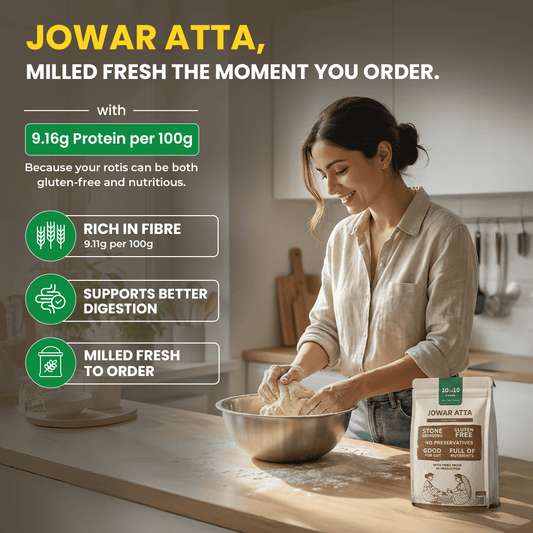
Having said that, protein-rich rotis are unquestionably a smart and delicious way to make an everyday meal more nutritious. All you need to do is make a few simple tweaks. For example, you can blend wheat flour with high protein roti flours like Ragi, Barley, Jowar, etc. To make it more wholesome, consider adding sprouts or spinach.
From a nutritional standpoint, regular wheat atta only delivers 10–12g of protein per 100g. Whereas, high protein roti flour formulated with a strategic blend of protein-rich ingredients delivers double the protein per serving, around 30–50%.
However, this is why improving atta quality can transform your daily nutrition, support managing weight and help you eat clean.
Top Ingredients That Increase Protein Power in Your Daily Rotis
Rotis made in an Indian household give your mother, sister, or someone who cooks complete control over their nutritional profile. From improving satiety to aiding muscle repair, these add-ins bring both flavour and function to your everyday meals.
Here are the best ingredients to increase the protein power of your daily rotis:
Roasted Gram Flour (Sattu)
Sattu is India’s most underrated superfood. Yes, you heard it right. The reason is that Sattu is a protein-rich, high-fibre flour that is made from roasted gram. It boosts energy levels, supports weight loss, and enhances digestion. Besides this, roasted gram flour acts as a natural cooling agent, which improves heart health, controls blood sugar levels, and nourishes skin.
Nutrition-wise, Sattu contains approximately 20–22 grams of protein per 100 grams. You can say it delivers nearly five times the protein of plain wheat flour. Furthermore, it has high dietary fibre, iron, and magnesium. Therefore, blending Sattu with regular wheat flour is particularly effective for sustained energy, digestive health, weight management, and building lean muscle.
Soy Flour or Soy Chunk Powder
If there is one ingredient that punches above its weight, it is soy. It is mostly known to provide complete protein as it contains all nine essential amino acids that your body cannot produce on its own.
Soy flour powder contains approximately 40–52 grams of protein per 100 grams. Due to this reason, it is one of the highest plant-based protein sources you can blend into roti dough.
Meanwhile, adding soy chunk powder, even in small quantities, can turn your regular roti into a high protein roti for weight loss. Ultimately, that would be perfect for athletes, vegetarians, or someone who wants to increase daily protein intake without drastically changing the flavour or texture of rotis.
Paneer or Tofu
Just like you crumble paneer to make a stuffing for paneer paratha, you can either grate or crumble paneer and tofu directly into the flour and knead it to make a dough out of it. This simple trick can turn your flatbread into a protein-dense, soft, and incredibly flavourful meal.
Now, let us shed light on its protein content. While paneer provides roughly 18 grams of protein per 100 grams and adds calcium + healthy fats alongside, tofu, meanwhile, delivers a comparable protein profile with fewer calories and less fat. As a result, this makes it the best flour for protein intake.
Chickpea Flour (Besan)
Besan needs no introduction in an Indian kitchen; it might already be lying on your kitchen shelves. What many people do not realize is that it is also one of the most affordable and effective ways to make a high protein roti flour blend at home.
The simple trick with besan is: instead of taking 100% whole wheat flour, swap out 40–60% of your regular wheat flour with besan. Consequently, it will deliver about 22 grams per 100 grams. Plus, the dough will be rich in folate, iron, or soluble fibre and has a low GI.
Legume Purees (Moong, Masoor, Chickpea)
Legume (dal) puree is perhaps the easiest way to add protein to rotis. This is by far the most effortless way to prepare high protein roti for weight loss. How? First, it replaces water in the kneading process, and secondly, it makes the dough softer, and lastly, it boosts its nutritional profile.
Moong dal puree (cooked mashed yellow moong) delivers 24–25 grams of protein per 100g, masoor dal (red lentil) puree provides approximately 7–9 grams of protein per 100 grams, and chickpea (chana dal) puree delivers roughly 8–9 grams per 100 grams.
Seeds (Flax, Chia, Hemp)
Seeds like chia, flax and hemp are trendy. You’ve probably seen many people buying them from grocery stores ever since they became popular. They might seem tiny in appearance, but these seeds pack a lot of nutrition in a small package. Specifically, Flax, Chia, or Hemp seeds are a great source of plant-based protein, healthy fatty acids, fibre, and a variety of minerals.
Also, they contain omega-3 fatty acids (alpha linolenic acid) that improve brain function and the immune system. However, including ground seeds in the roti dough increases protein by around 16.5 to 18.3 g per 100 g.
Pro Tips: Get the Most from Your High Protein Roti Flour
While you might believe the switch is straightforward, technical factors also play a major role here. The following simple techniques guarantee you get the best results in taste, texture, and nutrition:
- Start with a 50:50 Blend: If you're unfamiliar with high protein roti flour, start by mixing it 50:50 with your regular atta. The dough will be slightly firmer. To fix it, add a touch more warm water and rest it for 15–20 minutes before rolling.
- Pair Mindfully: The right combination makes the whole difference. You never know, you might end up loving your chosen combo of attas. Given that, you can consider blending your high protein roti with dal, curd, or paneer-based curries for a complete amino acid profile. These protein sources complement each other beautifully.
- Use Warm Water: Protein-rich flours absorb water differently from plain wheat. However, it is always recommended to use lukewarm water when kneading your dough. It hydrates the flour evenly, produces smoother yet pliable dough, and turns out to be softer rotis that do not crack at the edges when rolled.
- Don’t Over-Knead: Over-kneading the flour isn’t generally recommended because it breaks down the gluten structure that is built while piling the dough together. Hence, it will result in a poor-quality, tough, and dense baked dough.
- Store Smart: Since stone-ground flour is fresher and contains natural oils intact, the dough might turn rancid if kept in open air. Especially, if you are preparing a flour blend in bulk, then store it in an airtight container away from heat, moisture, and direct sunlight. Also, we recommend that you consume it within 3–4 weeks for optimal flavour and nutrition.
- Cook on Medium Heat: High protein flours, especially those having besan or soy, are most likely to burn if cooked on high heat. So, always cook your rotis on a medium flame while allowing each side sufficient time to cook through evenly without burning.
- Don't Skip the Ghee: A small amount of ghee on a freshly made high protein roti is not recommended because it tastes better. Instead, it is yet another nutritional strategy. It is suggested because the fat-soluble vitamins A, D, E, and K are present in the flour, which requires some source of dietary fat for absorption. This way, ghee improves the taste while making the roti softer.
Wrap Up
While there is a persisting protein deficiency in India, it calls for a radical dietary change, particularly the smart use of foods we already eat every day. When it comes to weight loss, it doesn’t mean giving up on your favourite foods. A smart switch in technique and blending the regular atta with protein-rich ingredients is the ultimate solution.
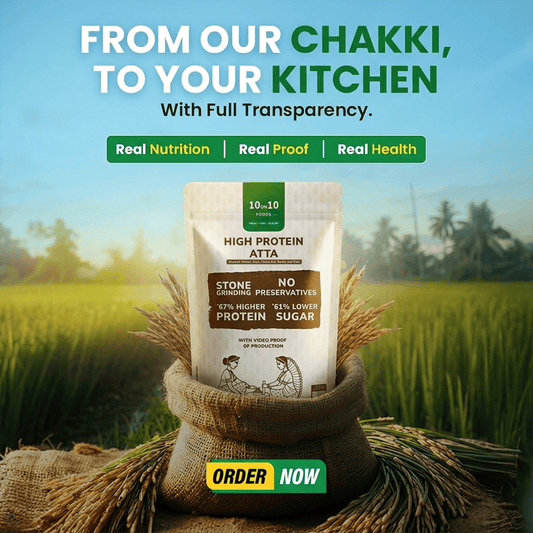
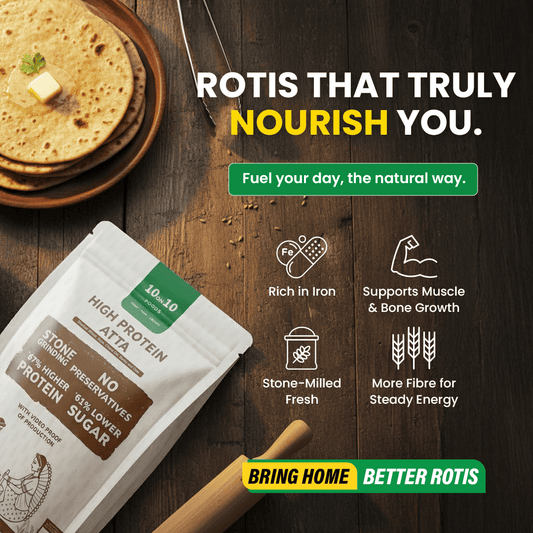
If this guide encourages a change, then switching to 10on10 Foods’ protein-rich flour products could be an impactful, minimal effort nutritional upgrade available to the average Indian household.
No new recipes. No new habits. No compromises on taste. Just a better flour and all the nutrition that should have been there all along!!!
FAQs
Q1: Is High Protein Roti suitable for weight loss?
A: Yes, many Indians are aware of the fact that protein supports weight management and carbs lead to obesity. It only works through two main mechanisms, i.e., satiety and metabolism. This means that protein makes you feel fuller for longer and burns more energy just by being digested.
Q2: Which roti has the maximum protein?
A: Amongst the options mentioned above, besan (chickpea flour) roti, soybean roti, and bajra (pearl millet) roti are among the highest-protein options.
Q3: How to get 70g of protein a day in India?
A: Try consuming protein-rich food items like dal, legumes (chickpeas, rajma), paneer, tofu, soy chunks, Greek yogurt, and more in every meal.