
The Hidden Nutrition Lever: Why Atta Matters More Than Supplements?
MOORAV FOODTECH PRIVATE LIMITED AdminShare
Wondering why India’s protein gap is lagging behind? The answer is hidden in your kitchen all along. Yes, you heard it right!!!
It is seen that when most health-conscious people think about improving their nutrition, the first instinct is to add something like a protein shake, a multivitamin, or maybe a collagen supplement that promises miracles in 30 days. Well, it is evident that the wellness industry has done an exceptional job of convincing us that nutrition gaps are best filled with products you buy in addition to your regular meals.
But that’s not the fact and isn’t necessary, unless or until they are prescribed by the doctor.
The thing that most supplement brands won’t tell you is - the most powerful nutritional upgrade is sitting on your kitchen shelf, and you use it two, sometimes three times a day, every single day of your life.
And that’s you atta.
This blog post explains why atta matters more than supplements, what’s actually wrong with regular atta, what a smarter upgrade looks like, and more.
Why Are Cereals India's Most Underestimated Nutritional Grains?
Most Indians consume cereals multiple times Daily diet (roti, paratha, breads), and it has been prevalent for decades. It is, without question, the most consistent dietary habit, transcending income levels, geographies, religions, and food cultures.
|
Do You Know? 🤔 According to ICMR-NIN data, cereals contribute nearly half of protein intake in rural areas and about 40% in urban diets. |
While many underestimate the power of roti, the grain you roll out in your kitchen is already doing more nutritional work than any supplement.
Now the question is not whether atta matters to your nutrition, since it already does. The question is whether the atta you're currently using is working for you, or if it's just filling you up.
A typical Indian household will consume approximately 8–10 kg of atta per month, depending on the family size and each person’s diet. Hence, that's a lot of rotis. Amidst them, every single pack is either delivering meaningful nutrition or quietly missing the opportunity to do so.
Why 73% of Indians are Deficient in Protein
India’s protein crisis has gone way too far, and the suppressed numbers are hard to ignore. For instance, in one of the surveys conducted in 2017, it was found that 73% of Indians are deficient in protein. And the worst fact is, 90% of Indians are unaware of their daily protein requirement.
If you are one of them, let us clear that first. The daily recommended allowance of protein for an average Indian adult is 0.8 to 1 gram per kilogram of body weight, yet the average intake is only about 0.6 grams per kilogram.
When we look at these numbers, it is clear that this isn’t a niche wellness concern; this is a population-wide nutritional crisis.
What is the solution? Simple: as our parents and grandparents say, “eat more protein-rich foods, have more dal, add more paneer, increase egg intake, etc.” Although this advice isn’t wrong, chances are, sometimes it might overlook something fundamental.
In today’s hectic lifestyle, instead of “add more protein foods,” upgrade the base ingredient eaten daily because it will work within your existing eating habits. And, the best part? You don’t even need to put much effort into preparing nutrition-rich food items.
Regular Wheat Flour vs High Protein Multigrain Atta: A Simple Solution
The biggest question of all time is why ordinary atta falls short. Most commercially available modern wheat flour is often highly processed. It undergoes high-speed industrial milling that generates heat and strips the grain of its bran and germ. Therefore, bran and germ are something where most of the natural oils, fibre, vitamins, protein, and minerals live. And, when these are removed during milling, the only thing left is a starchy, high-gluten powder that digests quickly, offers very little nutritional value, and might spike your blood sugar.
The simple solution is switching to the atta with high protein or multigrain atta. Why? Because they contain more gluten-forming proteins like gluten and gliadin. These proteins are responsible for creating a stronger yet more elastic dough structure.
What Nutritionally Upgraded Atta Looks Like?
Nutritionally upgraded atta, particularly high-protein and multigrain atta, is prepared to be a healthier alternative to conventional white or whole wheat flour. Nutrition-wise, these are rich in fibre, protein, and micronutrient content. On the other hand, it typically appears as a slightly coarse or darker flour, owing to the inclusion of bran and other grains.
Besides, other physical and sensory characteristics include:
- Nutrition-rich flours have a slightly coarser texture to the touch since they are less processed and retain the bran.
- These can feel more elastic and firm when kneaded.
- The rotis remain soft and fluffy, even with the higher fibre content.
Now the question arises, how to check if your atta packet is an upgraded version or not? The key indicators of upgraded atta are:
- Higher protein and fibre content on the nutrition label.
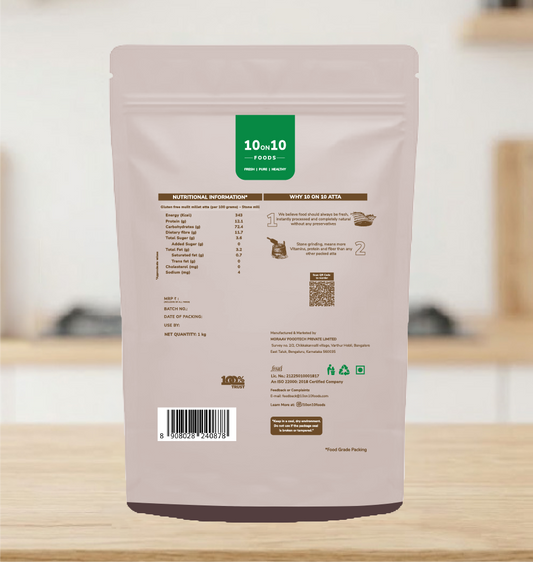
- Clean label, which is often free from additives and preservatives.
- The label will highlight “2x more Zinc/Iron”, “low glycemic index”, or “no maida”.
Why Does It Matters More Than Supplements?
Now that you have made up your mind to make a change, it's time to understand why this change matters more than the supplement. Here are the reasons for the same:
- Unlike pills, nutrition-rich flours deliver balanced nutrition, a blend of iron, magnesium, and vitamin B that work synergistically.
- Rather than consuming supplements to maintain great gut health, the fibre content in nutrition-rich atta helps you feel full longer and improves digestion. Ultimately, it ends up supporting your gut health.
- Contrary to a few supplements that trigger a quick boost in terms of energy, these flours keep the energy levels steady and manage the blood sugar levels.
- It fosters a lower risk of chronic issues, metabolic syndromes, diabetes, and inflammation.
- Since heavy reliance on pills can lead to overdosing on certain vitamins or minerals, food-based nutrition is generally safe.
Overall, improving daily staple nutrition impacts population health faster than supplements, of course, in a healthy way.
How 10on10 Food Contributes to Change
It's time to draw the comparison directly. A standard protein supplement costs ₹2,500–₹4,000 per kilogram and contains artificial sweeteners and additives. Plus, you have to take it separately. Now, yes, it delivers protein, but does it deliver anything else? No.
| Nutritional Metric (per 100g) | Regular Atta | 10on10 High-Protein Atta | Commercial Protein Shake |
| Protein | ~8 - 10g | 24.56g | ~60g - 70g |
| Dietary Fiber | ~2 - 3g | 12.68g | 0g |
| Artificial Additives | None | None (Stone-Ground) | Sweeteners / Emulsifiers |
| Cost per KG | Low |
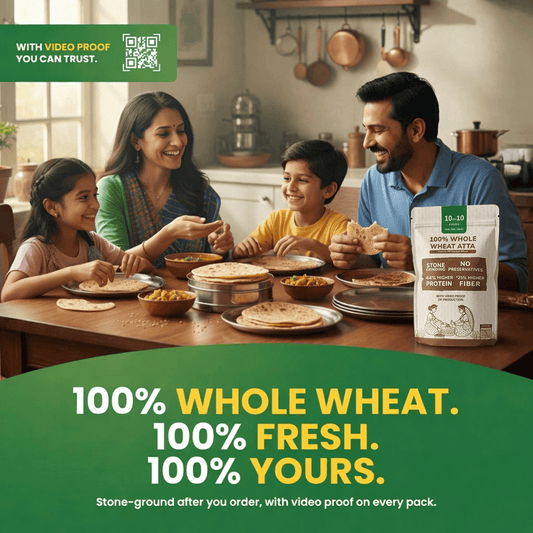
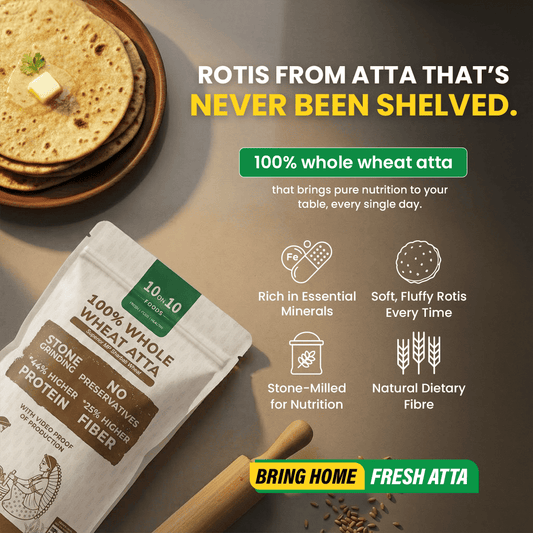
On the contrary, 10on10 Foods' high protein atta delivers 24.56g of protein and 12.68g of dietary fibre per 100g, made from a Sharbati wheat, soya, and channa. Most importantly, it is stone-ground fresh after every order.
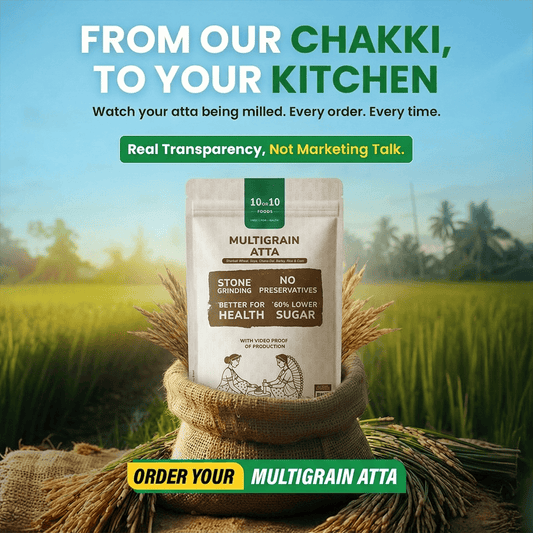
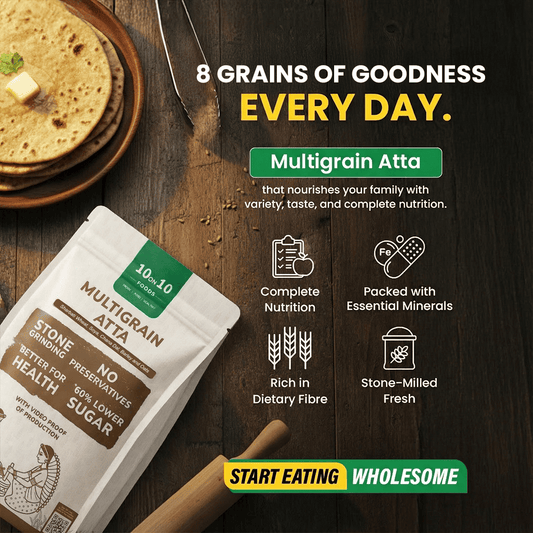
10on10 Food’s multigrain atta offers 12.86g of protein and 10.17g of dietary fibre per 100g as it is prepared using eight grains, including wheat, soya, channa, barley, oats, maize, rice flour, and psyllium husk.
An example: A regular atta delivers somewhere between 8-10g of protein and 2–3g of fibre per 100g. And when you upgrade to 10on10 Food’s high-protein flour, the three medium-sized roti (let's say), roughly 75g of flour, then you will move from consuming 9g protein to consuming 26.25g protein for 3 rotis.
These are mostly beneficial for fitness-conscious people, women managing PCOS or thyroid conditions, and anyone whose doctor has highlighted low muscle health or inadequate protein intake in their body.
Therefore, this is what genuine dietary change looks like. In the end, it’s not about an addition, but an upgrade at the foundation.
Conclusion
Now that we are about to wrap up this guide, we have to say that India’s nutrition challenges are not going to be solved by supplements. Even the statistics from the survey stated above reveal that Indians fall short on protein, and instead of “add more protein foods,” upgrade the base ingredient eaten daily, which is your “Atta”.
Your rotis have long been a vital component; it's time to give them the ingredients they deserve. Making this addition isn’t about choosing a flour that nourishes you, but about the one that's rooted in tradition, rich in nutrition, and kind to your gut.
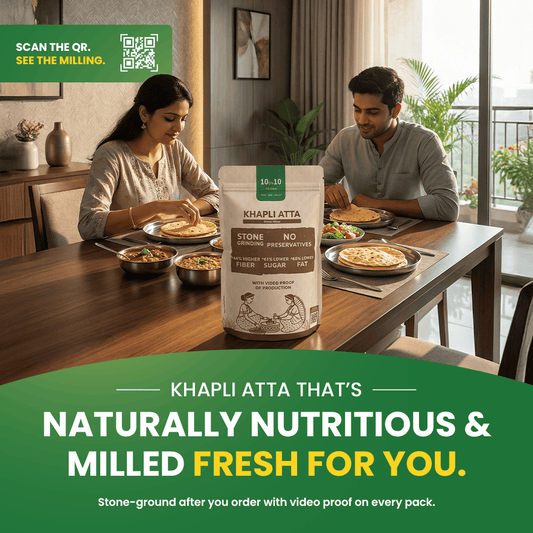
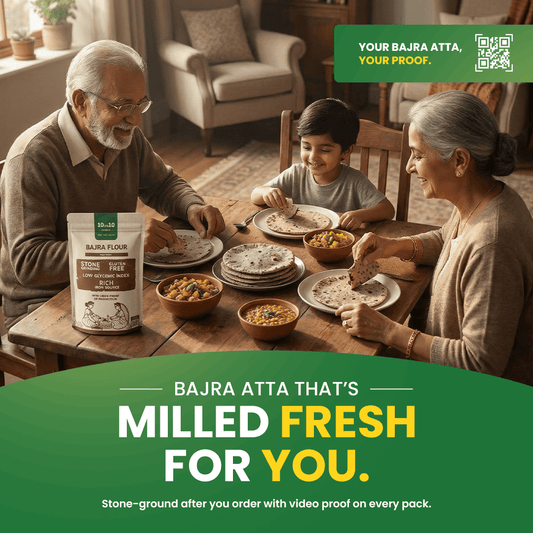
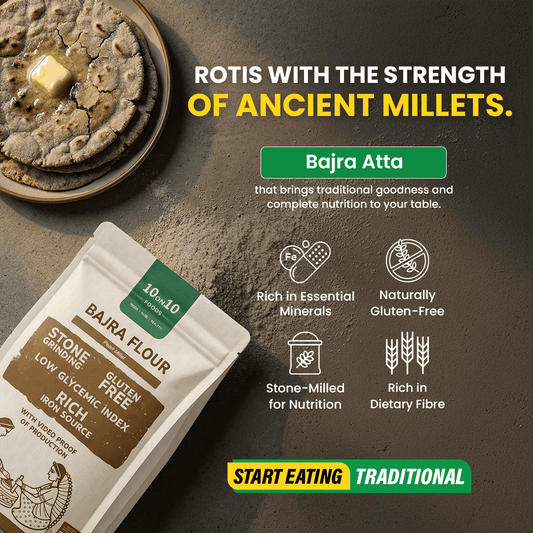
Hence, upgrade to 10on10 Food’s freshly stone-milled range. Be it a high-protein, Khapli, multigrain, or Jowar vs Jau flour, every pack contains nutrients that you were lacking. And you know what the best part is? Each pack is milled on order, no preservatives, no compromise, whatsoever.
FAQs
Q1: Why are natural foods better than supplements?
A: What happens with supplements is that they often isolate specific nutrients like Vitamin C or calcium, whereas nutrition-rich flours provide a synergistic blend of vitamins, minerals, fibre, and phytochemicals.
Q2: What should I eat instead of supplements?
A: Yes, supplements help to fulfil the nutrient gap, but when you heavily rely on them, it can lead to heavy reliance on certain minerals or vitamins. Instead, evolve a habit of consuming rotis made of either high-protein, wholegrain, or multigrain atta.
Q3: Is high-protein atta suitable for the whole family, including children and older adults?
A: Absolutely yes! Since high-protein flour is made of whole, natural grains or legumes, it is safe and beneficial for all age groups. Children benefit from protein or minerals, and older adults gain high fibre content, which supports digestion.
Q4: How is 10on10 Foods' atta different from the multigrain atta available in supermarkets?
A: In supermarkets, most multigrain atta packets are milled weeks or months before they actually reach you. And, you never know if the nutrients have been oxidised. Fortunately, 10on10 Foods mills every batch fresh only after your order is placed. With this practice, we aim to preserve the germs, bran, and complete nutritional architecture.