
Sattu vs Besan for Weight Loss: Nutrition And Benefits
MOORAV FOODTECH PRIVATE LIMITED AdminSattu and besan are those ingredients in our Indian kitchens that might not always be the highlight, but they were always there.
Almost all of us can relate to seeing somebody in the kitchen taking a spoonful of roasted gram flour out of a tin container and stirring it in water to make a glass of something golden.
Well, what if we tell you that these two classic desi ingredients have quietly been India's original weight-loss hack? That too, decades before “high-protein” became a trending hashtag.
And between all that, the real hot question is: Sattu?? or Besan??
Also, which one actually helps you shed weight faster? Are they even different? Or is this just two names for the same roasted gram magic?
This blog will help you settle the conflict of sattu vs besan in your mind, once and for all. So grab your tea and read till the end to know exactly which one deserves a permanent spot in your weight-loss kitchen.
What Even Is The Difference Between Sattu and Besan?
Well, both of them come from the very same family, i.e., roasted Bengal gram that most people refer to as Chana. But to be fair, they are not twins; rather, they are more like cousins who took different life paths.
SATTU
It is made up of roasted whole Bengal gram (or sometimes barley) that's ground into a fine, nutty-flavored flour. The roasting is the hero move that makes sattu what it is. Roasting helps to lock in fiber, boosts digestibility, and gives the signature earthy aroma.
BESAN
Another side of the same coin, besan is made from raw and unroasted split Bengal gram (commonly referred to as chana dal) ground into a smooth flour. It is also naturally gluten-free, which is why it's commonly used by people managing gluten sensitivities or celiac disease on a regular basis.
Common Myths About Sattu and Besan You Should Stop Believing
Before we go further, let's bust a few myths that have been passed around kitchens and between gym freaks for years:
Myth 1: "Sattu and besan are basically the same thing."
No, this is not true at all. Sattu is roasted and made from whole gram. On the other hand, besan is raw and made from split gram. The processing changes the fiber, taste, and how your body digests each one.
Myth 2: "Besan is unhealthy because it's used in fried snacks."
Besan itself isn't the villain here in this context. Best believe it's the deep frying in pakoras and bhajiyas that adds the calories. Used in a chilla or roti with minimal oil, besan is a really good weight-loss-friendly option.
Myth 3: "More protein automatically means more weight loss."
Both flours have similar protein levels, but weight loss depends on your overall calorie balance, fiber intake, and portion control. The bottom line is protein numbers won't automatically do the shedding for you; there is a need for you to be consistent and take care of other factors too.
Same origin, but different processing makes all the difference!
Sattu vs Besan Protein Content
When it comes to sattu vs besan protein content, numbers are exactly what we need before picking sides. Here is all you should know about the protein content in sattu and besan:
- Sattu typically has around 20-23g of protein per 100g, along with a generous dose of fiber (all because the whole gram being used, including the husk).
- Besan isn't that far behind; it offers roughly 20-22g of protein per 100g. But it has slightly less fiber since the husk is removed before grinding.
In terms of protein, both of them are pretty similar. The differentiator here is the fiber content in them. Both of them act differently once they hit the stomach.
Since sattu has higher fiber content, it swells up and slows down digestion, which keeps you full for longer. Besan digests a little quicker, which is why it is great for light food and quick snacks.
Sattu Benefits for Weight Loss: Why Is It the Internet's Favorite?

If you have also wondered “is sattu good for weight loss?” then, to shortly answer your question, it's a yes. Let’s look at the facts for why nutritionists keep referring to sattu in diets to promote weight loss:
- It's a Natural Appetite Suppressor: The insoluble fiber in sattu forms a gel-like mass in your gut, keeping you fuller for hours. You know what that means? Less snacking, less mindless munching, less sabotage of your calorie deficit.
- It Cools and Detoxes: Especially in summer, a chilled sattu drink isn't just refreshing. It flushes out all toxins in your body and helps keep your metabolism steady, which results in you not feeling sluggish.
- It's a Low-Glycemic and Slow-Release Energy Source: Unlike sugary snacks you take for your afternoon cravings, which spike and crash your blood sugar, sattu releases energy gradually, so your body isn't screaming for munching on a biscuit by 4 PM.
- It's Insanely Versatile: There are so many recipes you can make. Sattu paratha, sattu ka sharbat, sattu ladoo. You can weave sattu into breakfast, lunch, or a post-workout recovery drink without ever feeling like you're “on a diet”.
Benefits of Sattu Drink for Weight Loss
A glass of sattu is a popular body cooler in summers and a good weight-loss tool in India. benefits of sattu drink for weight loss go beyond compare, and it is really easy to make. Mix roasted sattu powder with water, a squeeze of lemon, roasted cumin, and a little black salt, and there you have it: your magic drink.
As mentioned earlier, it assists with cravings and hunger with the help of fiber, fuels you slowly with steady energy, and flushes toxins out of your system by supporting digestion and hydration.
All you need is two minutes to mix it up, and you have it as a pre-workout energizer in the morning or a healthy swap for that 4 PM snack craving.
Which sattu is good for weight loss? Always go for pure and unadulterated roasted chana sattu without added sugar or preservatives. Because the fiber and protein content is the real highlight of this flour.
Besan Benefits for Weight Loss: Is It The Underrated Ingredient?
For sure, sattu has many benefits, but don't rule out besan just yet. Besan benefits for weight loss are not taken seriously enough. Here is everything you should know about besan’s benefits:
- Low Glycemic Index (GI): Besan has a much lower GI compared to refined wheat flour (maida), meaning it won't spike your blood sugar. This makes it a good substitute for diabetic people too.
- Great Fat-to-Protein Ratio: It's naturally low in fat but decent in protein, making it a smart substitute in recipes that would otherwise have less protein and high amounts of fat.
- Supports Muscle Retention While Cutting Calories: When you're in a calorie deficit, you don't just want to lose weight. Your goal is to lose fat and not lose muscle. The protein in besan helps preserve lean mass while you shed a few kilos.
- It's a Blank Canvas for Guilt-Free Comfort Food: This is where besan truly shines. You can make many dishes from besan, and it is so easy to incorporate into an average Indian diet.
Let’s explore the benefits of some recipes made with besan.
Benefits of Besan ki Roti for Weight Loss
Switch out your regular everyday wheat roti for a besan ki roti, and you instantly cut simple carbs with the extra perks of adding protein and fiber. You can start slow by having it once a day. It keeps you full longer, helps with those 6 PM cravings, and honestly, tastes incredible with a little bit of ghee and some pickle.
Besan Chilla Diet for Weight Loss
If there's one recipe that you can easily include in your fitness journey, it's the chilla. Is it true that besan chilla is good for weight loss? Absolutely! It's basically a protein-rich breakfast that is low in fat if made with minimal oil.
PRO TIP: You can use non-stick pans to avoid using oil or ghee for greasing.
Mix besan with water, add chopped onions, tomatoes, and spices, cook it on a non-stick pan with minimal oil, and it's that easy to make. It is a filling, low-calorie breakfast that keeps you satisfied and full till lunch. Add some grated paneer or spinach, and you've got one of the easiest besan weight loss recipes out there on your plate.

Sattu vs Besan: The Head-On Comparison
Here is a side-by-side comparison of the nutritional value of sattu vs besan:
|
Factor |
Sattu |
Besan |
|
Protein |
~20-23g/100g |
~20-22g/100g |
|
Fiber |
High (when whole gram used) |
Moderate |
|
Satiety |
Excellent, long-lasting |
Good, moderate duration |
|
Best for |
Drinks, parathas, quick meals |
Chillas, rotis, curries |
|
Digestion |
Slow-release, filling |
Quick, light |
If your main goal is appetite control and long-lasting fullness (especially in hot weather), sattu is quite ahead. And if you want variety in your meals that are low-fat and won’t spike your sugar, then besan is your best pick, that too without giving up your favorite comfort foods.
Let 10on10 Foods Help You Out.
Well, honestly, neither sattu nor besan will magically melt fat if the product itself is compromised. Cheap sattu in the market is often combined with cheaper flours, and besan can be adulterated or stored for months, losing both flavor and nutrition.
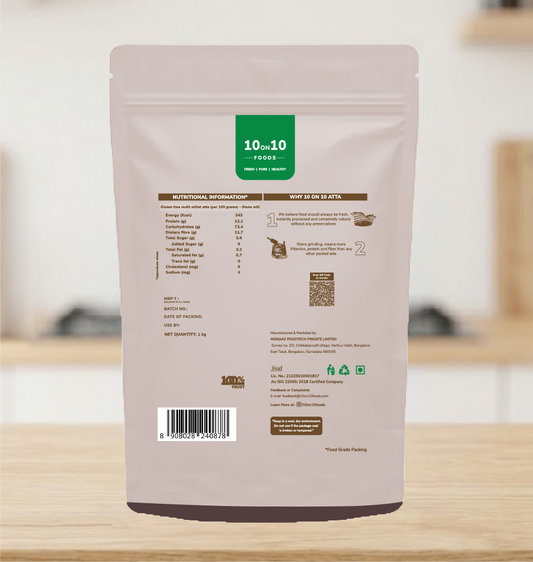
That's why 10on10Foods brings you 100% pure besan, which is made from whole Bengal gram, stone-ground, and roasted the traditional way. No shortcuts, no fillers, no compromise.
10on10Foods' pure besan gives you the fiber-and-protein combo in its best and most effective form. Cause we believe that a “weight loss meal” is only as good as its purity and freshness.
So, whether you're prepping a besan chilla for breakfast or kneading besan ki rotis for dinner, we have got your back.
So, Who Actually Wins? The Final Words
First step first, we need to stop thinking of it as a battle. Sattu and besan can work together as a tag team.
- Start your day with a sattu drink for sustained energy and appetite control.
- Make besan chilla or besan ki roti as your go-to lunch or dinner swap for refined flour.
- Rotate between both throughout the week so you never get bored, and your body keeps getting a steady stream of plant protein and fiber.
Losing weight is not about discovering one miraculous superfood. It starts with the small elements that help you build consistent habits, control portions, and choose the right flour. And frankly speaking, sattu and besan both tick every one of those boxes.
They are desi, and they taste amazing. Additionally, using only quality and unadulterated products like 10on10Foods' Pure Besan is not only cost-effective but also a healthy food choice.
So the next time someone asks you to pick a side, tell them the truth: why choose one when your kitchen has room for both?
FAQs
Q1: Is besan good for PCOS or diabetic weight loss?
A: The low glycaemic index of besan also makes it a smart choice for anyone managing blood sugar or weight gain due to PCOS. Just remember, it should be part of a balanced diet.
Q2: Can I have sattu and besan together in a day?
A: Yes. Sattu drinks in the morning and besan chilla for lunch combine perfectly.
Q3: Which is healthier, sattu or besan, for daily consumption?
A: Both are healthy when consumed in moderation. But the best answer would be to choose the healthy version, like the pure besan from 10on10 Foods.
Q4: Does besan chilla help in reducing belly fat?
A: Yes. Consistently having besan chilla will help you with weight loss in general, but no single food can target fat in the belly specifically, so you have to make sure that you are consistent with your diet. Adding vegetables and pairing the chilla with curd can make the meal more balanced. Just remember to keep the amount of cooking oil moderate.