
Is Khapli Atta the Same as Emmer Wheat?
MOORAV FOODTECH PRIVATE LIMITED AdminMost likely, you've seen the names Khapli wheat and Emmer wheat floating around in healthy-eating videos or the “organic” section of your local store. And if you're wondering whether they're the same grain or two entirely different things, well, this is the case with many individuals too.
It's one of the most common questions people ask before they switch their daily roti flour.
Let's settle this clearly, with the facts to back it up.
So, Is Khapli Wheat the Same as Emmer Wheat?
Yes, khapli wheat is simply the Indian name for emmer wheat. Botanically, both refer to Triticum dicoccum, which is an ancient tetraploid wheat variety that's been cultivated in India for thousands of years. Internationally, and in scientific literature, it's known as emmer wheat.
Besides, the other name for Khapli wheat atta is Khapli Gahu in Marathi, Samba Godhumai in Tamil, Jave Godhi in Kannada, and Jonna Godhuma in Telugu.
So when you see khapli wheat flour, emmer wheat flour, or emmer flour listed on a packet, you're essentially looking at the same grain, just labelled differently depending on the region or the brand's target audience.
|
A Fact You’ve Missed Reading About!!! ICAR has documented Indian dicoccum wheat varieties, including HW 1098 (Nilgiri Khapli), confirming the association between Khapli and dicoccum wheat. FAO's food composition database also separately lists whole-grain Emmer as Triticum dicoccon. |
But there is more to the story than simply knowing that the names refer to the same grain. Khapli wheat has a distinctive history, nutritional profile, and culinary characteristics that make it different from the common bread wheat used in much of today's atta.
A Quick Look at Where It Comes From
Khapli emmer wheat isn't a modern health-food invention. It is simply one of the oldest cultivated grains in human history. Some of the earliest evidence of its cultivation traces back to the Neolithic site of Mehrgarh, dated between 6000-5000 BCE.
In India, it has traditionally been grown in states like Maharashtra, Karnataka, Gujarat, Andhra Pradesh, Rajasthan, and Tamil Nadu. Unlike the hexaploid wheat varieties (Sharbati and Lokwan) that were bred during and after the Green Revolution to maximise yield, khapli wheat has largely retained its original genetic structure.
That's a big part of why doctors and nutritionists have lately started recommending Emmer wheat as a healthier substitute for regular wheat.
What Actually Makes Khapli Atta Nutritionally Different?

Here's where the numbers actually matter, so let's talk facts rather than vague claims.
- Lower Glycaemic Index: Khapli wheat atta has a glycaemic index of roughly 45, compared to around 70 for regular refined wheat. In simple terms, it releases glucose into your bloodstream slowly. This is one reason why it is often recommended for people tracking their blood sugar.
- Higher Fibre Content: Fibre is essential for the human body because it supports healthy digestion, manages blood sugar, lowers cholesterol, and feeds beneficial gut bacteria. Emmer wheat flour typically contains 14-16 g of fibre per 100 g, compared to about 12.2 g in standard wheat flour.
More fibre generally means better digestion and longer-lasting fullness after meals.
- Weaker, More Digestible Gluten: Compared to the contemporary wheat atta you'll find on your kitchen shelf, the gluten structure in Khapli atta is looser and less elastic. However, it is important to remember that this does not mean that anyone with celiac disease or a gluten allergy can safely consume it.
- Solid Protein Contribution: Just three chapatis made from khapli wheat can provide roughly 23% of an adult's daily protein requirement. This is why it is a genuinely useful staple recommended by experts, rather than just a “wellness trend” grain.
- Research-Backed Blood Sugar Benefits: Research from the Department of Plant Sciences at the University of California (Damania et al.) has pointed to Khapli atta’s lower glucose response in people who regularly include emmer wheat in their diets. Therefore, it is an interesting data point for anyone managing metabolic health.
The IDF Diabetes Atlas, 2024, shows that 11.4% of people in India have diabetes. This is why low-GI grains like Khapli wheat are getting more attention from both dietitians and regular people.
Additionally, the ICMR-NIN Dietary Guidelines for Indians, 2024, emphasize the importance of incorporating indigenous and traditional grain varieties into a well-balanced Indian diet. Khapli wheat is a prime example of a grain that is compatible with this recommendation.
Khapli Atta Benefits

There is an increasing interest in Khapli atta benefits, particularly among individuals who are seeking traditional whole-grain alternatives. But how does all of this really apply to daily life? Here are a few of the possible health benefits:
- Gentler on Digestion: The weaker gluten structure and fibre help the gut move, and they may also help with bloating and feeling heavy after a meal.
- Supports Blood Sugar Management: Thanks to its low GI, if you prepare roti from Khapli flour, it will definitely support blood sugar management. Moreover, due to its low glycemic index, it is frequently advised to be consumed in moderation by individuals with diabetes or insulin resistance.
- Rich Mineral Profile: Khapli wheat contains meaningful amounts of magnesium, iron, and zinc. With such a rich mineral profile, organic khapli wheat supports bone strength, energy levels, and immunity.
- Heart-Friendly: Its mineral and fibre content is associated with better lipid metabolism and reduced oxidative stress. Both of these are relevant for cardiovascular health.
- Naturally Low-Input Crop: Organic khapli wheat grows well in tougher conditions with fewer chemical inputs. Due to this, it is a more sustainable choice compared to some modern wheat varieties.
-
It Has a Distinctive Taste: If you've only eaten regular wheat atta, Khapli atta may taste slightly different. To give you an idea, it can have a mildly nutty, earthy flavour that works particularly well in rotis, parathas, theplas, cheela, homemade breads, and traditional baked recipes.
Khapli Wheat Side Effects: Are There Any?
Despite being an ancient grain, Khapli wheat is still wheat. That means it naturally contains gluten and is not suitable for people with coeliac disease who need to follow a strict gluten-free diet. Some people may also experience digestive discomfort after eating wheat products.
However, since no grain is a universal fit, it's worth being upfront about these khapli wheat side effects you should know before switching entirely:
- It Still Contains Gluten: Although it contains less gluten than regular wheat, it is still not gluten-free. That means people with celiac disease or who can't handle gluten should stay away from it, just like they would stay away from regular wheat.
- Digestive Adjustment Period: If you're moving from refined wheat products to high-fibre emmer wheat atta, your digestive system may need some time to adjust. As a side effect, some people may experience temporary bloating or changes in digestion as their fibre intake increases.
So, you should always start with smaller portions, and gradually increasing them can make the transition easier.
- Not a Magic Fix: Although it is a nutritionally superior grain, it isn’t a cure-all or a substitute for medical treatment. On the contrary, it works best as part of an overall diet that includes a variety of whole grains, vegetables, fruits, proteins, and healthy fats.
- Higher Price Point: Khapli emmer wheat can cost more than conventional wheat because it is a relatively niche crop with lower production volumes and more specialised cultivation and harvesting.
Knowing this, khapli wheat atta is a premium alternative to regular wheat flour for Indian consumers, especially when sourced from organic or carefully processed producers.
Overall, before making it your regular flour, it is wise to consult with a physician or dietitian if you have any pre-existing digestive or metabolic condition.
Looking for Khapli Wheat Online?
If you're searching for khapli wheat online, khapli atta online, or khapli wheat flour online, compare products carefully before ordering. Look beyond phrases such as “ancient grain”, “healthy flour”, or “traditional atta”.
And if a product page mentions the following important information, it will help you make an informed decision:
- Ingredient information.
- Nutrition facts.
- Net quantity.
- Processing details.
- Storage instructions.
- Manufacturer/brand information.
- Batch and expiry information.
- Customer support information.
10on10 Foods and Their Khapli Atta
10on10 Foods is a food brand that brings wholesome and thoughtfully sourced ingredients to everyday kitchens. With an emphasis on quality, nutrition, and traditional food choices, we aim to make healthier eating simpler without compromising on taste.
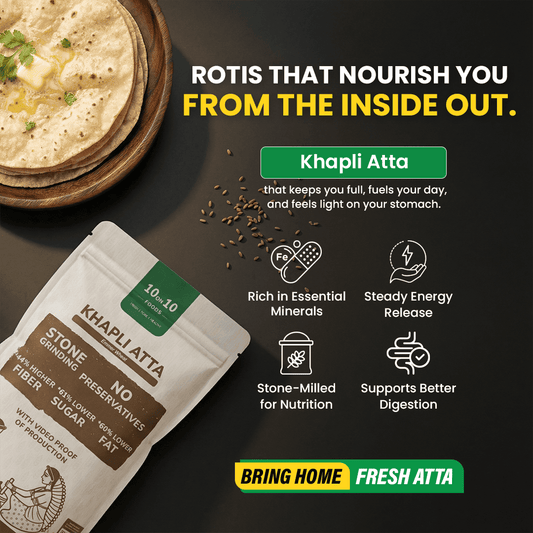
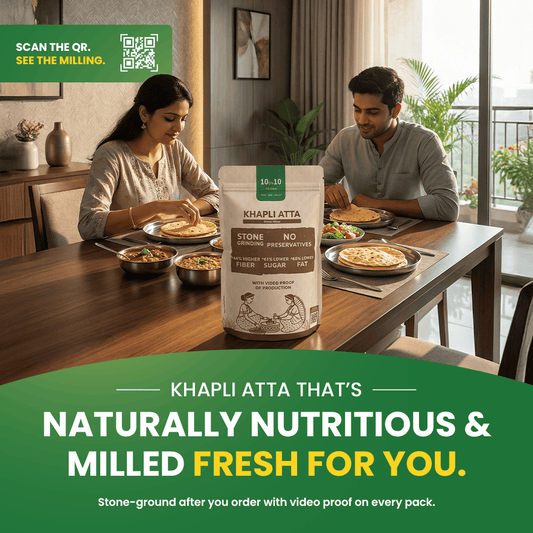
So if you're specifically looking for a packaged khapli atta, 10on10 Foods offers Khapli Atta (Emmer Wheat Flour) that is high in fibre. Our khapli atta online includes 14.54g of dietary fibre and 14.51 g of protein.
The key highlights of 10on10 Foods khapli wheat flour online are as follows:
- Unrefined.
- Free from added preservatives and chemicals, according to the brand.
- Suitable for rotis, phulkas, and parathas.
- Available online in 1 kg, 2 kg, and 5 kg packs.
Another thing that makes the best khapli atta brand in India is our emphasis on stone-ground processing. It is a traditional milling method that keeps the bran and germ intact, rather than stripping them away the way industrial roller mills often do.
For households wanting to buy emmer flour for everyday Indian cooking, 10on10 Foods' Khapli atta is one option to consider based on its stated ingredients, processing, and nutrition information.
Final Takeaway
So, is Khapli atta the same as Emmer wheat? Yes, in general. Khapli wheat is the Indian name commonly used for Emmer or dicoccum wheat, scientifically associated with Triticum dicoccum. Khapli atta is the flour made from this grain.
What matters more than the name is what's actually in the packet. Whether it's genuinely 100% khapli wheat, how it's been milled, and how transparently it's been sourced.
However, if you get those three right, you can get an organic pack of khapli wheat flour online that has fed Indian households for thousands of years.
FAQs
Q1: Is there any difference between Khapli wheat and normal wheat?
A: Yes. Khapli wheat is a very old, non-hybrid crop. Standard wheat, in contrast, is a relatively young crop that is well bred to produce a higher yield and have good gluten development.
Q2: Who should not eat Khapli wheat?
A: Individuals dealing with celiac disease, a wheat allergy, or severe gluten sensitivity should avoid eating Khapli wheat because the grain still contains gluten.
Q3: Why do Khapli Atta cost so much?
A: Khapli Atta is on the expensive side because it is a low-yield crop, and it also needs extra manual processing and careful stone-grinding.
Moreover, its cultivation, harvesting, and processing can also involve more careful handling, which contributes to its higher price compared with mass-produced wheat flour.
Q4: Is Khapli wheat better than jowar?
A: Because Khapli wheat is an ancient wheat and Jowar is a naturally gluten-free millet, whether Khapli wheat is superior to Jowar depends on your dietary needs, digestion, and health requirements.
Q5: Does Khapli Atta reduce weight?
A: Yes, khapli atta can definitely help people lose weight due to the presence of more fiber and a lower GI compared to modern wheat flour.