

10on10 Foods
Makki Atta, Stone-Ground Maize Flour, Milled Fresh
Makki Atta, Stone-Ground Maize Flour, Milled Fresh
Couldn't load pickup availability
 Order On WhatsApp
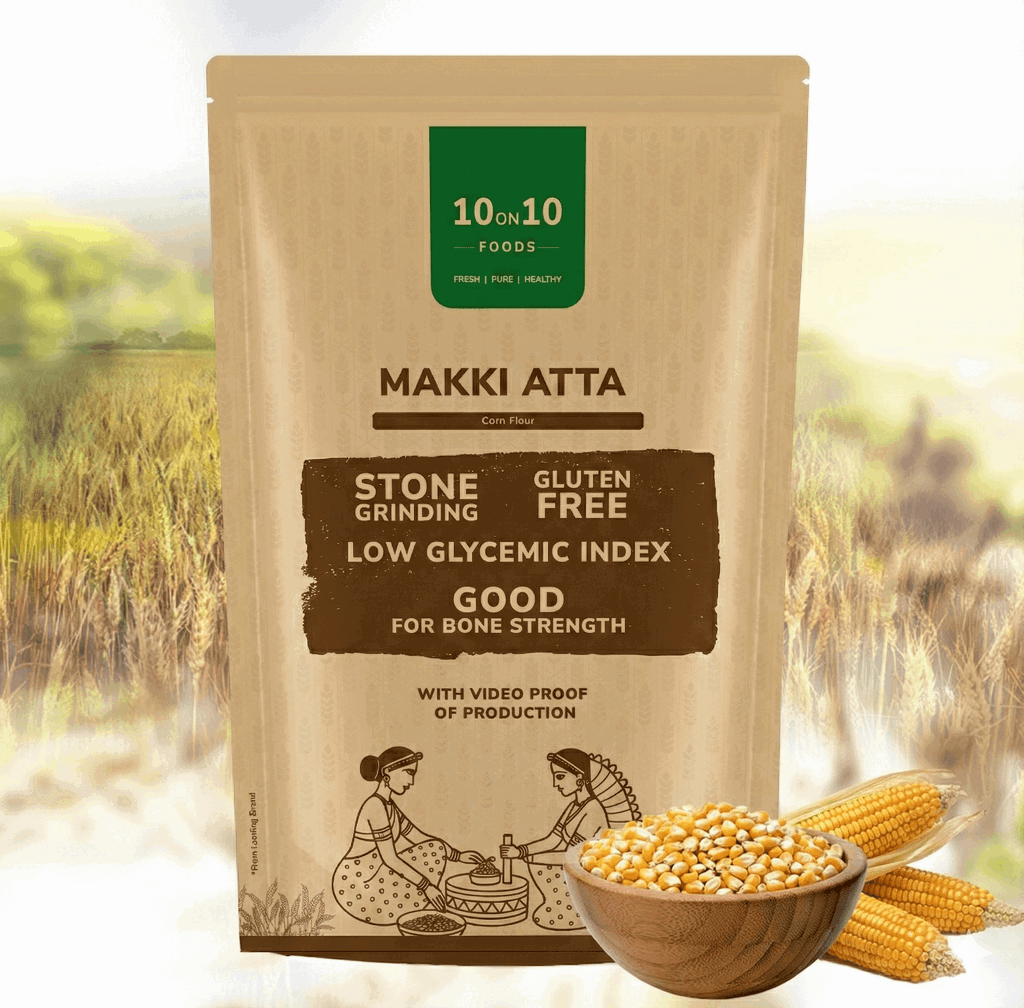
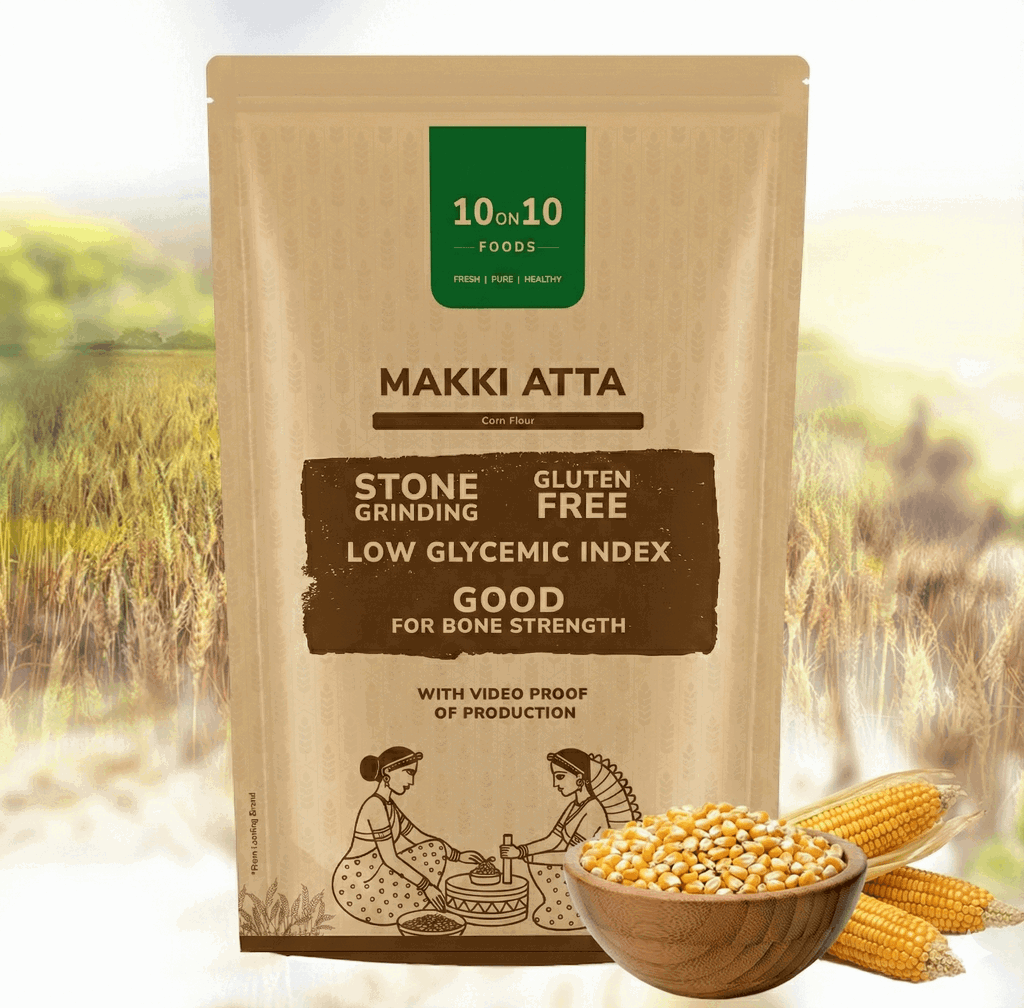
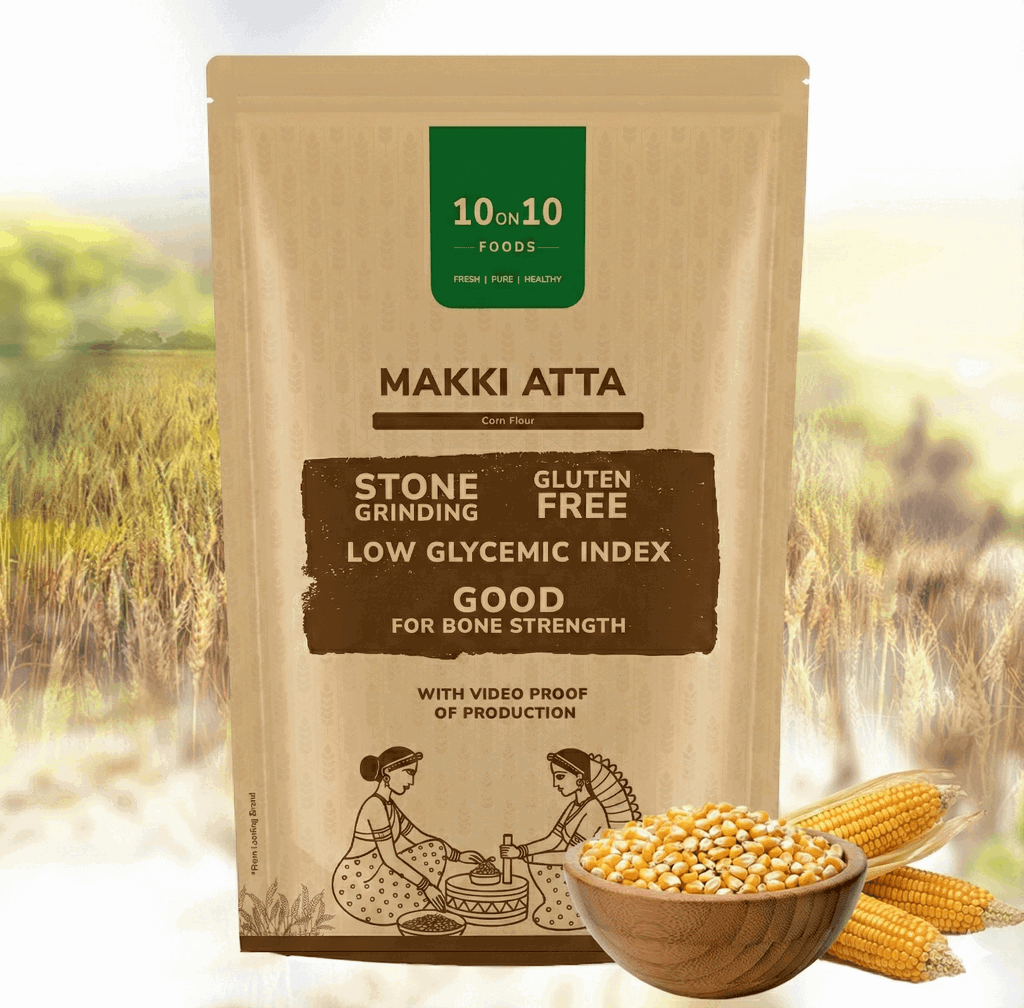
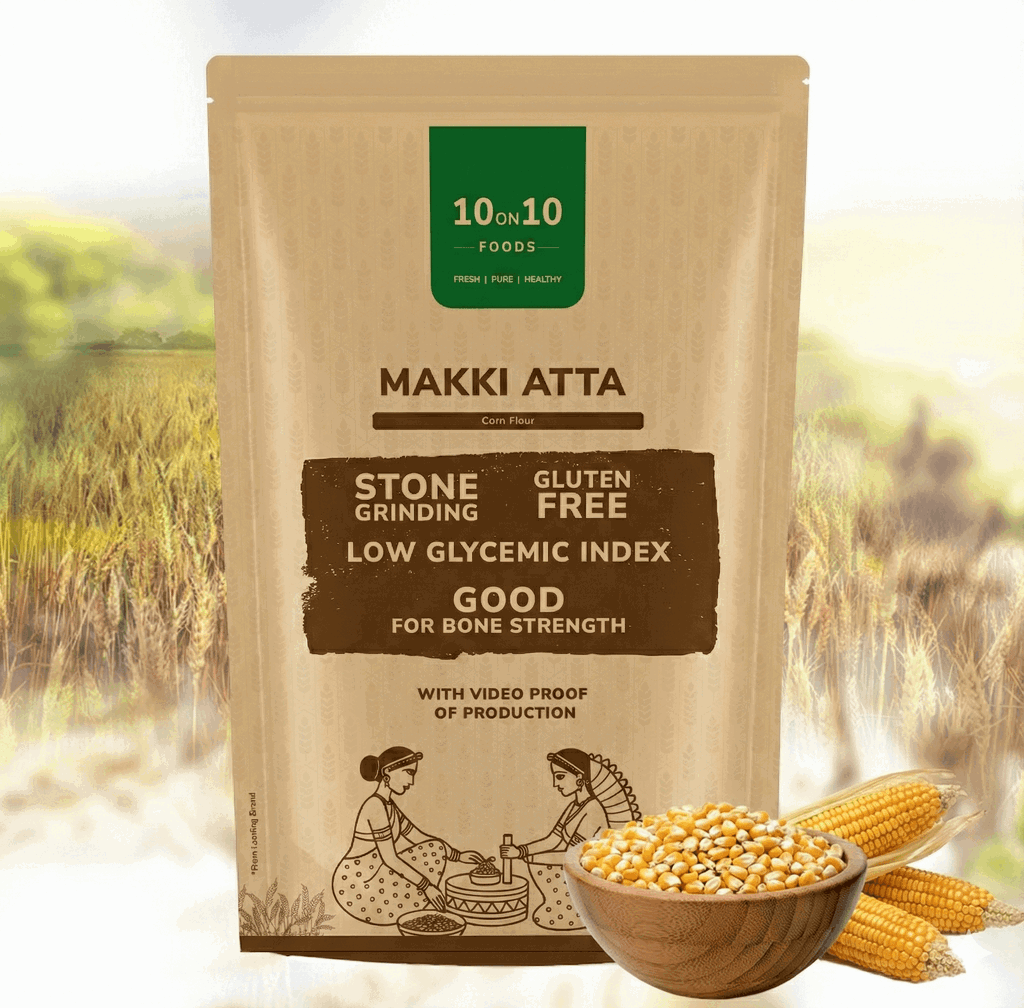
Makki di roti with sarson da saag is one of the few dishes the whole country agrees about, and it is also one of the few where the flour has nowhere to hide. There is no gluten, no blend, nothing to cover for a stale grind. Ours is stone-milled from whole maize after you order, which is really the only way this roti works.
Milled fresh after you order
Maize flour is one of those things that is either fresh or it is disappointing.
- Whole maize is cleaned and stone-milled on a traditional chakki
- The stones run slow and cool, so the germ stays in and the flour keeps its sweetness and its yellow
- Nothing is added afterwards. No binder, no preservative, no anti-caking powder
- Milled against your order, because maize germ carries oil and dulls quickly once it has been sitting
Watch your own batch. Every pack carries a QR code. Scan it and you will see the video of the batch that became your atta.
Nutrition per 100g
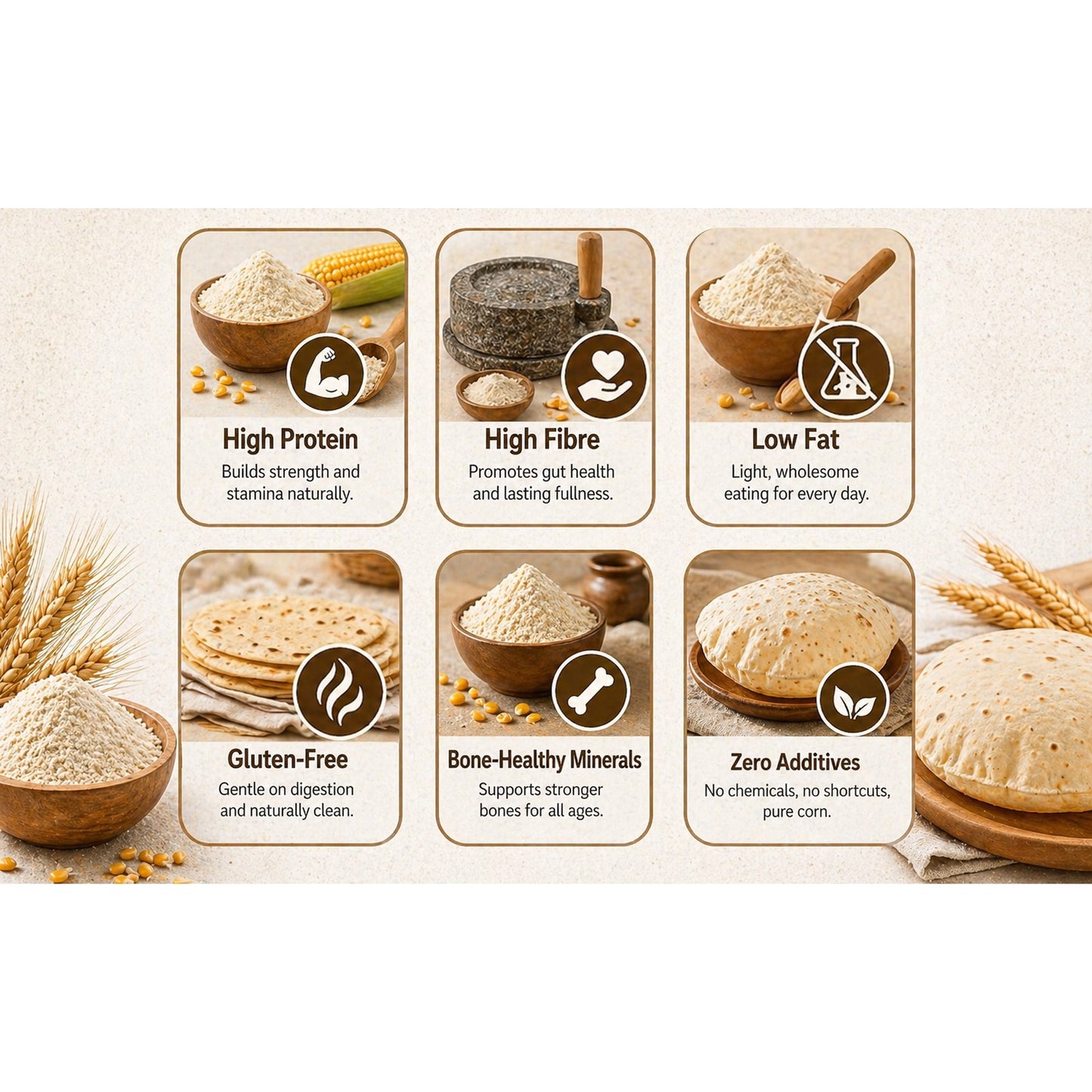
- Whole maize, milled with the germ intact rather than degermed the way commercial corn flour usually is
- A source of dietary fibre and plant protein
- Naturally free of wheat, with nothing blended in
- Full analysis is published here: our lab reports
On gluten: maize is a naturally gluten-free grain. It is milled in a facility that also handles wheat, so if you are avoiding gluten strictly or for coeliac disease, please take that into account.
What makes our makki atta different
- It is not degermed. Most commercial maize flour has the germ stripped out to extend shelf life. That is what makes it pale and flat-tasting. Ours keeps it, which is why it is deeper yellow and sweeter
- It is makki atta, not cornflour. Cornflour, the white stuff used to thicken gravies, is pure maize starch and a completely different product
- Stone-milled, not roller-milled, which keeps the grind slightly textured rather than powder-fine. That texture is what gives makki di roti its character
- It is a winter flour in most of north India, and it eats like one, warm and substantial
Who it is for
- Households in Punjab, Haryana and Himachal where makki di roti is a winter fixture
- Anyone avoiding gluten who wants a flour with real flavour rather than a neutral substitute
- Cooks who have been disappointed by pale, flat supermarket maize flour
- Families rotating grains through the year
How to use it
- Makki di roti, with sarson da saag and a knob of white butter
- Makki thalipeeth, blended with jowar and besan
- Makki dhokla and cheela
- Blended into wheat atta, a quarter makki, for a sweeter, more golden roti
The makki di roti tip. This is the hardest roti in the Indian kitchen and it is entirely about method. Use hot water. Knead the dough while it is warm and keep it slightly wetter than you think is right. Then do not roll it, pat it out between your palms or on a damp cloth or a sheet of plastic, and slide it onto a hot tawa. If it cracks at the edges as you pat, wet your fingers and press the crack shut. Every crack you close is one that will not tear on the tawa.
Pack sizes and which to pick
- 500g, ₹63.81. Start here. Makki is best used fresh, and for most households it is a seasonal flour rather than a daily one
- 1kg, ₹122.86. For kitchens where makki di roti is a regular winter meal
Storage and shelf life
- Because the germ is still in it, this flour is more perishable than degermed commercial maize flour. That is the trade for the taste
- Move it into an airtight steel or glass container as soon as it arrives
- Keep it cool and dry, away from the stove and out of direct sunlight
- In humid weather, refrigerate what you will not use in the next few weeks
- Go by the milling date printed on your pack
Shipping and delivery
- Free shipping above ₹299
- Milled after your order is placed, so dispatch takes a little longer than a warehouse product
- Delivered across India, sealed, with the QR code on every pack
Why buy from 10on10 Foods
- FSSAI licensed and ISO 22000:2018 certified
- Lab-tested, with the reports published: see them here
- Guided by our nutritionist Dr. Anju
- Whole maize with the germ left in, not degermed for shelf life
- Milled fresh after you order, with QR video proof of your own batch
Frequently asked questions about Makki Atta
Is makki atta the same as cornflour?
No, and this is the most common mix-up. Makki atta is whole maize, stone-milled, and it is what you make makki di roti from. Cornflour is white maize starch used to thicken gravies. They are not interchangeable.
Is makki atta gluten free?
Maize is a naturally gluten-free grain. Ours is milled in a facility that also handles wheat, so we would not call the finished flour suitable for coeliac disease. For everyday gluten avoidance it works well.
Why does my makki di roti keep breaking?
There is no gluten in maize, so nothing binds the dough except heat and moisture. Use hot water, keep the dough wetter than feels right, pat it out by hand instead of rolling, and press any cracks shut with wet fingers before it goes on the tawa.
Why is your makki atta darker than the one I usually buy?
Because we do not degerm it. The germ is what carries the colour, the sweetness and the oils, and it is the first thing removed in commercial milling to extend shelf life.
Can I eat makki roti through the year?
You can, though most Indian kitchens treat it as a winter flour because it eats warm and heavy. There is no rule about it.
How should I store makki atta?
Airtight, cool and dry, refrigerated in humid weather. It is more perishable than degermed flour precisely because it has more in it.
Also available on Blinkit, Swiggy Instamart and FirstClub. Those packs are milled in advance and stocked ready to deliver. Milled-to-order packs, with QR video proof of your own batch, ship only from here.
Learn more and recipes


Create Your Own Customized Order