
What Is Gluten Free Atta: Benefits, Types and Uses
MOORAV FOODTECH PRIVATE LIMITED AdminShare
Benefits of Gluten Free Atta: Why This Question Is Suddenly Everywhere
Think about what you eat for dinner every night as nothing but rice and chapatti (breads made of wheat) together, neither special nor a treat, but something that you enjoy eating almost every day without thinking about it, it's something that is just part of who you are, it seems natural to you and feels safe and traditional.
However, many people have been reporting that they are now experiencing heaviness after meals and feeling bloated all of the time as well as being more tired than they used to be, despite not increasing the amount of food they are consuming. As such, an inkling of suspicion is starting to form in their mind, which states that the reason for these changes in their health is not due to the amount of food being consumed, but the types of food being consumed.
This is when the majority of people will first hear about gluten free flour. Following this initial discussion, the real question arises; what are the benefits of gluten free flours, and do they really have an impact on one's health?
With respect to the question posed above, the short answer is - no, it won't be that dramatic, however, it is more of a realistic perspective and involves knowing how gluten actually works within the body.
Benefits of Gluten Free Atta: Understanding Gluten Without Complicating It
Wheat, Rye & Barley- Glutinous Grain
A grain that is glutinous (and by definition contains gluten; this protein is responsible for providing flexibility and integrity to various types of baking) is referred to as a glutinous grain. Although gluten is present in many cereal grains, oats are distinct as in that they are naturally gluten-free and suitable for human consumption.
Gluten is difficult for people who are lactose intolerant or have a lactose allergy to digest. For some individuals, gluten can be held in their intestines; this fermentation creates a heavy feeling in the stomach. If not consumed, gluten can cause excess bloating, intestinal inflammation, tummy aches and general tiredness.
In comparison, when a gluten-free flour is produced, it is not from wheat, but from naturally gluten-free grains, such as millet, brown rice, corn and buckwheat. Gluten-free flours use alternative grains that were used prior to the formation of modern day commercial wheat flour products.
How Gluten Free Atta Compares With Regular Atta and Store-Bought Flour
|
Aspect That Matters Daily |
Regular Wheat Atta (Store-Bought) |
Gluten Free Atta (10on10 Foods) |
|
Gluten Presence |
High, can feel heavy for many people |
Naturally gluten free, lighter on digestion |
|
Digestive Comfort |
Often causes bloating or acidity over time |
Easier digestion, reduced heaviness |
|
Processing Method |
Industrial milling, heat-intensive |
Traditional milling, low heat |
|
Freshness |
Milled weeks before purchase |
Milled only after you order |
|
Nutrient Retention |
Nutrients degrade during storage |
Fiber, minerals & natural oils retained |
|
Glycemic Impact |
Moderate to high blood sugar spikes |
Lower glycemic response, steadier energy |
|
Suitability for Daily Use |
Common but not ideal for all bodies |
Suitable for sensitive digestion & conscious eating |
|
Transparency |
No visibility into milling time |
Video proof with timestamp provided |
|
Additives & Preservatives |
Often present to increase shelf life |
Absolutely none |
|
Environmental Impact |
Single-use packaging |
Eco-friendly & refillable options |
Why Digestion Improves for Most People
Most of the changes one feels, happen in the digestion.
Gluten-free grains generally contain simpler starch structures and higher natural fiber. This ultimately means that the stomach doesn't have to work quite so hard, and the gut isn't inflamed trying to break down a complex of proteins.
People who turn to gluten-free 'atta' often describe meals as "lighter" even when the portion remains exactly the same. There is less bloating, fewer episodes of acid reflux, and, on the whole, a calmer digestive cycle.
It's an effect that's even more pronounced at 10on10 Foods, where atta doesn't get milled until you've placed your order. That's because when flour just sits on the shelves, its natural oils get oxidised and fiber breaks down. Fresh milling preserves what the grain is meant to offer which is , nutrition working gently, and not aggressively.
This freshness highly amplifies the benefits of gluten-free atta, especially for daily consumption.
A Quiet Advantage for Blood Sugar and Energy
The nutritional benefits of gluten free grains is also becoming more prevalent because of its positive effects on blood sugar levels.
Most gluten free grains, especially millets, have lower glycemic indexes than refined wheat flour. This means that glucose will enter the bloodstream at a slower rate and will therefore result in less dramatic spikes and drops in blood sugar.
This will result in people with diabetes having better overall blood sugar regulation.
For people who do not have diabetes, gluten free grains provide a more sustained form of energy after a meal instead of feeling tired and lethargic.
It should be noted that both the type of grain and the processing that is performed on the grain will have a significant impact on these blood sugar benefits. For example, 10on10 Foods uses traditional milling techniques to preserve the integrity of the fiber layer, and this will result in slower digestion of the grain due to the presence of fiber.
Nutrition Beyond Just “No Gluten”
People often think that gluten free flour is less healthy than gluten-based flour but this isn't true! In fact, for many people gluten-free flours may provide more bang for your buck.
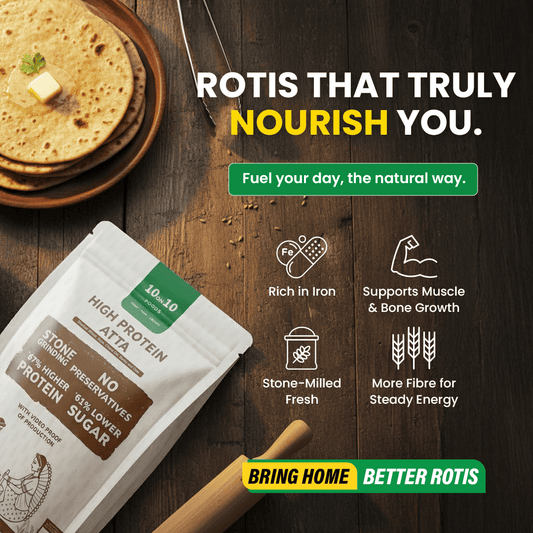
Instead of relying on Wheat, Barley & Rye which contain gluten, millet provides many minerals including magnesium, iron, calcium, zinc e.t.c. While they are gluten-free grains and include bone supportive ragi (Irish barley), iron-rich bajra (millet), jowar (sorghum) for heart health & buckwheat which supplies plant based protein.
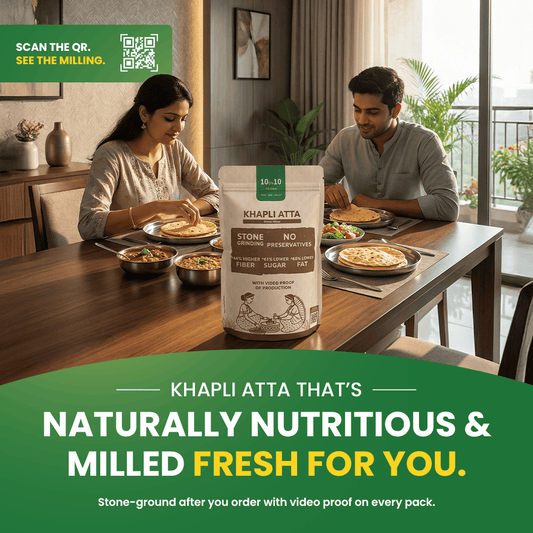
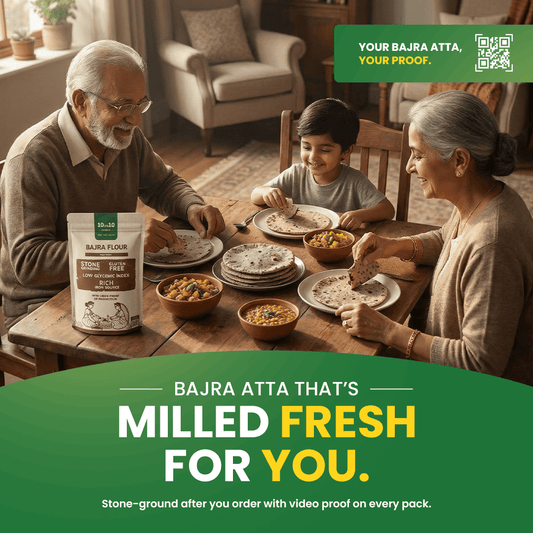
When freshly milled without using chemical preservatives and other additives, these grains maintain all their nutritional value. At 10on10 Foods we believe food should be processed as soon as possible, not stored for prolonged periods of time. This is why we provide video proof (with time stamps) showing you exactly when your flour was milled. Nutritious products can only build trust when they have transparency.
Choosing the Right Type for Your Kitchen
However, not all gluten-free atta are alike, which is a fact to keep in mind.
Certain flours such as jowar and bajra are great for making rotis and require only a little extra water. Rice and corn flour feels lighter and is great for making regional recipes. Buckwheat is very filling and is usually consumed during fasting. However, its health benefits are immense throughout the year.
The trick is not perfection, it is familiarity. When your kitchen adjusts to the skills of hydration and kneading, gluten-free atta becomes every bit as easy to work with as wheat atta was.
Freshness is again a crucial point in this context. Freshly milled wheat absorbs water easily. It does so in a more natural way. It results in softer rotis. Everyone knows that this is not possible in the case of gluten-free grains.
Gluten-Free Options at 10on10 Foods: What Works Best
Not all attas are gluten-free, and that's an important point of distinction. For example, at 10on10 Foods, we carefully distinguish between naturally gluten-free grains and flours made from wheat. That way, we allow the consumer to decide what their body truly responds to.
Naturally Gluten-Free Atta (Best for Sensitive Digestion)
These are gluten-free on their own, and can be used for everyday Indian cuisine, when ground fresh:
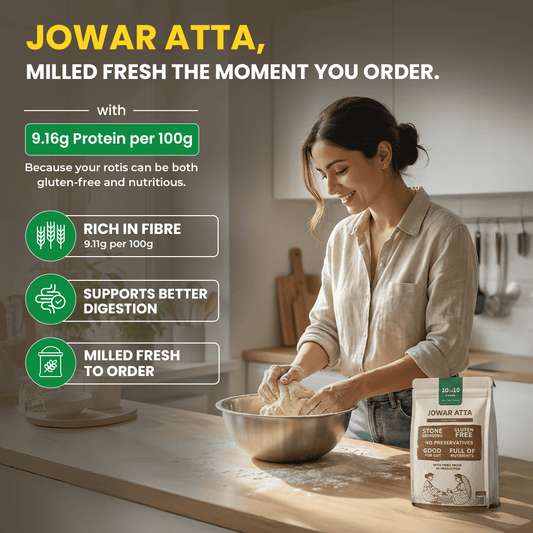
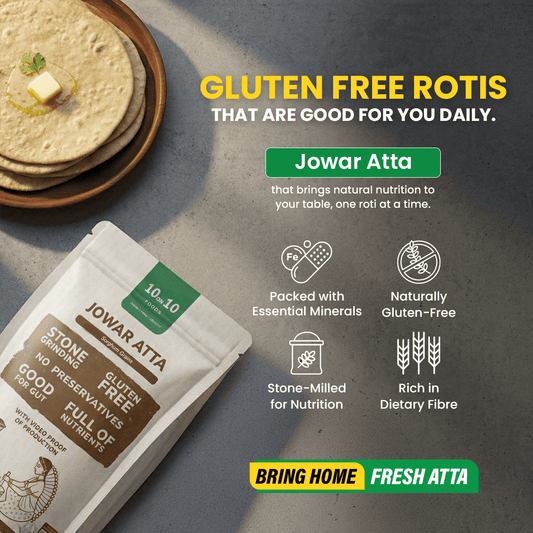
- Jowar Atta: Very good for making rotis and bhakris. Easy to digest. Suitable for eating.
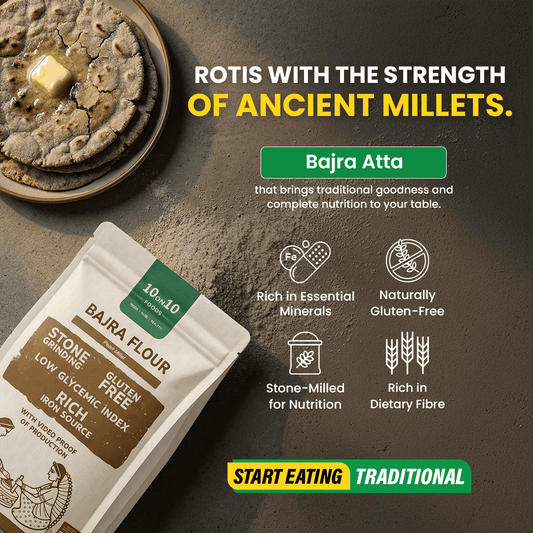
- Bajra Atta: Iron-fortified and very nutrient-dense. Most helpful for sustained energy and satiety.
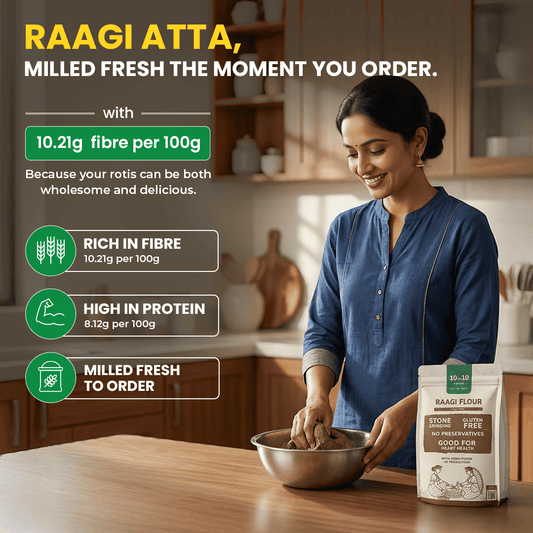
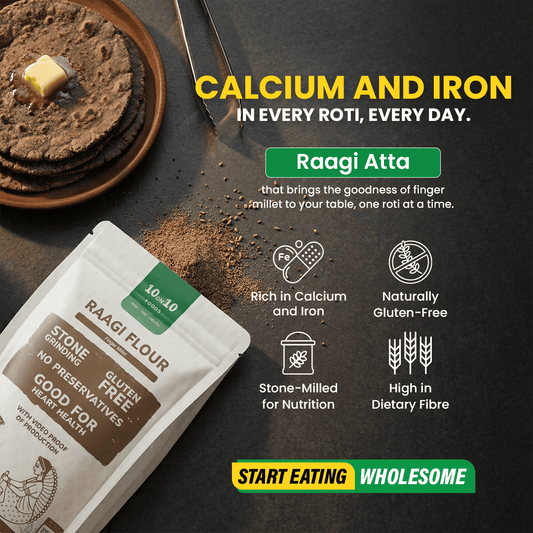
- Raagi Atta: Rich in calcium and promotes bone development. It is best used for rottis, dosas, and porridges.
- Makka Atta: Naturally gluten free and stomach-friendly. Traditionally used to make rotis, makki ki rotis, and more.
-
Pure Besan: Gluten-Free and High Protein. Perfect for chilla, cheela, kadhi, and snacks.
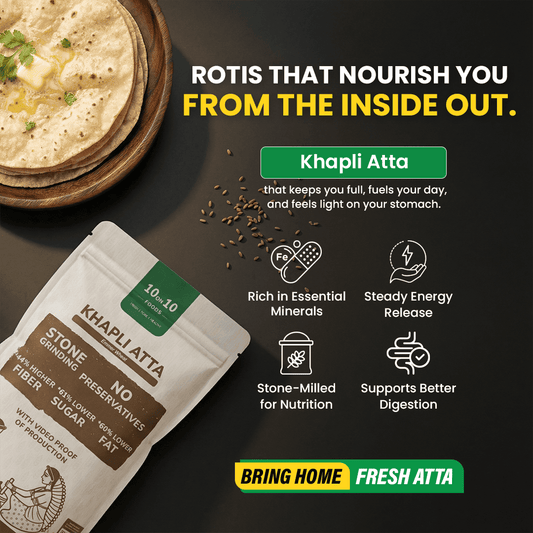
- Khapli Atta: Gluten-free, rich in fiber and protein, made from stone-ground Emmer wheat. Ideal for preparing soft rotis, parathas, and healthy meals.
It is important to note that the use of these flours gives the best results when it is done with fresh flours, seeing that the grains used in gluten-free foods are more delicate compared to others.
It is worth noting that Khapli wheat is an old type of grain and is easily digestible. To prepare the best food, it is always better to have fresh stone-ground flour, as gluten-free, low-gluten, or other grains are more refined than wheat flours.
Why Fresh Milling Matters Even More for Gluten-Free Grains
Gluten-free atta has natural oils that oxidize faster than wheat. That's why packaged gluten-free atta or flour usually has a dull or stale smell.
In 10on10 Foods, all atta, as well as all gluten-free variants like jowar, bajra, raagi, makka, and besan, are produced after you order, ensuring that your flour is light on your digestive system.
Everyday Indian Food, Just Made Better
Eating gluten free does not require changes in the way you eat, but it does have an impact on how your body feels after you eat. Gluten free products such as rotis, parathas, bhakris, chillas, etc. already exist in our culture, so what is changed is the type of grain ( Gluten Free) and the quality of milling of that grain.
Freshness, No Chemicals and Traditional Processing of flour will make digestion not only easier and also give you the feeling of more energy without that heavy feeling after your meal. This is where gluten free atta gets its true power through the benefits of being gluten free.
Where Freshness is a Must
Gluten free atta are fragile. They have a tendency for the natural oils and nutrients found in the flour to go bad faster than those found in wheat flour. This is why commercial gluten free flour tends to smell and taste dull.
In the case of 10on10 Foods, a caller inquired about the process they follow for milling the atta since the company mills the flour only after an order is placed and the flour is delivered in a matter of hours. When questioned about eco-friendly and refillable products, the company’s representative explained that not only do
Because dates are less important than freshness.
Food must also benefit one's body, rather than just filling one's belly.
A Final Thought
Moving to gluten-free atta is not based on fear and trends.
“It's about awareness.”
It’s about making food choices that coincide with how our body is meant to function. And if that food comes from grain that’s been freshly milled, processed in a way that’s easy to understand, and lacks additives that serve no biological purpose, it’s felt, not advertised.
At 10on10 Foods, simplicity is the promise. Fresh. Natural. Honest. Trustworthy,
"That's where the real benefits begin."