
12 Ways to Use Jowar Flour at Home (Recipes Inside)
MOORAV FOODTECH PRIVATE LIMITED AdminShare
In today’s world, healthy eating is no longer a trend — it’s a lifestyle. And when it comes to nutritious flours, Jowar Flour (also called Sorghum Flour) has gained immense popularity for its health benefits, versatility, and natural goodness.
If you're new to this grain, here's our complete jowar guide
At 10on10 Foods, we bring you 100% pure Jowar Flour, carefully milled to retain nutrients and freshness. Unlike refined flours, our Jowar Flour keeps all the natural fibre, vitamins, and minerals intact — making every meal wholesome and satisfying. Let’s explore how Jowar Flour can elevate your meals, its benefits, and some precautions you should keep in mind.
Table of Contents
- What Is Jowar Flour?
- Common Uses of Jowar Flour
- Health Benefits of Jowar Flour
- Nutritional Value (Per 100g)
- Is Jowar Good for Diabetics and Kids?
- Is Jowar Safe During Pregnancy?
- Jowar Benefits for Skin
- Tips to Cook with Jowar Flour
- Why Choose 10on10 Foods Jowar Flour
-
Frequently Asked Questions
Want to know if jowar suits your body type? See our body-type guide
What Is Jowar Flour?
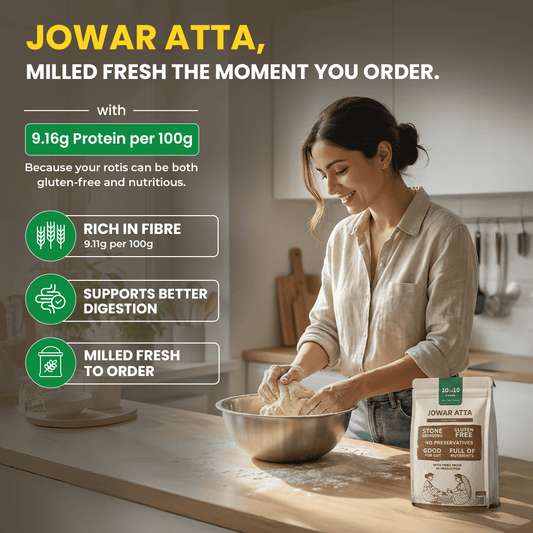
Jowar Flour is made by grinding the grains of Sorghum, a naturally gluten-free cereal that has been cultivated in India for centuries. Unlike refined flours, Jowar Flour is nutrient-dense, high in fibre, and low in fat, making it ideal for healthy, balanced meals. Its mild, slightly nutty flavour and fine texture make it versatile for a variety of dishes, from traditional Indian rotis to modern baked goods.
Depending on where you're from, you may know it by a different name — jwar or juar in Hindi, jonna in Telugu, or cholam in Tamil. It's all the same grain: sorghum.
Common Uses of Jowar Flour
- Roti / Bhakri: Traditional Indian flatbreads that are light and nutritious
- Porridge / Upma: A wholesome breakfast option
- Baking: Cakes, muffins, and cookies for a gluten-free twist
- Pancakes & Dosas: Soft, healthy, and flavourful
- Thickening Soups & Gravies: Adds fibre and texture naturally
Health Benefits of Jowar Flour
1. Rich in Fibre: Supports digestion, keeps you full longer, and helps maintain healthy cholesterol levels — also one of the reasons jowar is a popular choice for weight management.
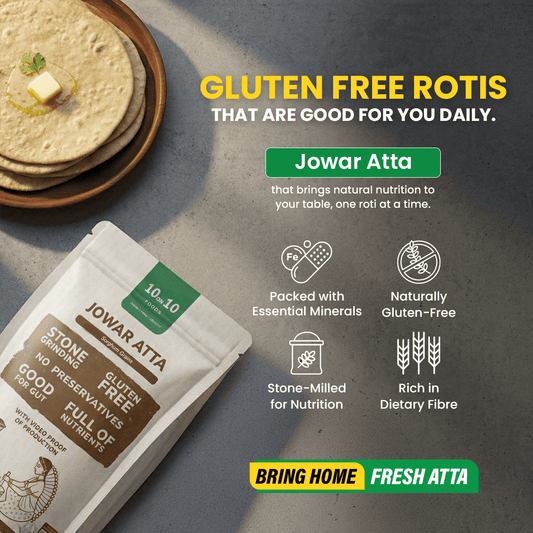
2. Gluten-Free: Safe for people with gluten intolerance or celiac disease.
3. Packed with Protein: Supports muscle repair, immunity, and energy production.
4. Low Glycaemic Index: Helps manage blood sugar levels — ideal for people with diabetes.
5. Mineral-Rich: Contains iron, magnesium, and phosphorus, promoting bone health and overall wellness.
6. Heart-Friendly: Low in fat and free from refined components, making it a heart-healthy choice.
7. Supports Skin, Hair and Bone Health: Antioxidants and B-vitamins support skin elasticity, zinc supports hair growth, and calcium plus phosphorus help build strong bones — see the dedicated skin section below.
Nutritional Value of Jowar (Per 100g)
| Nutrient | Amount | Health Impact |
| Calories | 329 kcal | Provides long-lasting energy |
| Protein | 10.4 g | Helps build and repair muscles |
| Fibre | 9.7 g | Improves digestion and promotes fullness |
| Iron | 4.1 mg | Prevents anaemia and boosts stamina |
| Calcium | 25 mg | Strengthens bones and teeth |
| Magnesium | 165 mg | Supports heart and nerve function |
| Phosphorus | 287 mg | Vital for metabolism and bone health |
Jowar's glycemic index sits around 55, well below whole wheat atta (~69) and refined maida (~80+) — which is exactly why it's a smarter carb for anyone watching blood sugar.
Is Jowar Good for Diabetics and Kids?
For diabetics: jowar's low glycemic index (~50–55) means glucose is released slowly, supporting insulin regulation and helping avoid the sugar spikes that whole wheat (~69) and refined flour (~80+) can cause. Its high fibre content further slows gastric emptying and glucose absorption. As always, this supports a diabetic-friendly diet but isn't a substitute for medical advice — check with your doctor or Dr. Anju on how it fits your specific plan.
For kids: jowar supports growth and development through its protein and minerals, boosts immunity through antioxidants, aids digestive health through fibre, and provides the sustained, slow-release energy that keeps active kids going — all while being naturally gluten-free for children with wheat sensitivities.
Is Jowar Safe During Pregnancy?
Yes, in moderation — jowar is commonly included in a pregnancy diet across Indian households. Its iron and folate content support the increased blood volume and neural development needs of pregnancy, while its fibre helps ease the constipation many women experience, especially in later trimesters. Its low glycemic index is also useful for women managing or at risk of gestational diabetes, since it avoids the sharp blood sugar spikes that refined flours can cause.
As with any dietary change during pregnancy, introduce it gradually and discuss your overall diet with your gynaecologist or a qualified nutritionist — this is general nutrition information, not a substitute for personalised medical advice.
Jowar Benefits for Skin
Skin health is shaped as much by what you eat as by what you apply. Jowar's polyphenols and antioxidants protect skin cells from oxidative stress and slow premature ageing; its zinc content supports wound healing and helps regulate oil production; and its fibre supports the gut–skin axis, reducing the digestive toxin buildup often linked to acne and dull skin. Its low-to-moderate glycemic index also means fewer insulin spikes — one of the key dietary triggers behind acne and inflammatory breakouts. None of this replaces a skincare routine, but consistent, daily jowar (roti, porridge, dosa) is a genuine nutritional support for skin from within.
Tips to Cook with Jowar Flour
- Mix Jowar Flour with water gradually to make soft rotis or bhakris.
- Use a little oil or ghee while cooking flatbreads for better softness.
- Combine with other flours like wheat or ragi if you want a milder texture.
- Store in an airtight container in a cool, dry place to retain freshness.
Why Choose 10on10 Foods Jowar Flour
- 100% pure Jowar Flour — no additives, preservatives, or refined flour
- Carefully milled to retain natural nutrients and flavour
- Fresh and wholesome — ideal for everyday use
- Trusted by countless homes for health-conscious cooking
Choose 10on10 Foods 100% Pure Jowar Flour for wholesome meals that nourish your body and delight your taste buds. Because your family deserves purity, nutrition, and flavour in every bite, every meal you prepare becomes a step towards healthier, happier living.
Try our stone-ground Jowar Atta
Frequently Asked Questions About Jowar Atta
Q1. Is Jowar Flour gluten-free?
A1. Jowar Flour is naturally gluten-free, which makes it an excellent option for people with gluten intolerance, celiac disease, or those who prefer gluten-free diets. It can be safely incorporated into a variety of meals without causing digestive issues related to gluten.
Q2. Can I replace wheat flour entirely with Jowar Flour?
A2. Jowar Flour can replace wheat flour entirely in many recipes, but it may require some adjustments. Mixing it with water gradually or combining it with other flours can help achieve the right dough consistency, especially when making soft rotis or parathas. Experimenting with proportions ensures the texture remains soft and easy to handle.
Q3. Does Jowar Flour help in weight management?
A3. Jowar Flour is high in fibre, which promotes a feeling of fullness for a longer time, reducing the tendency to overeat. Its slow-digesting carbohydrates support steady energy levels, making it a smart choice for those looking to manage their weight while maintaining proper nutrition.
Q4. How should I store Jowar Flour?
A4. Jowar Flour should be stored carefully to preserve its freshness and nutritional value. Keep it in an airtight container in a cool, dry place, away from sunlight and moisture. For longer shelf life, refrigeration or freezing in sealed packs is recommended. Proper storage ensures the flour stays aromatic, healthy, and ready to use whenever you need it.
Q5. Is Jowar Atta good for a diabetic diet?
A5. Yes. Its low glycemic index (~50–55) and high fibre content help regulate blood sugar, improve insulin sensitivity, and reduce post-meal glucose spikes — always check with your doctor for how it fits your specific plan.
Q6. Can jowar help with acne and skin health?
A6. Jowar's antioxidants, zinc, and low-to-moderate glycemic index support better digestion and more balanced blood sugar — both linked to reduced inflammation and fewer acne triggers, alongside a proper skincare routine.
Q7. Is Jowar Flour suitable for kids?
A7. Yes — it's rich in iron, calcium, and protein for growth, and being naturally gluten-free, it's safe for children with wheat sensitivities.
Q8. Is jowar safe to eat during pregnancy?
A8. Yes, in moderation — it's a common part of Indian pregnancy diets thanks to its iron, folate and fibre content. As always, check with your gynaecologist before making significant dietary changes.