
Protein Content in High Protein Atta vs Regular Wheat Atta: Full Nutrition Comparison
MOORAV FOODTECH PRIVATE LIMITED AdminShare
Not all attas are created equally, especially when protein is your major concern. The regular wheat atta has been a staple ingredient in the kitchen for years. Our mums, grannies, or sisters have long been making flatbreads like chapati, roti, paratha, or puri with regular wheat flour.
On the contrary, the growing health-conscious choices are redefining everyday nutrition needs in the same roti. Many people are paying closer attention to protein content, muscle support, and overall nutritional value in their daily meals.
Now the question arises, when comparing high protein atta vs normal atta, which one truly supports your health goals? This descriptive guide breaks down the complete nutritional difference. Get ready to go through the talks about protein concentration, amino acid value, fibre content, and overall dietary impact.
Key Differences Between High Protein Atta and Regular Atta
To truly understand the difference between high protein atta vs normal atta, you need to check beyond the protein numbers on the label. Majorly, the variation lies in the following:
- Processing Techniques: High-protein atta is made by triple-ground whole-wheat flour with 18.45% damaged starch. It is further substituted with double sifted full-fat stabilised rice bran (SRB) and undamaged-stabilised-debitterised-wheat germ (USDWG) flour. In simple words, it is processed using high-gluten wheat varieties or is blended with protein-rich ingredients such as pulses, soy, or other plant proteins. The milling process is typically controlled to retain protein fractions.
On the other hand, regular wheat atta is made by grinding whole wheat grains, retaining the bran, germ, and endosperm. To produce the finely minced atta, the miller follows traditional milling techniques like stone milling and roller milling.
- Fibre Content: The fibre content in high-protein atta varies depending on the blend. At times, it is enriched with legumes or seeds. With this blend, it can offer moderate to high fibre levels. Whereas, regular atta naturally gives off good fibre, as it includes the wheat bran.
- Texture: Due to high protein content and gluten strength, dough made from high protein atta can feel a little firmer and more elastic. Therefore, the elasticity helps in better puffing and maintaining a better structure.
In contrast, regular atta produces a soft, flexible dough that is easy to roll. The rotis made with regular attas are typically light, soft, and familiar in texture, which is perfect for traditional cooking styles.
- Nutritional Density: When comparing high protein atta vs normal atta, the high-protein one is naturally concentrated in terms of protein. It provides around 18g–25g protein per 100g, while supporting muscle repair, satiety, and increased daily protein intake. On the contrary, the regular atta provides balanced nutrition, moderate protein (10g–12g per 100g), and complex carbohydrates.
Protein Per Roti (Practical Comparison)
A medium-sized roti cooked in an Indian household typically uses 30–35g of flour. Now, here’s where the real difference between high protein atta vs normal atta proves noteworthy.
Per Roti Breakdown
A dough of regular wheat atta (35g dough) gives you around 3-3.5g of protein per roti. As you can see, the protein content in a roti made with regular flour isn’t enough to satisfy a nutritious diet.
But 35g of dough of high-protein flour gives you approximately 8.75g of protein per roti. Consequently, this will straight mean that one roti with high-protein atta can give you almost double the protein compared to regular atta.
And, we talk about the daily consumption:
Suppose you eat 3 rotis (standard diet of every Indian) made from regular wheat atta. Then you will consume around “3 rotis × ~3g = ~9g protein”. On the contrary, if you eat 3 rotis made with high-protein flour, then you will consume approximately “3 rotis × ~8.75g = ~26.25g protein”.
That’s an extra 16-17.5g of protein daily without having to add eggs, paneer, or protein powder additionally.
Therefore, to give you a bigger picture, if you consume 26.25g extra protein per day from high-protein atta, then you will get:
- In 7 days: +183.7g protein.
- In 30 days: +787.5g protein.
- In 1 year: +9.5 kg worth of protein intake.
In conclusion, when comparing high protein atta vs normal atta, high-protein flour delivers a serious nutritional upgrade from a basic kitchen swap.
Nutritional Purpose
Not everybody prefers to consume high-protein flour. The choice comes from personal preferences, requirements, and dietary needs. Given that, high-protein atta is specially consumed by someone who is conscious about their protein intake and overall fitness goals.
The buyer segment of high-protein atta ranges from gym freaks, athletes, vegetarians who wish to meet protein targets, working professionals aiming for better energy levels, or someone who is on weight-loss or muscle-building training.
Regular wheat atta is an ideal choice for everyday family use where familiar texture or tastes are priorities, kids or elders who prefer lighter/softer rotis, individuals on regular carbohydrate-based diets, and budgetary cooking where cost remains the key consideration.
How 10on10 Food’s High-Protein Flour Supports Your Health?
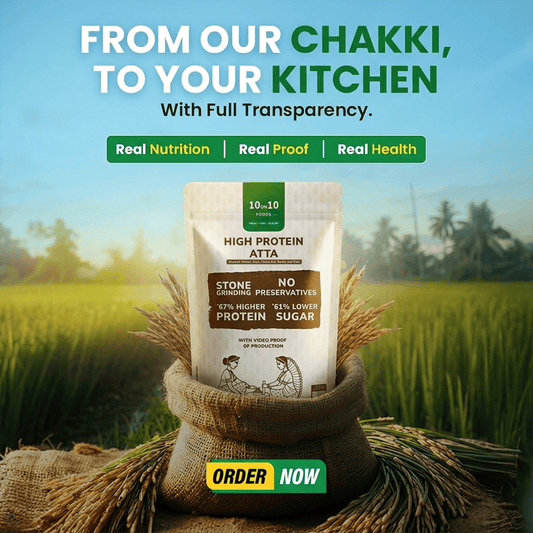
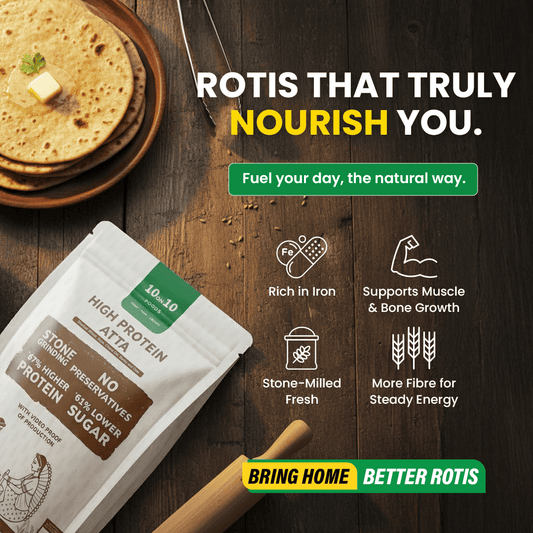
10on10 Food’s high-protein atta is specially formulated to provide extremely high protein content compared to regular wheat atta. Below is a clear comparison of how 10on10 Food’s high-protein atta can dominate your regular, nutritious daily intake:
|
Feature |
10on10 High-Protein Atta |
Regular Wheat Atta |
|
Protein per 35g Roti |
8.75g |
3-3.5g |
|
Primary Purpose |
Muscle support and higher protein intake |
General household nutrition |
|
Satiety Level |
High!!! It keeps you full longer |
Moderate |
|
Supports Muscle Repair? |
Yes!!!. It is great for active individuals. |
Limited support |
|
Suitable For |
Fitness enthusiasts, working professionals, and vegetarians |
Everyday family consumption |
|
Need for Supplements |
Reduces dependency |
Occasionally requires additional protein sources |
|
Nutritional Strategy |
Goal-oriented and protein-focused |
Balanced and carb-focused |
As you can see in the table above, the comparison clearly highlights how 10on10 Food’s high-protein atta outperforms regular wheat atta in terms of nutritional impact and purpose.
With 8.75g of protein per 35g of roti, it delivers more than double the protein of regular atta, which offers 3–3.5g per 35 g. So, it’s safe to say, while regular wheat atta supports general household nutrition and balanced carbohydrate intake, 10on10’s high-protein atta is up for muscle support, higher protein intake, and improved satiety.
Wrap Up
To summarise this blog post, we can say that wheat isn’t only the world’s most common food, but it is the most controversial one as well. Meanwhile, people who are intolerant to gluten consider giving up wheat from their diet entirely.
Ultimately, when comparing high protein atta vs normal atta, the choice remains deeply personal, but the nutritional chase is clear. As stated in this guide, high-protein atta delivers approximately 2.5X the protein of regular atta per roti. And this difference demonstrates a meaningful upgrade over weeks or months when consumed daily.
Frequently Asked Questions
Q1: Is high-protein flour the same as wheat flour?
A: The straightforward answer to this question is “No”! High-protein flour is milled from hard grain wheat and contains a higher protein concentration than regular atta. Besides, while both are derived from wheat, regular atta is produced through traditional milling methods, and the high-protein one is processed.
Q2: Does high-protein atta taste different from the regular wheat atta?
A: Well, it slightly tastes different from regular wheat atta. High-protein flour produces a firmer and more elastic dough. As a result, consumers have to chew roti more densely.
Q3: Can I mix high-protein flour with wheat flour?
A: Absolutely yes! Blending them together can be a practical approach for an Indian household, considering switching gradually. Therefore, a 50:50 blend still increases the protein content per roti and also keeps the texture closer to what the family is used to.
Q4: Is high-protein flour good for children?
A: Yes! Protein is something that is essential for a kid’s growth and development. In case parents have specific dietary concerns, they can consult a paediatrician or nutritionist before making changes.