
Why Is Multigrain Atta Better Than Single-Grain Flour?
MOORAV FOODTECH PRIVATE LIMITED AdminShare
One grain feeds hunger. Many grains feed health!
Grains are staples in Indian households and are important for human dietary needs. Today, consumers not only eat food to satisfy their appetite, but also to gain nutrients from what they are eating. And, when it comes to the everyday diet, the type of floor often plays an important role in overall health.
Now, ask yourself: Is the flour you use every day giving your body everything it needs?
In an era of health-conscious living, the debate over multigrain Atta vs single grain Atta has gained traction. From a nutritional standpoint, it is more important than ever. While single-grain flour supplies calories, multigrain Atta provides more fiber, higher protein, better micronutrient diversity, and sustained energy.
This clear nutritional advantage makes multigrain Atta a more wholesome option for a modern lifestyle. This descriptive guide will walk you through the key differences between the two, nutrition composition, and health benefits.
How are Single-Grain and Multigrain Flour Different From Each Other?
In the 21st century, consumers are looking for food that gives more nutrients in less intake. Multigrain flour consists of a blend of wheat with other grains and pulses like oats, barley, ragi, maize, soy, and millets. On the other hand, a single-grain Atta is prepared by grinding the complete wheat kernel, bran, germ, and endosperm, all of them!
The next key difference lies in digestion and energy release. A wheat atta gets digested faster, which can lead to a sudden spike in blood sugar and quicker hunger pangs. On the flip side, Multigrain atta digests more slowly to provide sustained energy and better satiety.
Key Differences in Nutritional Composition
When comparing multigrain atta vs single grain atta, the difference lies not just in taste, but in the nutrients your body actually absorbs. A regular wheat flour can provide 3–4 g of fibre per 100 g, and a multigrain Atta can offer 10–15 g of fibre per 100 g, contributing to better digestion and gut health. However, multigrain Atta typically contains 20–30% more dietary fibre. That’s nearly 3 times more fibre in multigrain atta.
Next comes the protein advantage: single-grain atta provides 10–12g of protein, whereas multigrain one provides 13–15g of protein. All thanks to the added pulses like soy and legumes.
Now, here is a question to think about: “Are you getting enough protein from your daily meals, especially if you follow a vegetarian diet?” Switching to multigrain can add 2–3 g extra protein per 100 g, without changing portion sizes.
The diversity of micronutrients further sets apart multigrain Atta vs normal Atta. While single-grain atta often provides basic nutrients, multigrain atta provides a wider range of nutrients. Iron, calcium, magnesium, and B-complex vitamins, multigrain has it all.
Nutritional Summary
|
Nutritional Aspect |
Single-Grain Atta (Normal Atta) |
|
|
Primary Source |
Wheat atta |
Blend of wheat, grains, and pulses |
|
Dietary Fiber |
3–4g |
13.5g |
|
Protein Content |
10g |
14.24g |
|
Carbohydrates |
76g |
73.9g |
|
Energy |
340–360 kcal |
379.49 kcal |
|
Micronutrients |
Limited variety |
Rich in iron, calcium, and B vitamins |
|
Overall Nutrition |
Calorie-focused |
Nutrient-dense and balanced |
Overall, multigrain atta clearly wins.
“Multigrain atta provides richer nutrients and balanced nutrition”.
Health Benefits Say it All
Let’s be real, in an Indian household, rotis are the backbone. But did you know what kind of atta you use can actually make a big difference to your health? Here are the key health benefits of multigrain Atta and single-grain flour.
Let’s see how each atta stacks up for your family’s health:
Single Grain Atta
- Quick Energy Pump: Since it is packed with carbohydrates, it can provide extra energy to individuals and help them kick-start their day.
- Decent Protein Source: It helps with basic muscle maintenance.
- Affordable and Easily Available: Generally cheaper and easily obtained from the nearby grocery store.
- Easy on Digestion: High fibre content helps to maintain a healthy human digestive system.
- Multiple Uses: Works for rotis, parathas, puris, and even traditional sweets.
- Gluten-Friendly Options: Gluten-free and highly nutritious options are also available for individuals with sensitivities.
Multigrain Atta
- High Fibre Content: It keeps the digestion going well and ensures that you feel full longer.
- Heart Health: Ingredients like oats, barley, and flaxseed contain both soluble fibre and omega-3s. As a result, it curbs bad cholesterol (LDL) and supports cardiovascular health.
- Rich in Micronutrients: The presence of iron, calcium, magnesium, and B vitamins is beneficial for bones, energy, and overall immunity.
- Lasting Energy: Slower digestion can stop hunger cravings and help people to sustain energy for the long haul.
- Antioxidant Properties: Barley and oats also have antioxidant properties, which further help to neutralise free radicals in the body.
- Disease Prevention: A mix of whole grains narrows down the risk of diabetes, heart problems, and some cancers.
- Flavourful: Gives your regular roti a hint of nutty, healthy flavor.
- Digestible Carbohydrates: Multigrain chapati flour provides a balanced combination of complex carbohydrates like starches, dietary fibre, and resistant starches. Consequently, it helps in stabilising blood sugar levels, sudden energy spike, etc.
Why is 10on10 Food’s Multigrain Atta Sets Standard in Modern Indian Kitchens?
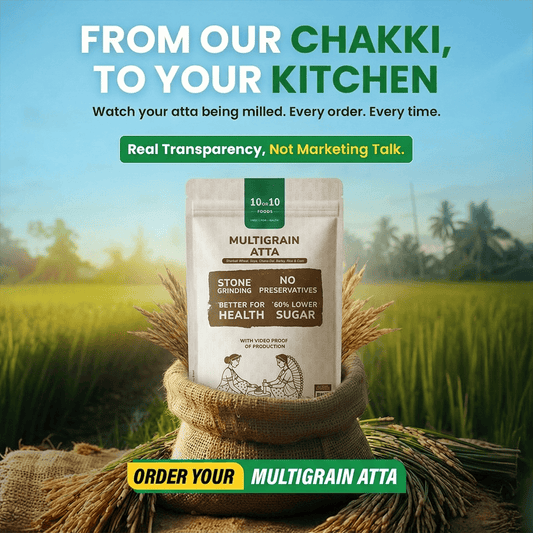
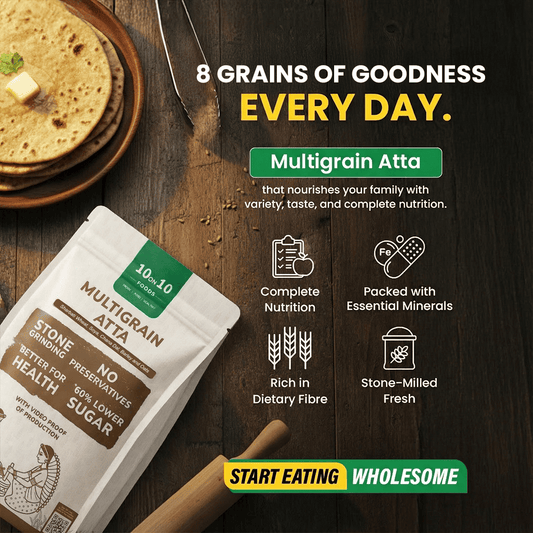
At 10on10 Foods, we’re all about keeping it real, fresh, and super healthy. Our multigrain atta is made from eight nutrient-packed grains, including wheat, soya, barley, channa, oats, rice flour, maize, and psyllium husk. Each pack of our multigrain flour is stone-milled fresh after you order.
Consumers can rest assured, as there will be no chemicals, no additives, just pure protein, fibre, and essential minerals. With various benefits of multigrain atta like 14.24g protein and 13g fibre per 100g, plus iron, zinc, and manganese, it’s a total power-up for your meals.
FAQs
Q1: Is multigrain atta better than normal atta?
Absolutely yes! Multigrain flour is typically considered healthier because it includes a mix of grains and pulses.
Q2: Can I eat a multigrain atta daily?
Undoubtedly yes! There is no harm in having food items made from multigrain atta. Just make sure to buy it from authentic brands like 10on10 Foods and keep an eye on portion size.
Q3: Is multigrain atta more expensive than single-grain atta?
Yes, multigrain flour is slightly pricer than wheat flour. That’s because it’s made from a mix of nutrient-rich grains and pulses.
Q4: What kind of grains are in multigrain atta?
In our multigrain atta pack, there are 8 types of grains, including wheat, soya, channa, barley, oats, maize, rice flour, and psyllium husk.
Ready to take on a lasting wellness journey? Bring home 10on10 Multigrain Atta to make every meal healthier, full of protein, fiber, and essential minerals!