
Jowar vs Bajra: Which Is Better for Daily Consumption?
MOORAV FOODTECH PRIVATE LIMITED AdminShare
A Complete, Evidence-Based Guide (Explained Simply)
As more people move away from refined wheat and ultra-processed grains, traditional millets like jowar and bajra are making a strong comeback. Both are ancient Indian staples. Both are naturally gluten-free. Both are praised for being nutrient-rich and gut-friendly.
So why does the question still come up: jowar vs bajra- which is better for daily consumption?
The answer is not as simple as picking a “winner.” These two grains behave differently inside the body. They digest differently. They suit different climates and activity levels. And over time, they support health in different ways.
Instead of asking which grain is better in isolation, a more useful question is:
Which grain fits your body, your digestion, and your daily routine better?
To answer that properly, let’s look at jowar and bajra through nutrition, digestion, traditional wisdom, and modern lifestyle needs.
Understanding the Basics of Jowar and Bajra
Jowar (sorghum) and bajra (pearl millet) are both millets, but they are built very differently.
Jowar has a lighter grain structure and is commonly eaten across central and southern India. It has long been used as a regular household staple because it is relatively easy on digestion and works well with daily meals.
Bajra is a denser grain and has traditionally been consumed in northern and western parts of India, especially in colder and drier regions. It has always been associated with strength, stamina, and warmth.
This historical pattern already tells us something important:
Jowar evolved as a “daily grain,” while bajra evolved as a “strength grain.”
That doesn’t make one better than the other. It simply means they serve different purposes.
Nutritional Comparison: How Their Differences Show Up in the Body
Nutritionally, both jowar and bajra are far superior to refined wheat or polished rice. They are rich in complex carbohydrates, fibre, and essential minerals. But their nutrient profiles are not identical.
Jowar is rich in dietary fibre and provides steady, slow-release energy. It contains good amounts of magnesium and phosphorus, which support muscle function and metabolism. Because its fat content is low and its carbohydrate release is gradual, it suits regular meals without making the body feel heavy.
Bajra is more calorie-dense and richer in iron, zinc, and healthy fats. These nutrients are extremely useful for people who need more energy, better hemoglobin support, or greater physical endurance. Bajra’s nutrition is more concentrated, which is why it feels more filling and sustaining.
Nutritional Snapshot (Per 100g)
|
Nutrient |
Jowar |
Bajra |
|
Calories |
~329 kcal |
~361 kcal |
|
Protein |
~10.4 g |
~11.6 g |
|
Fiber |
~9.7 g |
~11.3 g |
|
Iron |
~4.1 mg |
~8 mg |
|
Fat |
~3.1 g |
~5 g |
|
Gluten |
Gluten-free |
Gluten-free |
Looking at this table, a simple pattern emerges:
Jowar is balanced and light; bajra is dense and powerful.
This is why jowar atta adapts well to daily eating, while bajra shines when the body needs extra nourishment.
Ayurvedic Perspective (Explained Practically)
Ayurveda classifies foods not just by nutrients but by how they influence internal balance.
Jowar is considered mildly warming but generally stable for digestion. It supports digestive fire without disturbing the system when eaten regularly in normal quantities. This is why it is seen as suitable for frequent consumption across different seasons.
Bajra is traditionally classified as warming and strengthening. That quality made it ideal for people living in cold regions or doing heavy physical work. It helped maintain body heat and energy levels when winters were harsh, and food choices were limited.
The key point is this:
Bajra was never meant to be avoided; it was meant to be used purposefully.
Traditional diets used bajra in winter and jowar across broader seasons. This wasn’t superstition; it was practical food intelligence based on how the body responds over time.
So Ayurveda does not say “bajra is bad.”
It says: Bajra is powerful, so use it when power is needed.
Digestibility and Gut Health
When we talk about daily food, digestion matters as much as nutrition. A food that is nutritious but hard to digest can slowly strain the gut.
Jowar, especially when freshly milled and properly cooked, is easier to break down. Its fibre structure supports gut movement and helps avoid heaviness. This makes it suitable for people with moderate digestion, desk jobs, or irregular eating patterns.
Bajra digests more slowly because it is denser and richer. This doesn’t make it harmful. It simply means it suits people who have stronger digestion or higher physical activity levels. Many people find that bajra keeps them full for longer and provides sustained energy rather than quick hunger.
So the real difference here is not tolerance, but digestive demand:
● Jowar = gentler on the system
● Bajra = more demanding, more nourishing
Both can support gut health when eaten in the right context.
Seasonal Suitability and Climate
Traditional food systems always matched grains to climate.
Jowar performs well in moderate and humid seasons and adapts easily to daily cooking styles like rotis, bhakri, and porridge.
Bajra has always been associated with winter because it helps maintain warmth and strength in colder months. This is why bajra rotis are common in winter diets in Rajasthan, Haryana, and Gujarat.
When eaten in the right season, bajra atta supports the body rather than burdening it.
This makes seasonality an important part of choosing between jowar and bajra — not fear, but timing.
Daily Consumption in Modern Lifestyles
Most modern lifestyles involve long sitting hours, screens, and limited physical movement. For such routines, jowar fits easily into daily meals because it provides energy without heaviness.
Bajra fits better into routines that involve physical work, regular exercise, or colder environments. It is also valuable for people who need higher iron intake or who feel hungry too quickly on lighter grains.
So instead of thinking:
“Which grain is better?”
A more realistic question is:
Which grain matches how active I actually am?
That is where the real difference between jowar and bajra becomes meaningful.
Why Fresh Milling Changes Everything (Where 10on10 Fits In)
One detail that often gets ignored in these comparisons is flour quality.
Both jowar and bajra behave very differently depending on how fresh they are. Long-stored, factory-milled flour oxidises and loses much of its natural structure. That’s when even good grains start feeling heavy or dull.
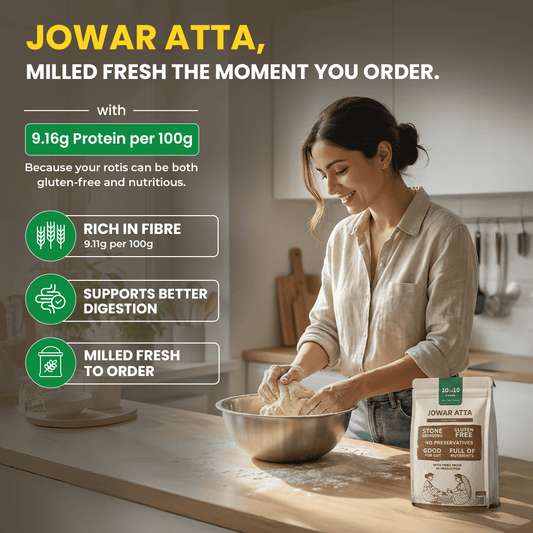
At 10on10 Foods, the approach is different. Grains are milled only after an order is placed, using traditional methods that retain natural fibre and nutrients. This means the flour behaves closer to how these grains were originally meant to be eaten.
Fresh milling makes jowar gentler and bajra more usable.
It reduces digestive load, improves taste, and preserves mineral availability.
Providing video proof of milling with timestamps also builds transparency — you don’t just trust freshness, you see it.
In practical terms, this allows both grains to be part of a modern diet without turning them into “health compromises.”
FAQs
Q1- Are jowar and bajra the same grain?
A- No. They are different millets with different nutrient profiles and digestive behaviour.
Q2- What is the main difference between jowar and bajra?
A- Jowar is more balanced and lighter; bajra is more nutrient-dense and sustaining.
Q3- Which is better for daily consumption?
A- Jowar is easier to adapt to daily meals. Bajra is better used seasonally or when energy needs are higher.
Q4- Can bajra be eaten every day?
A- Yes, if digestion is strong and lifestyle demands higher nourishment.
Q5- Is jowar lighter than bajra?
A- Yes. One major difference between jowar and bajra is that jowar is easier on digestion
When comparing jowar and bajra, the real question is not which grain is superior.
It is determining which grain is appropriate for your body and lifestyle.
Jowar works beautifully as a daily staple because it is balanced, adaptable, and easy on digestion.
Bajra remains a deeply nourishing grain that supports strength, warmth, and endurance when used with intention.
When both are sourced fresh, milled traditionally, and cooked thoughtfully, as done at 10on10 Foods, they stop competing with each other and start complementing each other.
The smart approach is not choosing sides.
It is choosing timing, quality, and understanding.