
Health Benefits of High-Protein Flour: Complete Nutritional Value Explained
MOORAV FOODTECH PRIVATE LIMITED AdminShare
There is a sudden push in the trend of conscientious living and the consumption of protein-rich products. And, if you ask, why high-protein flour is suddenly trending, the answer lies in its high protein value, and the benefits go far beyond just building biceps. Now imagine your eyes land on a packet labelled “High-Protein Flour”, and you start wondering if it could be a secret behind fluffy pancakes, or if it can be a game-changer for baking and cooking Indian breads.
The curiosity is valid. In a world where nutrition labels are read more carefully, people want their food to support their daily health. Why would someone even want to settle for empty calories when their daily roti, bread, or dosa batter can double up as a protein source?
Therefore, high-protein flour promises exactly that. And when a simple swap can add more protein, fibre, and functional nutrition, it’s worth knowing what makes this flour more than just a buzzword.
In this guide, we explore the high protein flour benefits, nutrition facts, and why it benefits your health. So, stay tuned…
What Is High-Protein Flour?
High-protein flour is made from wheat, almond, chickpeas, quinoa, and lentils. These are extensively used in the production of ready-to-eat snacks, bakery items, Indian flatbreads, or protein bars.
Nutritionally speaking, it is flour that delivers significantly more protein per 100g than regular flour, often 30–50% higher. This simple change in grain mix upgrades the nutritional ratio while keeping your everyday rotis, parathas, and breads familiar in taste.
|
Less-Known Fact : Are you aware of the fact that high-protein flours can also contribute to better blood sugar regulation compared to refined flour? It is because high protein and fibre content slow down glucose absorption, which is a key factor in diabetes prevention and management. |
From a health standpoint, more protein and fibre in high-protein flour support digestion, provide essential vitamins and minerals, maintain steady blood sugar, and provide minerals like iron or magnesium.
High-Protein Flour Nutrition Facts
The table below breaks down the nutritional composition of high-protein flour:
|
Nutrient |
Amount per 100 g |
|
Protein |
24.56 g |
|
Dietary Fiber |
12.68 g |
|
Carbohydrates |
64.76 g |
|
Total Fat |
1.59 g |
|
Sugar |
Low |
|
Additives |
None |
As you can see above, this atta gives you more muscle-friendly protein plus fibre for digestion, that too without compromising on taste or texture.
Beneficial Properties of High-Protein Flours
Lately, consumers have started looking beyond taste or texture. People today want their everyday staples to deliver real nutrition, rather than counterfeits. That’s where high protein flour benefits stand out.
Find below the key beneficial properties in detail:
- Stronger Gluten Formation: Protein is the central element for the development of gluten. When you add water and knead the flour, proteins like glutenin and gliadin combine to form gluten, which is the elastic network responsible for structure. However, high-protein atta contains more of these gluten-forming proteins.
- Better Satiety: Protein is considered the “stay-full nutrient”. In contrast, high-protein content slows digestion and gives one a feeling of fullness. And, since high-protein flour is already rich in protein, it increases the satiety hormones and suppresses hunger hormones.
- Muscle Support: Protein supports muscle growth by providing important amino acids like leucine to repair microscopic tears. Therefore, when flour alone won’t replace a protein shake, high-protein atta contributes meaningfully to your daily intake.
In addition, individuals on a vegan diet can absolutely trust high protein value atta as it bridges the protein gap without drastically changing meal patterns.
- Improved Rise and Texture: In baking, protein governs the performance. At the same time, yeast-based recipes like bread, pizza bases, and buns require a strong dough structure to hold back carbon dioxide during fermentation.
However, a flour rich in protein holds gas more efficiently, encourages a better rise, creates an airy crumb, and gives a perfect texture to the dough.
- Better Nutritional Value: Last but not least, high-protein flour is rich in micronutrient profile, compared to regular refined flour. Besides protein, it even delivers higher fibre and the overall best nutrient density.
How Does Protein-Rich Flour Support Digestive Health?
Gut health in the human body plays a significant role. Meanwhile, high protein flour nutrition facts listed above show it’s not just about protein. Here is how it supports gut health:
- A flour having 12.68 g of fibre per 100 g can help maintain regular bowel movements.
- Plus, fibre supports the growth of beneficial gut bacteria that help to reduce inflammation and improve immunity.
In simple terms, a well-fed gut is a happy gut, and high-protein flour contributes to that balance.
Weight Management
Protein and fibre are both satiety agents; they help you feel fuller for the long haul and naturally reduce excessive eating and mindless snacking. Even though numerous studies link higher protein diets with improved weight management because they accelerate metabolism (through the thermic effect of food) and maintain lean muscle mass. This means you will burn calories even in rest mode.
On the contrary, when everyday food like roti provides high protein value, they ultimately support portion control and encourages healthy eating habits.
Heart Health
Many of you might think that protein is only related to muscles, but it has a lot to do with your heart health. Flours enriched with legumes (like soya and chana) deliver good fats, fibre, and micronutrients. Consequently, it maintains healthy cholesterol levels and supports blood vessel functioning.
However, when you upgrade your flour with protein-rich atta over time, you can expect various high protein flour benefits.
How to Choose High-Protein Wheat Flour?
With so many options at your disposal, finding the right high-protein flour pack labelled with sufficient nutrient value may feel like finding a needle in a haystack. The right pack is the one that ensures quality, digestibility, and long-term health benefits.
Now the question arises, how could you choose the correct one? Here is the solution:
- Know Your Dietary Needs: Avoid using gluten-free flour in place of high-protein wheat flour unless recipe modifications are made if gluten is an issue.
- Look at the Label: Get a high-protein flour packet that says "100% whole wheat" or "whole grain" in order to get full nutrients.
- Review Protein Content: Compare different brands while aiming for at least 20–25g per 100g serving.
- Skip a Pack Having Additives: Avoid flours that have been bleached or bromated, as this can lower the quality of the nutrients.
- Consider Organic Options: Doing this will reduce the potential pesticide residues.
- Store Properly: Store the flour in an airtight container and place it in a cool, dark cabinet or refrigerate it to enhance its shelf life.
Final Thoughts
High-protein flour isn’t a buzzword today; it's the right approach to fulfilling nutritional deficiencies. Hence, it is essential for everyone. Plus, you no longer need to be worried about whether it will taste good or have a good texture, as it can easily replace regular flour for rotis.
Health-wise, it supports digestive health, regulates blood sugar, manages colostral levels, and performs well in traditional baking. Furthermore, when you look closely at high protein flour nutrition facts, the higher protein value speaks for itself.
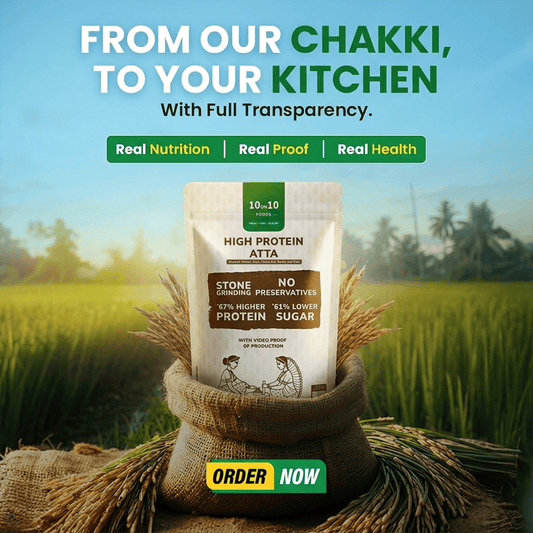
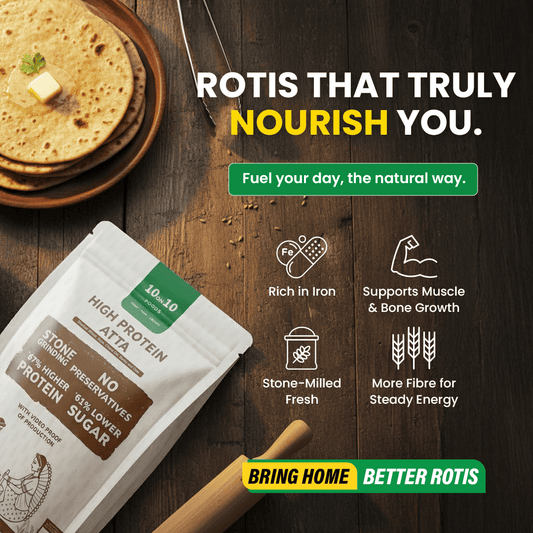
And if you want a reliable option, 10on10 Foods High Protein Atta delivers nearly 24.56g of protein per 100g, along with high fiber and zero additives. In addition, we vouch for the quality and absence of unwanted contaminants in our high-protein flour.
FAQs
Q1: What can I use high-protein flour for?
A: You can use 10on10 Food’s high-protein atta to prepare various dishes. It remains the most reliable choice for pizza, bagels, cookies, and other flour-centred recipes (like bread, pasta, pastries, or thickeners).
Q2: What is the difference between high-protein flour and all-purpose flour?
A: While high-protein flour is often referred to as bread flour, the terms are frequently used interchangeably. When we compare all-purpose flour and bread flour, bread flour contains more protein. This way, high protein value makes high-protein flour an ideal choice for yeast-based recipes like bread and other baked goods.
Q3: Can high-protein flour help with blood sugar control?
A: Absolutely yes! High protein atta benefits diabetic patients. How? The combination of protein + fibre slows down glucose absorption, which supports better glycemic response.
Q4: Can high-protein flour aid fitness goals?
A: Undoubtedly yes, because higher protein content supports muscle repair, strength gains, and recovery, especially when paired with regular exercise.
Q5: Does high-protein flour need more water?
A: It is seen that high-protein atta generally absorbs more water than lower-protein flours; ultimately, it will often need extra water to avoid an overly gummy texture.