
Is Jau and Jowar Same? Key Differences Explained in Detail
MOORAV FOODTECH PRIVATE LIMITED AdminShare
The question “is jau and jowar same?” is one of the most commonly searched grain-related queries in India. At first glance, the confusion is understandable. Both jau and jowar are ancient grains, both are deeply rooted in Indian food culture, and both are often recommended for healthy eating. However, despite sounding similar, jau and jowar are not the same grain, nutritionally, botanically, or Ayurvedically.
Understanding the difference between the two is important, especially if you are choosing grains for digestion, weight management, diabetes, or lifestyle disorders. Let’s explore this topic in depth and clearly answer the question: is jau and jowar same, or are they fundamentally different?
Understanding the Confusion: Why People Ask “Is Jau and Jowar Same?”
The confusion mainly arises due to regional language overlaps. In North India, the word jau is commonly used for barley, while jowar refers to sorghum. In some local dialects and casual conversations, these terms are loosely interchanged, leading many to believe they are the same grain.
However, from a scientific, nutritional, and Ayurvedic standpoint, jau and jowar are two entirely different cereals with distinct properties and health impacts.
So to be very clear from the start:
No, jau and jowar are not the same.
What Is Jau?
Jau is the Hindi name for barley (Hordeum vulgare). It has been cultivated for over 10,000 years and is one of the oldest grains known to humankind. In India, jau is traditionally consumed in the form of sattu, soups, and porridges, and is especially popular in Ayurvedic detox diets.
Barley contains gluten and has a chewy texture when cooked. It is widely known for its cooling, cleansing, and fat-reducing properties.
What Is Jowar?
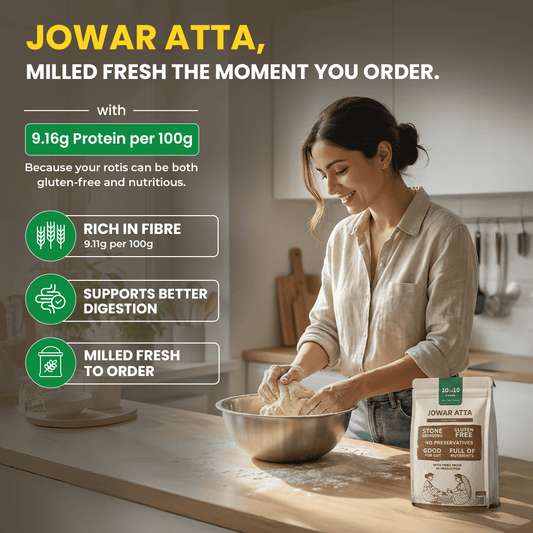
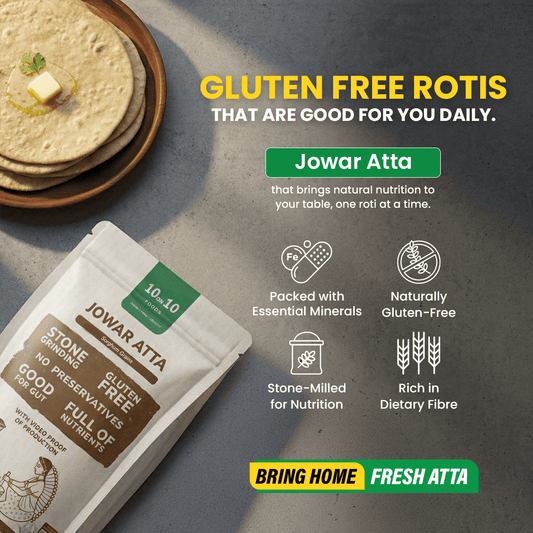
Jowar is the Hindi name for sorghum (Sorghum bicolor). It is a staple grain in many parts of India, particularly Maharashtra, Karnataka, Telangana, and parts of Africa. Jowar atta is naturally gluten-free and commonly consumed as roti, bhakri, dosa, or porridge.
Jowar is known for its high fiber content, sustained energy release, and suitability for people with gluten intolerance.
Is Jau and Jowar Same?
|
Aspect |
Jau (Barley) |
Jowar (Sorghum) |
|
Botanical Name |
Hordeum vulgare |
Sorghum bicolor |
|
Common Hindi Name |
Jau |
Jowar |
|
Gluten Content |
Contains gluten |
Naturally gluten-free |
|
Ayurvedic Nature |
Cooling (Sheeta) |
Mildly warming (Ushna) |
|
Digestibility |
Heavy, cleansing |
Light, nourishing |
|
Best For |
Weight loss, detox |
Energy, gut health |
|
Glycemic Impact |
Low |
Moderate |
|
Texture |
Chewy |
Soft when cooked |
|
Climate Suitability |
Cold & temperate |
Dry & semi-arid |
So, they are clearly different in every fundamental way.
Ayurvedic Perspective:
From an Ayurvedic lens, the difference between jau and jowar becomes even more evident.
Jau (barley) is classified as sheeta virya, meaning it has a cooling potency. It is often prescribed in Ayurvedic treatments for obesity, high cholesterol, water retention, and excess kapha. Jau is also drying in nature and is considered cleansing but heavy.
Jowar, on the other hand, has ushna virya, or warming potency. It supports digestion, provides strength, and balances kapha but may aggravate vata if consumed without adequate fat like ghee.
Thus, even Ayurveda does not treat jau and jowar as interchangeable foods.
Nutritional Differences:
Nutritionally, jau and jowar serve different purposes.
Barley (jau) is rich in beta-glucan fiber, which is particularly effective for reducing cholesterol and supporting metabolic health. However, its gluten content makes it unsuitable for people with gluten sensitivity or celiac disease.
Jowar provides complex carbohydrates, high dietary fiber, iron, magnesium, and antioxidants. Being gluten-free, it is often recommended as a wheat alternative for modern lifestyles.
This nutritional divergence further reinforces the answer to “is jau and jowar same?”, they are not.
Cooking and Usage Differences
Jau is usually boiled, soaked, or cooked slowly due to its dense structure. It is rarely used for soft rotis.
Jowar, when freshly milled, is ideal for rotis and traditional flatbreads. Its taste and texture heavily depend on freshness and milling quality.
This is where sourcing becomes critical.
The Role of Fresh Milling: Why 10on10 foods Matters
At 10on10 Foods, grains like jowar are treated as living food, not factory products.
10on10 does not believe in the concept of manufacturing and expiry dates when it comes to food. While dates are mentioned in compliance with regulations, the belief is simple: food should always be fresh, instantly processed, and full of nature. Dates should apply to what remains on the body, not what goes inside it.
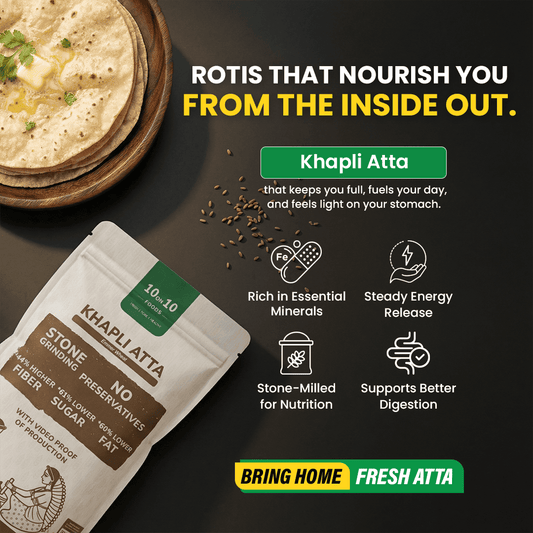
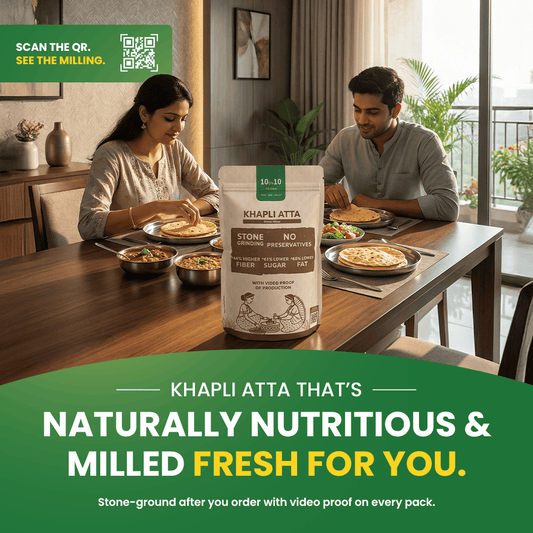
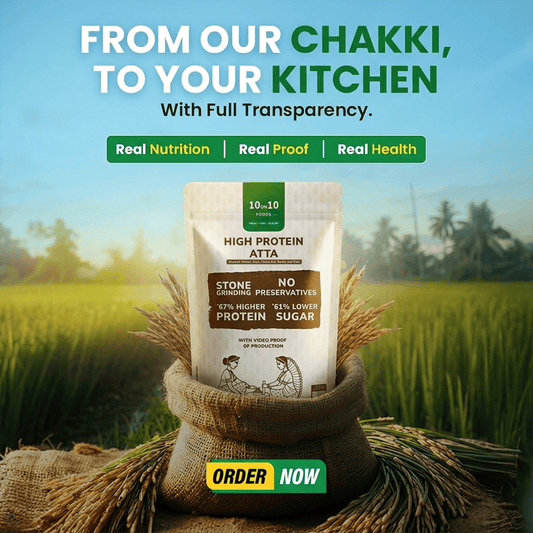
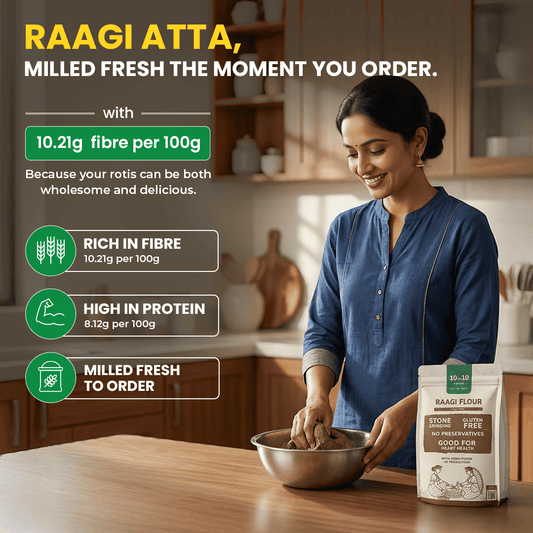
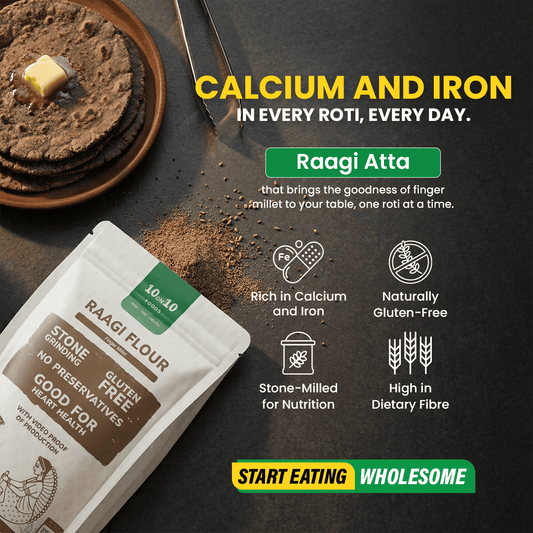
Using traditional milling methods, 10on10 ensures that jowar flour retains its natural fiber, minerals, and nutritional integrity. Unlike store-bought atta that sits on shelves for weeks, flour at 10on10 is milled only after you place an order. This guarantees freshness, better digestion, and superior nutritional value.
To maintain complete transparency, 10on10 provides video proof of everyday milling with timestamps, allowing customers to see exactly how and when their flour is processed. Orders are delivered within hours, ensuring minimal nutrient loss. The brand also prioritizes eco-friendly packaging and refillable options to reduce environmental impact.
This approach is especially important for grains like jowar, whose health benefits are closely tied to freshness.
FAQs:
Q- Is jau and jowar same grain?
A- No. Jau is barley, while jowar is sorghum. They are entirely different cereals.
Q- Can jau be used instead of jowar?
A- No. Their gluten content, digestion, and cooking methods differ significantly.
Q- Which is better for weight loss: jau or jowar?
A- Jau is traditionally preferred for weight loss due to its cooling and cleansing properties.
Q- Is jowar gluten-free like jau?
A- No. Jowar is gluten-free, while jau contains gluten.
Q- Why do people confuse jau and jowar?
A- The confusion comes from language overlap and lack of nutritional awareness.
So, Is Jau and Jowar Same?
Despite common misconceptions, jau and jowar are not the same. They differ in origin, nutritional profile, Ayurvedic nature, gluten content, and health benefits. Choosing between them should depend on your body type, health goals, and digestion capacity.
Understanding this difference helps you make informed food choices and when paired with freshly milled, traditionally processed grains like those from 10on10 Foods, those choices become even more impactful.