
How to Make Soft Jowar Roti: 7 Tricks That Actually Work
MOORAV FOODTECH PRIVATE LIMITED AdminShare
Summers are here, and it's time to make a change in your kitchen. Worry not! We are talking about an ingredient that has been dominating the Indian kitchen for ages. If you’ve ever tasted a jowar roti, you will know how soft, how light, and how easily it melts in your mouth like pure comfort.
Moreover, jowar is globally touted as the “new quinoa” because of its gluten-free and whole-grain goodness. Although it has been cooked for over 5,000 years, many home cooks get intimidated by the idea of making it. Why? Because they have a fear that they might end up with dry, crumbly bread instead of the soft, pliable rotis they wish to make.
Ultimately, it leaves them wondering how to make jowar roti perfectly. Given that, this detailed guide explains exactly how to make perfectly soft jowar rotis at home, along with benefits and more.
Why is Jowar Roti an Ultimate Alternative to Wheat Atta Rotis?
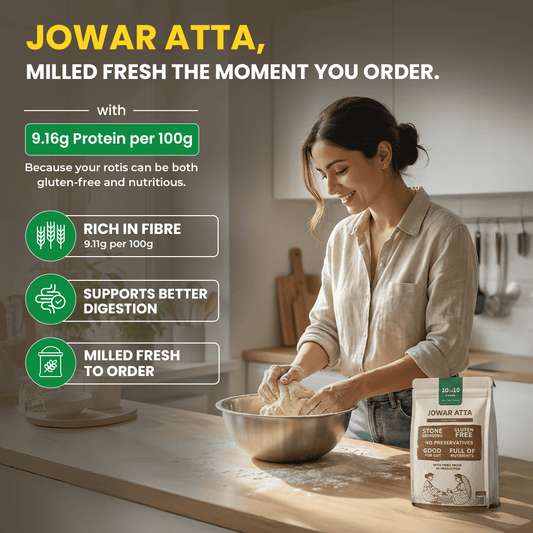
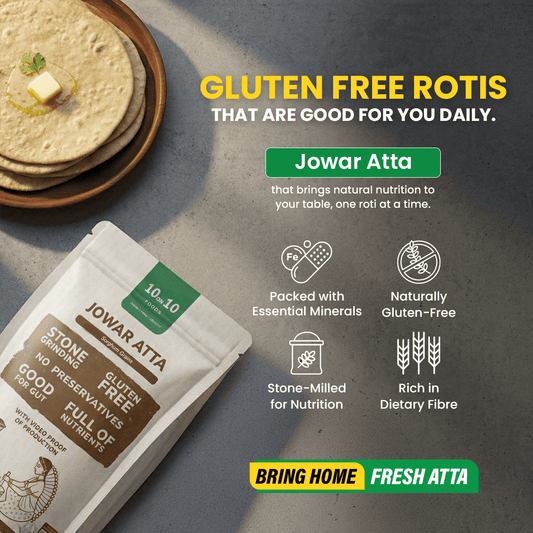
Jowar or Sorghum is one of the healthiest millets that is rich in minerals like calcium, potassium, phosphorus, and iron. Plus, it is rich in antioxidants, which are good for heart health and diabetic-friendly. The best part of making roti is that it remains soft, even when cooled down; it doesn’t get hard or chewy. Jowar or sorghum rotis are usually served with curries and dals.
On average, jowar roti delivers 100-120 calories per medium jowar roti (Just 1 roti!) and 7g dietary fiber per 100g (nearly 50% of daily needs). However, it is a nutrient-rich food.
If you're new to jowar, start with our complete guide
How to Make Soft Jowar Roti: Step-By-Step Recipe
Here is what you have been waiting for: how to make jowar roti soft? Before starting with the recipe, let us tell you that preparation will take 15 minutes (approximately), and cooking will take another 15 minutes. Overall, the whole process will take around half an hour.
Rest, look below to find the ingredients, equipment you will need, and step-by-step jowar roti recipe:
Ingredients
- 1 cup jowar flour that is freshly made (as available on 10on10 Foods) for maximum nutrition.
- ¾ to ⅞ cup warm water. You can start with ¾ and add gradually.
- Pinch of salt (optional, but it enhances flavor).
- ½ teaspoon ghee or oil (for extra softness).
Equipements Required
- Large mixing bowl.
- Rolling pin.
- Clean, dry kitchen towel or plastic wrap.
- Non-stick Pan or tawa (cast iron works great).
- Small bowl of water for dusting.
Process
- Prepare the Flour: In a large mixing bowl or plate with a rim, combine jowar flour and salt. You can also sift the jowar flour once before using it to aerate it and prevent lumps. Now, mix the flour contents properly with your fingers to distribute salt evenly. Add ghee (optional) for extra softness.
- Boil the Water: In a pot, heat around 1 cup of water and bring it to a boil. After a few boils, turn off the heat and let it cool down a little bit, not completely.
-
Knead the Dough: Next, gradually add warm water while mixing with fingers. Again, repeating, jowar atta or flour absorbs water differently depending on humidity and milling quality.
So, knead gently for 2-3 minutes using your palms and fingers. Once done, the dough will feel crumbly, which is normal. But, if it is too dry, add ½ teaspoon of water at a time. And if it is too wet, sprinkle a tiny amount of jowar flour.
- Rest the Dough: It’s time for the dough to rest. For that, cover the dough with a damp cloth or plastic wrap and let it rest for 10-15 minutes. Why is it important? Because it allows the dough to hydrate fully. Eventually, this will make rolling easier and rotis softer.
- Divide Into Balls: Now divide the dough into 6-8 equal portions and roll each into a smooth ball. At this point, if the dough starts cracking, add a few drops of water and knead briefly.
- Roll Out: Grab one ball and flatten it between your palms. Then, lightly dust jowar flour on the rolling board and place a dough ball on it. Using a rolling pin, roll from the center outward, rotating the roti occasionally.
Try to keep the thickness to about 3mm. If the roti gets torn while rolling, gently press the tear back together with your fingers.
-
Cook on the Tawa: Take a non-stick pan and heat it up on a medium flame. When hot, gently place the roti on the pan. Cook the first side of the roti for 30-45 seconds. When you notice the roti begin to color lightly and small bubbles start forming, just flip carefully.
Then, cook the other side for another 30-45 seconds. If you see small golden-brown spots, your roti is cooking perfectly. Don’t turn the heat high and don’t overcook, as this is the most common mistake many people make.
- Keep Warm: Finally, place each roti in a warm kitchen towel or plastic wrap. Doing this will trap the steam and keep the roti soft. On the contrary, if you leave them on a cold plate, they harden quickly.
That’s it for a perfect yet softer jowar roti recipe.
Want recipe ideas beyond roti? Try these 12 jowar recipes
The Science Behind Soft Jowar Rotis
Although there is no rocket science in making soft jowar roti, many people fail at how to make jowar roti soft. The reason is that they treat it like wheat dough, which is their biggest mistake.
Let us explain the key difference between them.
Wheat dough usually develops gluten while kneading, which creates elasticity and structure. At the same time, jowar lacks this gluten formation. And, this makes it naturally more crumbly. On a positive side, this characteristic makes jowar rotis lighter and easier to digest.
Now that the basic science is clear, the key factors to consider are as follows:
- Water Content: Jowar flour absorbs differently, so you’ll need to pour more water. Now the catch here is that the exact amount varies with humidity and flour quality.
- Kneading Time: Wheat dough calls for vigorous kneading and jowar atta requires gentle, short kneading (2-3 minutes maximum).
- Cooking Temperature and Time: The secret behind the soft jowar roti recipe is moderate heat and shorter cooking times. High heat may lead the outer layer to harden before the inside cooks through.
Common Mistakes to Avoid
Here are some common mistakes to avoid:
|
Mistake |
Why It Happens |
The Quick Fix |
|
Dry, crumbly rotis |
Too little water or high heat |
Add more water, reduce the heat to medium |
|
Roti tears while rolling |
Dough too dry or pressed too hard |
Add water and roll gently |
|
Hard rotis |
Overcooked at high heat |
Use medium heat and cook 45 seconds per side maximum |
|
Uneven cooking |
Uneven thickness or inconsistent heat |
Roll evenly and maintain steady heat for cooking |
|
Rotis stick to the Pan |
Pan too hot or not non-stick |
Use a non-stick Pan, and lower the heat |
Conclusion
Making soft jowar roti is genuinely easy once you understand the key techniques. Follow the steps listed above carefully. Try to note what works and what doesn’t. Once you’ve mastered it, you'll wonder why you ever limited yourself to wheat.
While many may think that making soft jowar roti isn’t everyone's cup of tea. We make it easier for you. Since the atta quality makes a difference, thousands of people trust 10on10 Foods to find nutritious flours, as they are freshly milled.
Our freshly-milled flours ensure better texture, improved nutrition, and always soft rotis.
FAQs
Q1: Why does my jowar roti turn hard?
A: It happens due to dry dough, cold water, or overcooking. It is advisable to use warm water and cook on medium-high heat.
Q2: Can beginners easily learn how to make jowar roti?
A: Absolutely yes, as there is no rocket science. With the right technique and practice, anyone can master it within a few tries.
Q3: Is jowar roti good for weight loss?
A: Yes, jowar flour contains high fiber content, which keeps an individual full longer and supports healthy weight management.